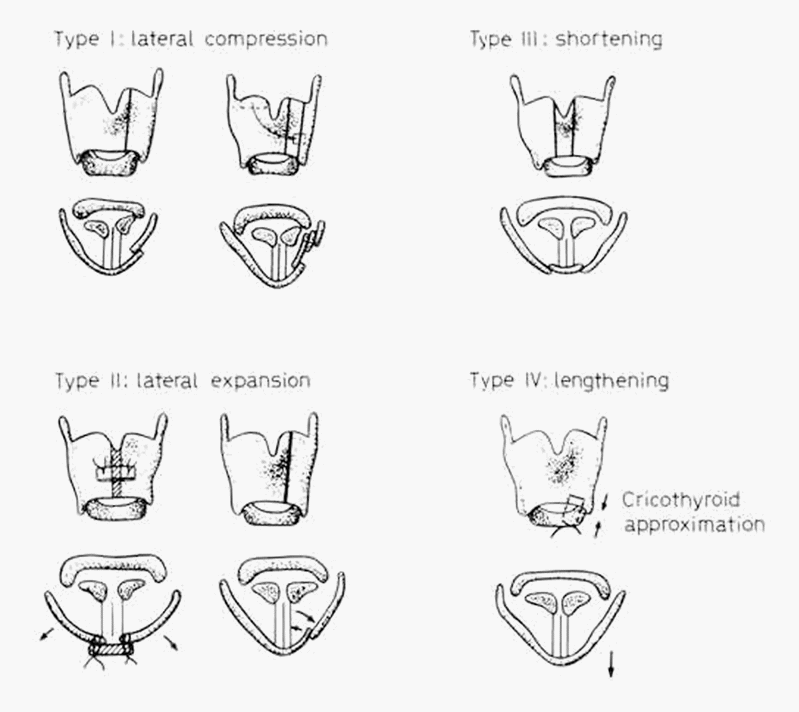
Thyroplasty is the cutting and reshaping of thyroid cartilage in various ways. Ishikki classificaiton – 4 types: Type Mnemonic Procedure Indication I M Medialization of cord (Approximation) Adductor palsy II L Lateralization of cord (Expansion) Abductor palsy III S Shortening of cord (Relaxation) Puberphonia IV L Lengthening of cord (Tensioning)…
Category: PGMEE, MRCS, USMLE, MBBS, MD/MS
Medical knowledge in bullet points with understandable language, simplified images and graspable mnemonics.
PGMEE, MRCS, USMLE, MBBS, MD/MS
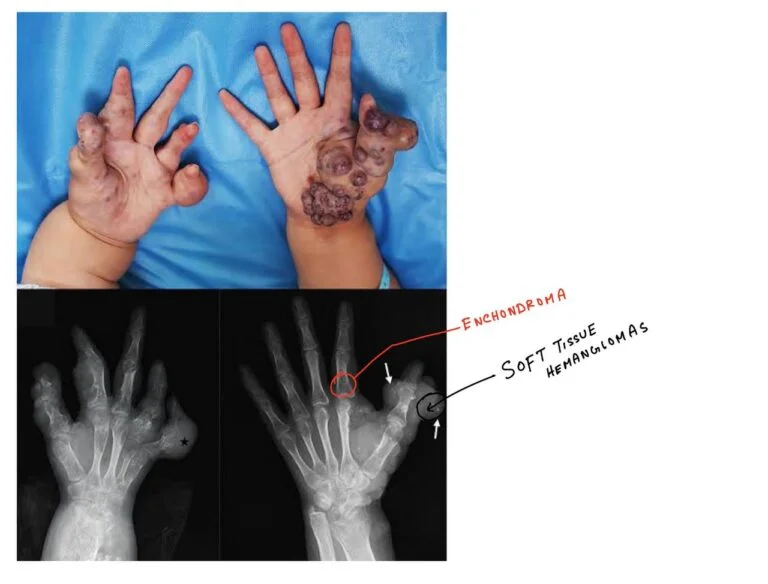
Ollier’s Disease and Maffucci Syndrome : Mnemonic
Ollier’s disease Maffucci syndrome
PGMEE, MRCS, USMLE, MBBS, MD/MS
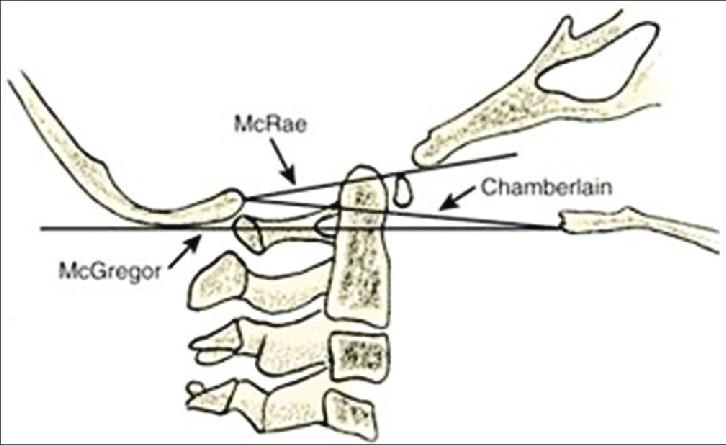
Radiological Lines for assessing Basilar Invagination : Mnemonic
Mnemonic: Imagine a letter “Z“. a. McRae’s line has “R” and is at Roof. b. Chamberlain’s line starts with “C” and is at Center. c. McGregor’s line has “G” and is at Ground. a. McRae’s line (foramen magnum line): drawn from anterior margin of foramen (basion) to posterior margin of…
PGMEE, MRCS, USMLE, MBBS, MD/MS
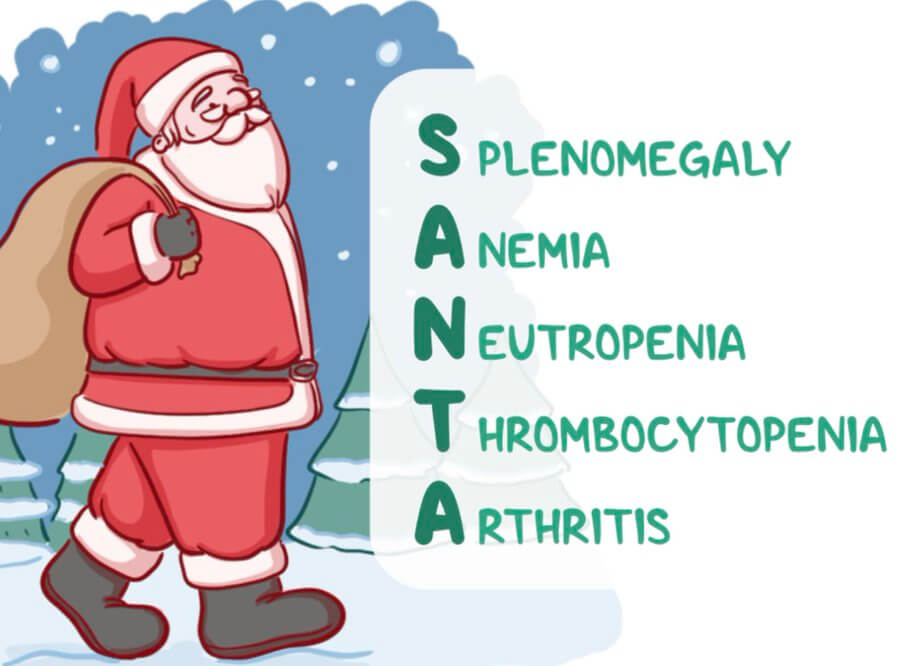
Felty Syndrome : Mnemonics
Felty syndrome is a triad of: Mnemonic #1: SANTA Mnemonic #2: FAULTS
PGMEE, MRCS, USMLE, MBBS, MD/MS
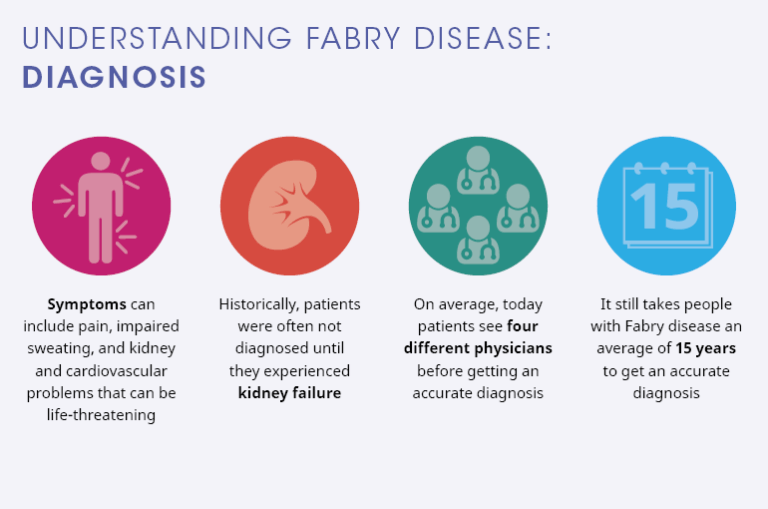
Fabry Disease : Mnemonic
Mnemonic: FABRY CX 1. Febrile episodes, Foam cells 2. Angiokeratomas, Alpha galactosidase A deficiency 3. Burning pains in hands and feet 4. Renal failure 5. Youth death 6. Cardiovascular disease, Ceramide trihexoside accumulation 7. X-linked recessive inheritance Further reading:
PGMEE, MRCS, USMLE, MBBS, MD/MS
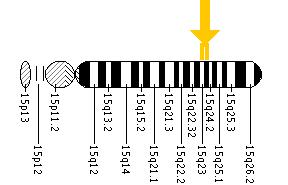
Tay Sach’s Disease : Mnemonic
Mnemonic: SACHS GO 1. Spots in macula (Cherry red spots) 2. Ashkenazic jews 3. CNS degeneration 4. Hexosaminidase A enzyme deficiency 5. Storage disorder 6. GM2 ganglioside accumulation 7. Onion skin appearance of lysosomes Further reading:
PGMEE, MRCS, USMLE, MBBS, MD/MS
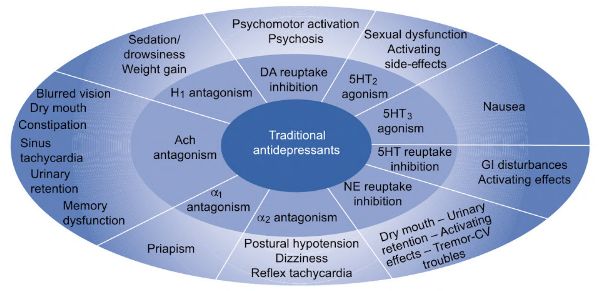
Antidepressants : Mnemonics
Classification and Mechanism of Action Acronyms: Mnemonic: TRIM 3N 3S Class Mechanism Drugs Side effects TCA Blocks reuptake of 5-HT, NA & other receptors (H1, ACh, α1, Voltage sensitive Na+ channel) Mnemonic: ANTI-DeP-C1. Amitryptiline, Amoxapine2. Nortryptiline3. Trimipramine4. Imipramine5. Doxepin, Desipramine, Dothiepin6. Protryptiline7. Clomipramine M1 blockade: Muscarinic anticholinergic side-effects α1 blockade:…
PGMEE, MRCS, USMLE, MBBS, MD/MS
Wernicke-Korsakoff syndrome : Mnemonic
Wernicke-Korsakoff syndrome is the most serious form of thiamine deficiency in patients diagnosed with alcohol use disorder. Thiamine deficiency in alcoholics (Wernicke-Korsakoff syndrome) results in degeneration of the medial-dorsal nucleus of thalamus, mamillary bodies, hippocampus and vermis of cerebellum. Mnemonic: COAT RACK Wernicke’s Encephalopathy (Acute phase) Korsakoff’s Psychosis (Chronic phase)