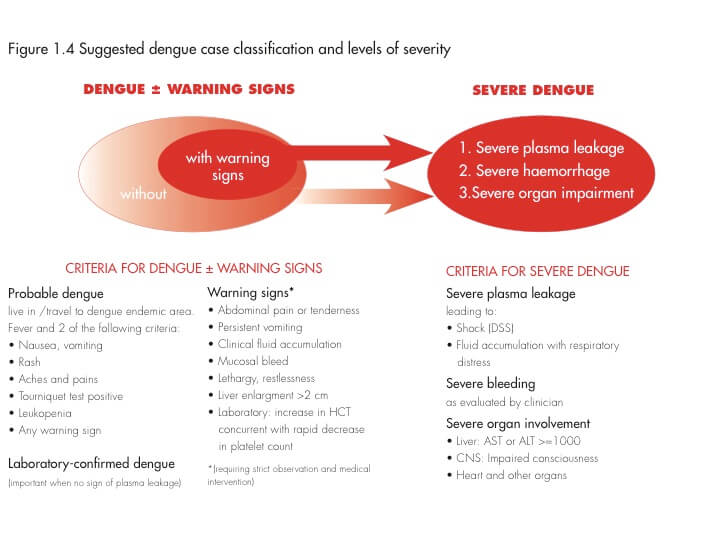
Pathophysiology Mnemonic: ABC Classification Lab Diagnosis
Category: PGMEE, MRCS, USMLE, MBBS, MD/MS
Medical knowledge in bullet points with understandable language, simplified images and graspable mnemonics.
PGMEE, MRCS, USMLE, MBBS, MD/MS
Deltoid Ligament : Anatomy, Clinical tests and Acute Injury
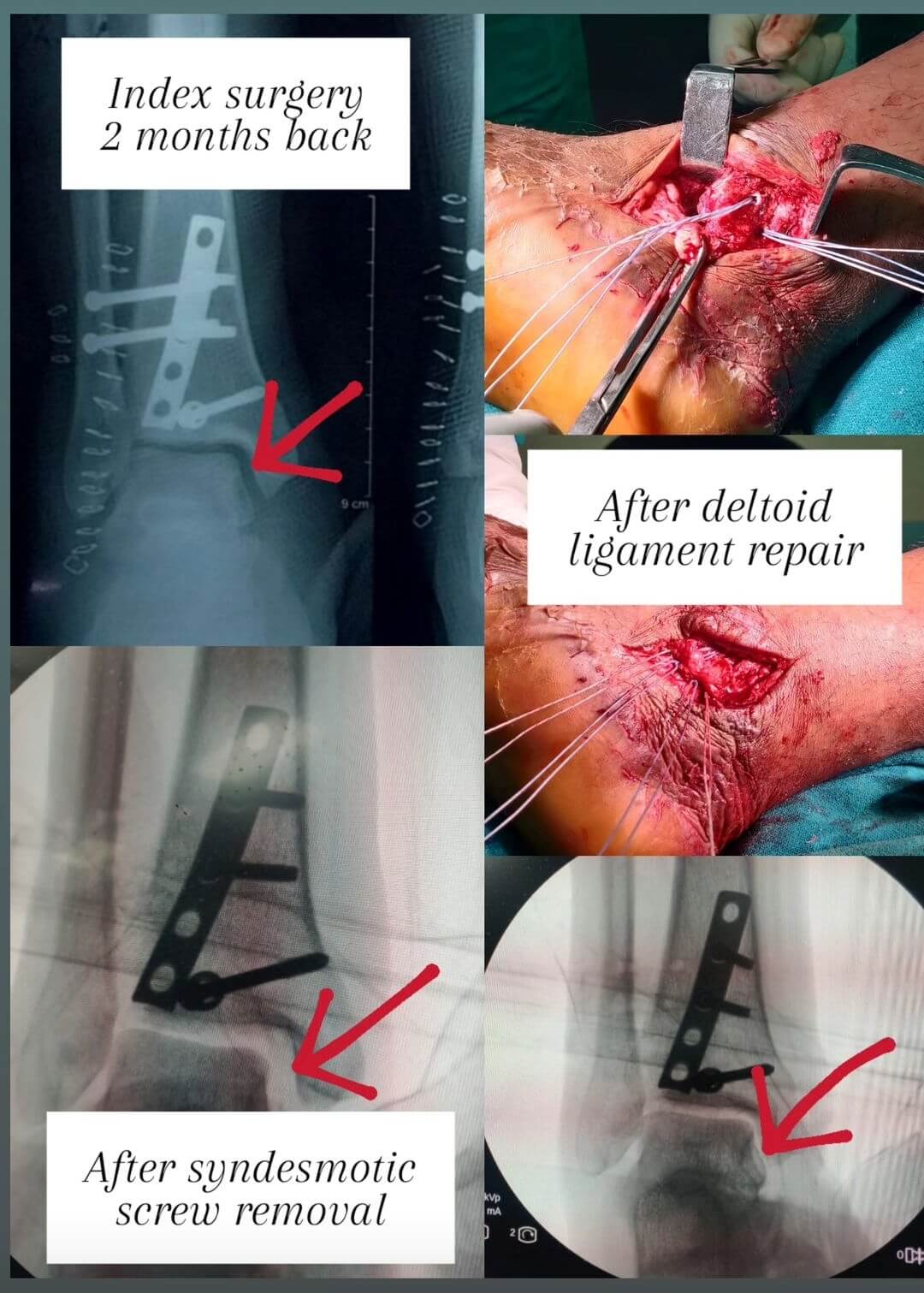
Deltoid ligament is the complex of medial collateral ligaments of the ankle joint. 2 layers of Deltoid Ligament a. Superficial layer: Originates from anterior and inferior aspects of medial malleolus fanning out & sending 3 bands to – b. Deep layer: Originates on posterior border of anterior colliculus, intercollicular groove…
PGMEE, MRCS, USMLE, MBBS, MD/MS
Unhappy Triad of O’Donoghue : Mnemonic
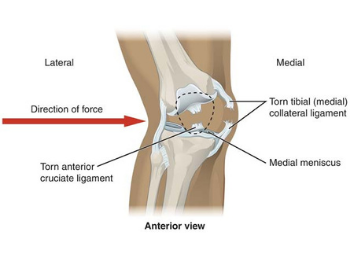
O’Donoghue unhappy triad is occurrence of 3 different soft tissue injuries of knee simultaneously. It includes: Mnemonic: MAM Mechanism: valgus stress with rotation of the knee Later on, more studies emerged showing that injuries in the lateral meniscus were more prevalent than injuries in the medial meniscus. The unhappy triad…
PGMEE, MRCS, USMLE, MBBS, MD/MS
Thyroid Eye Signs : Mnemonics
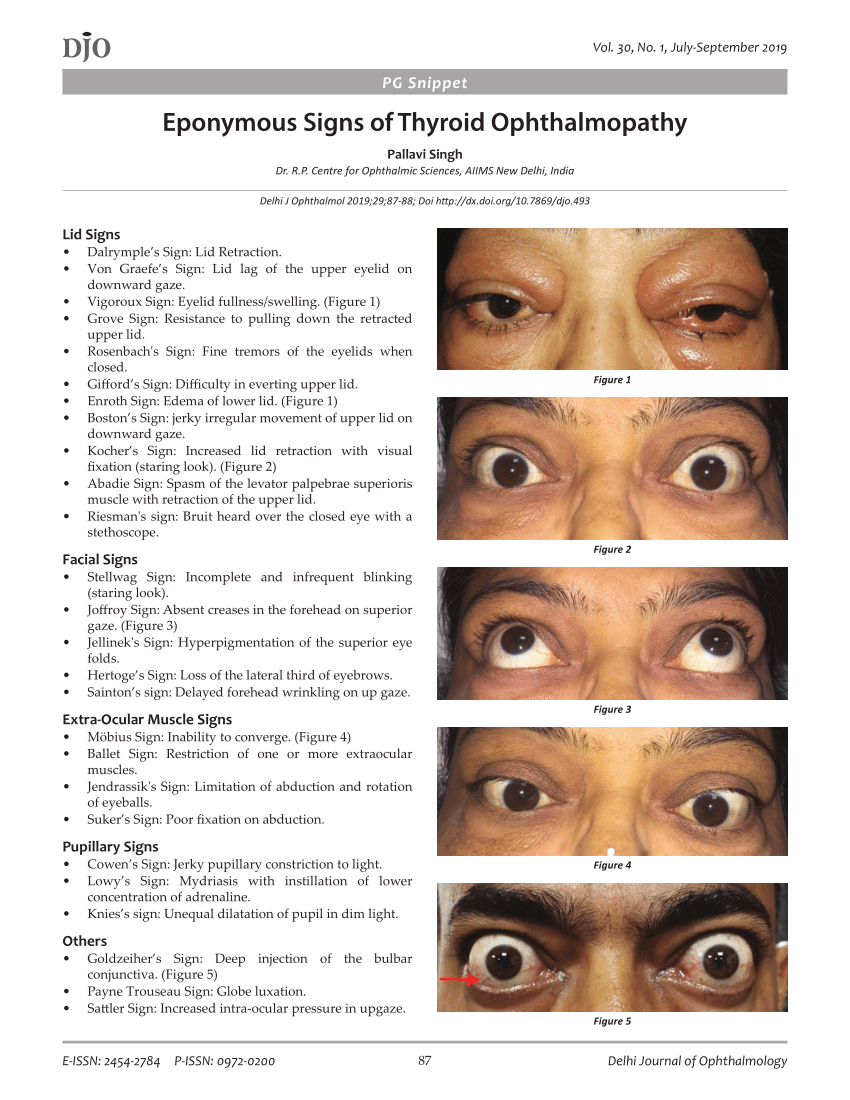
Classification Mnemonic: NO SPECS Class Signs Comment 0 No eye signs or symptoms 1 Only signs of hyperthyroidism Lid lag, Lid retraction 2 Soft tissue swelling Periorbital edema; red, itchy eye 3 Proptosis 4 Extraocular muscle involvement Often results in diplopia; pain especially on upgaze 5 Corneal involvement Generally a…
PGMEE, MRCS, USMLE, MBBS, MD/MS
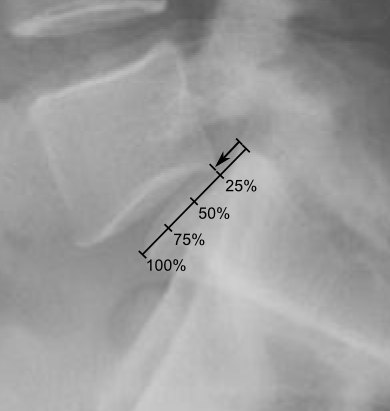
Spondylolisthesis : Summary
Indications for surgery Age group Spondylolisthesis Indications Pediatric Low grade Failure to respond to conservative treatment (9-12 months)Progressive slippageIntractable low back or radicular painNeurological deficit and deterioration High grade Neurological symptomsSevere sagittal plane spinal deformity Adult Low grade Failure of non-operative treatmentProgressive slippageSymptomatic and radiographically unstable isthmic spondylolisthesis High grade…
PGMEE, MRCS, USMLE, MBBS, MD/MS
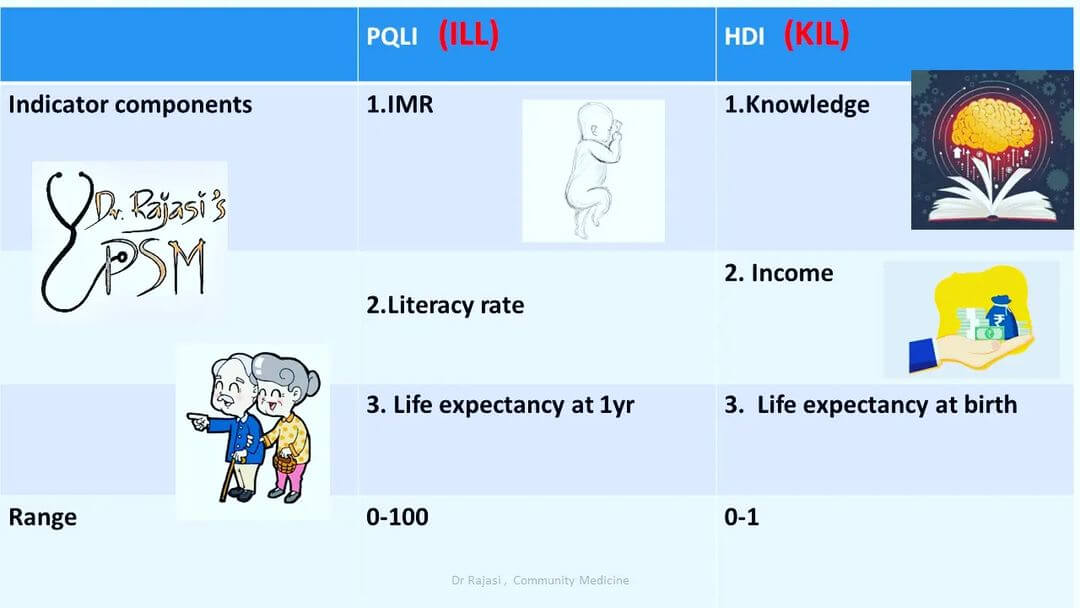
PQLI vs HDI : Mnemonic
PQLI and HDI are similar, the main difference between the two being the inclusion of income in HDI & exclusion of same from PQLI. HDI represents both physical and financial attributes of development and PQLI has only physical aspects of life. PQLI HDI Full form Physical Quality of Life Index…
PGMEE, MRCS, USMLE, MBBS, MD/MS
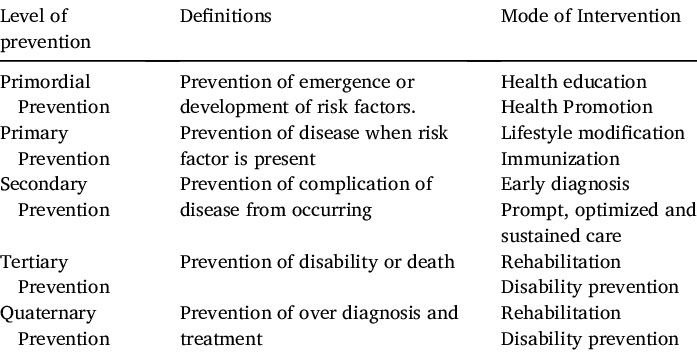
Levels of Disease Prevention : Mnemonic
Level Mnemonic Target population Goals Mode of intervention Primordial Prevent risk factors General population Prevent emergence of risk factors Health educationHealth promotion Primary Prevent disease General population Prevent disease onset Lifestyle modificationImmunization Secondary Screening Subclinical (asymptomatic) Prevent symptom onset Early diagnosisPrompt optimized & sustained care Tertiary Treatment Clinical (symptomatic) Prevent…
PGMEE, MRCS, USMLE, MBBS, MD/MS
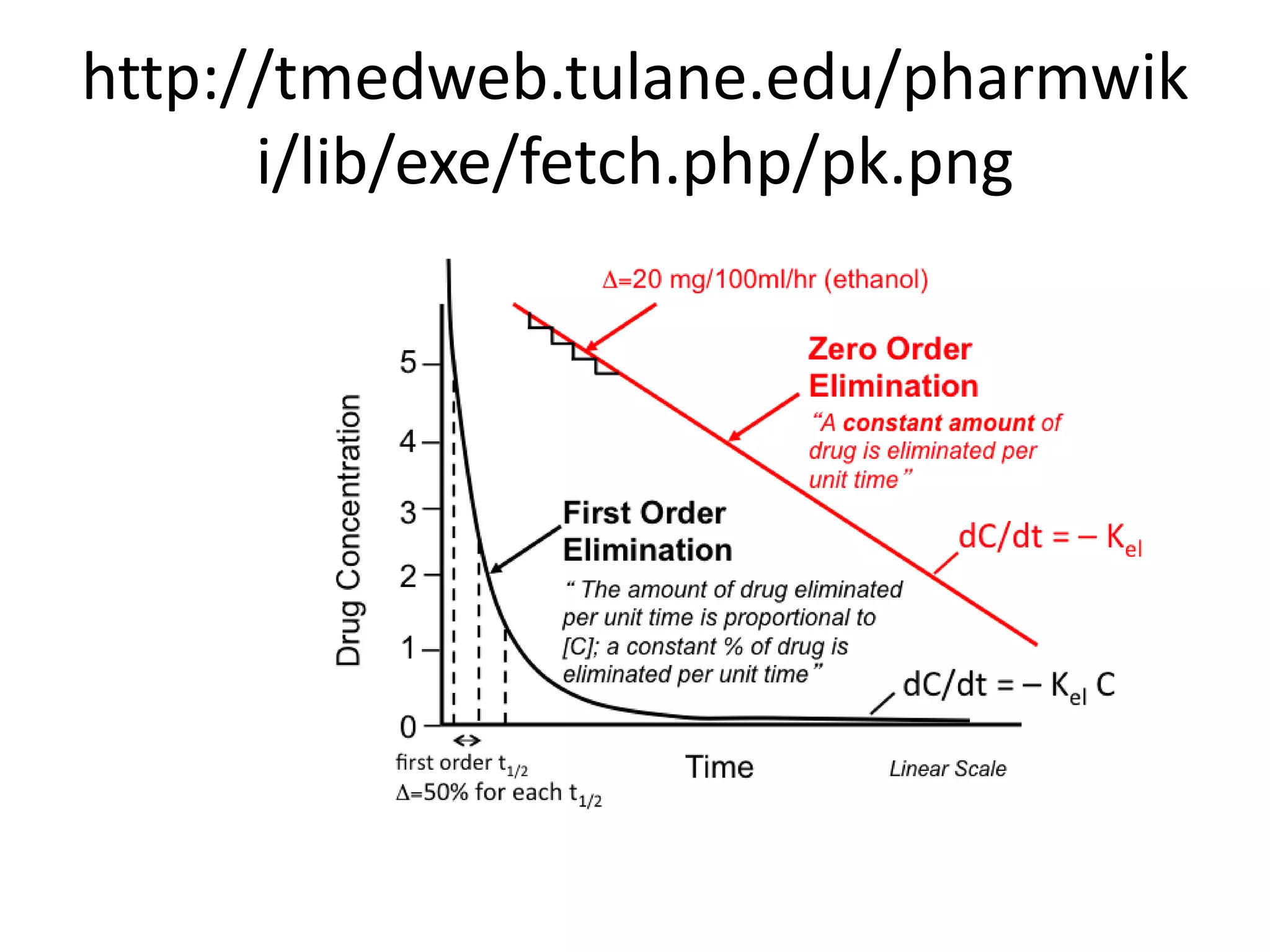
Drug Elimination Kinetics : Mnemonics
Zero-order First-order Amount of drug eliminated per unit time Constant amount Constant fraction (Mnemonic: first = fraction) Rate of elimination with plasma concentration Independent Directly proportional (greater the drug, greater is elimination) Elimination Capacity-limited, i.e. liver/kidney are saturated/maxed out on how much they can eliminate Flow-limited, i.e. liver/kidney are not…