Skip to content
Epomedicine

Mnemonics, Simplified Concepts & Thoughts

Epomedicine

Mnemonics, Simplified Concepts & Thoughts

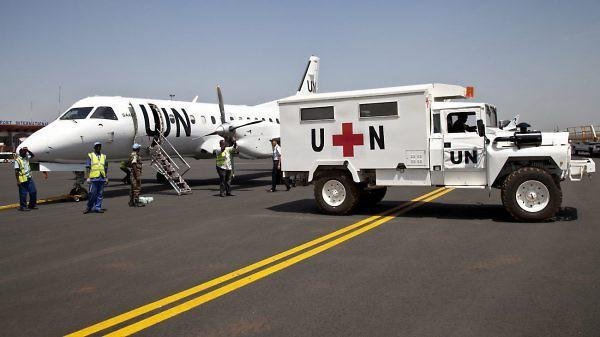
medical support un mission

Levels of Medical Facilities in Peacekeeping Operations

Epomedicine, Feb 23, 2018

medical support un mission

Basic Level (Soldier level or Buddy-Aid)

Immediate first-aid is provided by the nearest person-on-site (all personnel operating away from medical care must undergo standard first-aid training and carry personal and vehicular first-aid kits).

Level 1 (Mobile/Battalion level)

Provides immediate life-saving and resuscitation capabilities along with routine clinical care.

Staffing:

  1. ATLS trained 2 medical officers
  2. Trained 6 paramedics or nurses
  3. 3 support staffs including an ambulance driver

Capacity:

  1. Treat upto 20 ambulatory patients per day
  2. Temporary holding capacity of 5 patients for upto 2 days
  3. Hold medical supplies and consumables for 60 days

Level 1+: Addition of any modules like primary dental care, basic laboratory facilities, forward surgical team, AMET (Aeromedical Evacuation Team) capability.

Level 2 (Second line or Brigade/Sector level surgical facility)

All modules of Level 1+ PLUS damage control surgery, post-operative services and high-dependency care, intensive care-resuscitation, in-patient services, record maintenance and administrative support.

Staffing: 57 or 67 (if AMET facility)

Capacity:

  1. 3 to 4 surgeries per day
  2. Hospitalization for 10-20 casualties for upto 7 days
  3. 40 outpatients per day
  4. 10 dental consultations per day
  5. Hold medical supplies and consumables for 60 days

Level 2+: Addition of any modules like orthopedics, gynecology, internal medicine or diagnostic radiology.

Level 3 (Third line or Field Hospital)

This is a fully equipped and staffed multidisciplinary field hospital. All major medical and surgical specialties are provided for.

Staffing: 90 personnel in average

Capacity:

  1. 10 surgeries per day
  2. Hospitalization of 50 patients for upto 30 days
  3. 60 outpatients per day
  4. 20 dental consultations
  5. 20 X-rays and 40 lab tests per day
  6. Hold medical supplies and consumables for 60 days

Level 4

Definitive care facilities provided outside of the mission area.

  • Facebook
  • Twitter
Blog UN Medical

Post navigation

Previous post
Next post

Related Posts

Blog dr. andre waismann

What Are Prescription Opioids? [Effects, Dangers & Treatment] 

May 28, 2023Jun 8, 2023

It’s no new that while prescription opioids can effectively alleviate pain, they can also be highly addictive. For this reason, the first thing you want to do after being prescribed these medications is to learn as much about them as possible. This way, you know what to expect and how…

Read More
Blog

Becoming a Family Nurse Practitioner

Jun 13, 2025Jun 13, 2025

Family Nurse Practitioners (FNPs) play a vital role in the healthcare system by providing patient-centered, comprehensive care across the lifespan. Trained in both primary care and disease prevention, FNPs work with individuals and families to manage chronic conditions, treat acute illnesses, and promote healthy lifestyle choices. With the demand for…

Read More
Blog

The 5 Most Ridiculous Claims About COVID-19

Sep 20, 2020Sep 20, 2020

Anytime there is a new sickness going around, rumors and false claims start to get out of hand. Fake cures, bad advice, and outrageous claims are incredibly common, especially with the sheer amount of disinformation on the web.  COVID-19 is the newest conspiracy theory magnet, so we documented the five…

Read More

Leave a Reply Cancel reply

Your email address will not be published. Required fields are marked *

This site uses Akismet to reduce spam. Learn how your comment data is processed.

Epomedicine. Levels of Medical Facilities in Peacekeeping Operations [Internet]. Epomedicine; 2018 Feb 23 [cited 2025 Dec 3]. Available from: https://epomedicine.com/blog/levels-medical-facilities-peacekeeping-operations/.

Pre-clinical (Basic Sciences)

Anatomy

Biochemistry

Community medicine (PSM)

Embryology

Microbiology

Pathology

Pharmacology

Physiology

Clinical Sciences

Anesthesia

Dermatology

Emergency medicine

Forensic

Internal medicine

Gynecology & Obstetrics

Oncology

Ophthalmology

Orthopedics

Otorhinolaryngology (ENT)

Pediatrics

Psychiatry

Radiology

Surgery

RSS Ask Epomedicine

  • What to study for Clinical examination in Orthopedics?
  • What is the mechanism of AVNRT?

Epomedicine weekly

  • About Epomedicine
  • Contact Us
  • Author Guidelines
  • Submit Article
  • Editorial Board
  • USMLE
  • MRCS
  • Thesis
©2025 Epomedicine . All rights reserved.