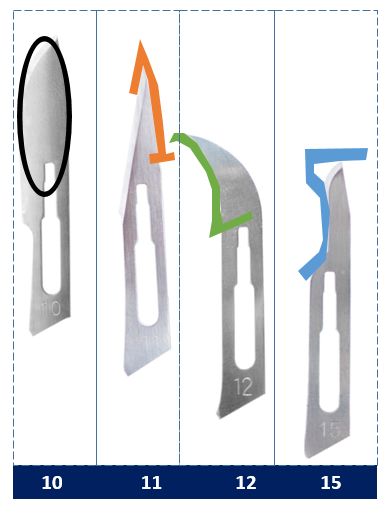
Surgical blade anatomy Sharp edge: Belly Tip Unsharpened ridge opposite to the edge: Spine Slot for scalpel Surgical blade numbers Here is a trick to know the surgical blades by numbers – a simple image mnemonic which will require your imagination. We will only discuss blades commonly used in our…
Author: Epomedicine
Emergency Medicine

Respiratory Emergencies
Contains concise management of following conditions with flowcharts, tables and figures. This handbook can be helpful for medical students posted in Emergency room or Internal medicine and also for medical officers working in Emergency department. Acute Pulmonary Embolism Acute Exacerbation of COPD Community Acquired Pneumonia (CAP) Healthcare Associated Pneumonia (HAP)/Ventilator…
PGMEE, MRCS, USMLE, MBBS, MD/MS
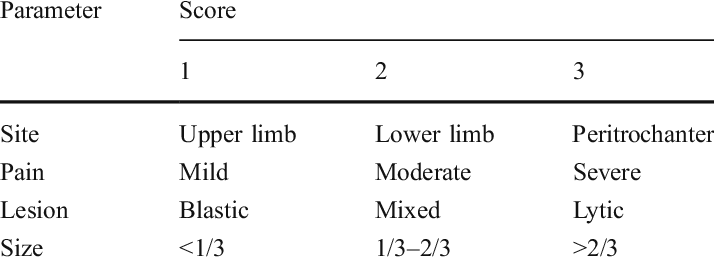
Mirel’s Criteria or Score – Mnemonic
Mirel’s scoring system rates 4 criteria from 1 to 3 with maximum possible score of 12 to assess the risk of pathological fracture due to metastases and also serves as a guide for considering prophylactic fixation. The parameters of the criteria can be remembered using the mnemonic MIREL’S. M –…
Clinical Skills and Approaches

Add “ICE” to history – Patient’s perspective
In medical history taking, “ICE” is an acronym for trilogy of “Ideas”, “Concerns” and “Expectations” which is a doctor’s tool to assess the patient’s perspective of the presenting problem. There has been a shift towards patient centered approach and many patients tend to prefer a shared decision-making model which includes…
Clinical Skills and Approaches
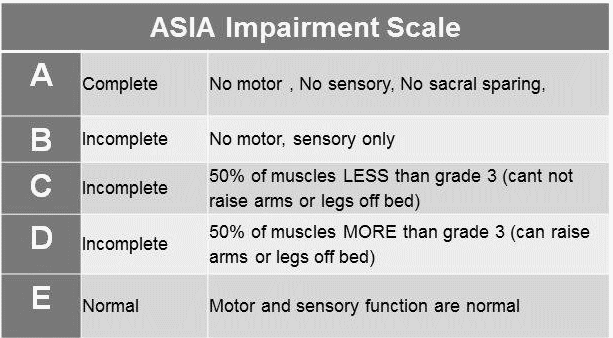
Simplified ASIA Impairment Scale
Check S4-5 S4-5: Perianal area <1 cm lateral to the mucocutaneous junction (taken as one level) 1. Sensory (-) and Motor (-): AIS A (Complete)i.e. N-0-0-0-0-N sign (No sacral sparing) 2. Sensory (+) and Motor (-): AIS Bi.e. Sensory (+) means any sensation present in S4/S5 or anal sensation Motor…
PGMEE, MRCS, USMLE, MBBS, MD/MS
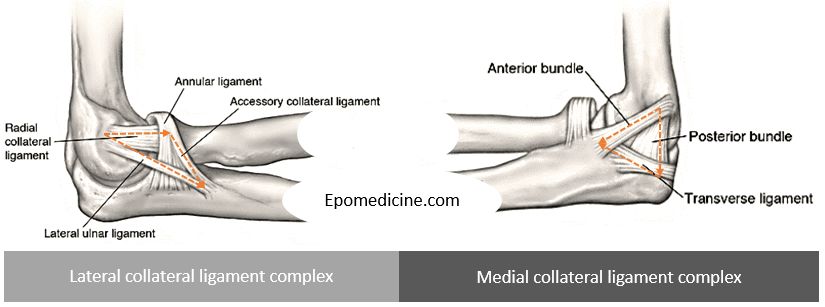
Elbow ligaments : Simplified Anatomy
Lateral collateral ligament complex Restraint to varus and posterolateral rotatory instability. Anatomy is more variable. LCL arises from lateral humeral condyle at a point through which the axis of rotation passes – it maintains a uniform tension throughout the arc of motion. Annular ligament is a “U” shaped ligament that…
Emergency Medicine
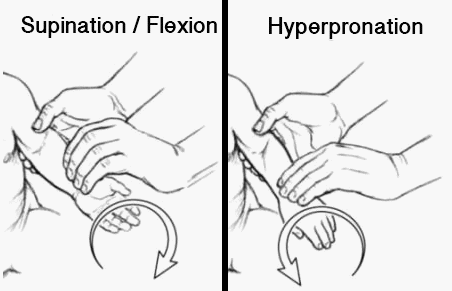
Pulled elbow reduction
Synonyms: Nursemaid’s elbow, Radial head subuluxation, Elbow subluxation Age: Commonly 1-4 years After 5 years of age, the attachment of the annular ligament to the neck of the radius strengthens Enlargement of the proximal radial epiphysis with growth may also improve stability Presentation: History of pull may be absent in…
PGMEE, MRCS, USMLE, MBBS, MD/MS
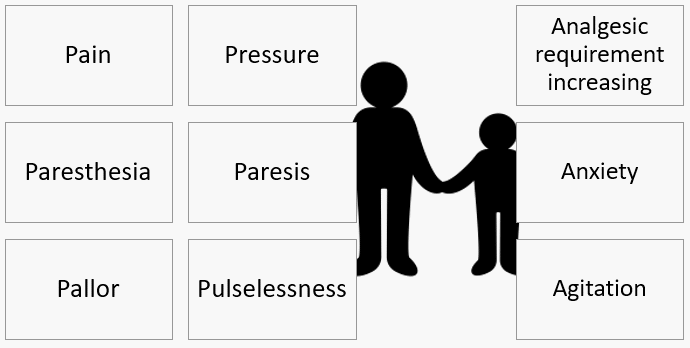
6 Ps and 3 As of Compartment Syndrome
Clinical features A. Adolescents and Adults Mnemonic: 6 Ps (by Hargens and Mubarak) Pain (may be absent in cases of nerve damage): Pain out of proportion to other physical findings (requiring increasing analgesic requirement) *: Earliest symptom Pain on passive stretch of the muscles in concerned compartment * Low sensitivity…