Skip to content
Epomedicine

Mnemonics, Simplified Concepts & Thoughts

Epomedicine

Mnemonics, Simplified Concepts & Thoughts

Anteromedial Ankle Hematoma Block

Epomedicine, May 24, 2023May 24, 2023

Mechanism of action of Hematoma Block

  1. Local anesthetic (LA) is injected directly into the fracture hematoma, spreading the contents to the fracture site and the immediate local environment.
  2. This LA targets the nerve fibers (especially small unmyelinated) in the periosteum and surrounding tissues.

Indications of Anteromedial Portal Injection

  1. Aspiration: Septic arthritis, Gout
  2. Aspiration and hematoma block: Reduction of ankle fractures

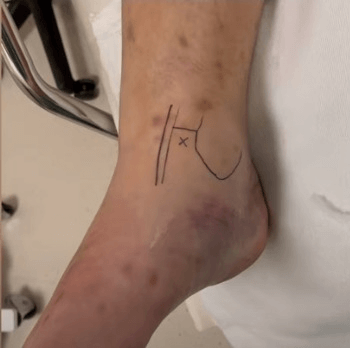
Landmarks

  1. Medial malleolus
  2. Medial axilla of tibial plafond
  3. Tibialis anterior tendon
ankle hematoma block

Technique

  1. Supine position
  2. Aseptic precautions
  3. Mark the landmarks
  4. Insert the needle at tibiotalar joint line between medial malleolus and tibialis anterior tendon
  5. Aspirate hematoma
  6. Inject 1% lidocaine without epinephrine in pre-determined dose
  • Facebook
  • Twitter
Surgical Skills OrthopedicsSurgical skills

Post navigation

Previous post
Next post

Related Posts

Emergency Medicine

Bier Block

Jan 11, 2022Jan 11, 2022

Named after: German Surgeon August Bier (first introduced the block in 1908) Definition: It is a peripheral intravenous local anesthetic block (IVRA; Intravenous Regional Anesthesia) of the upper limb using a pneumatic cuff technique Mechanism of action: Local anesthesia diffuses into the small veins surrounding the nerves and then into…

Read More
Surgical Skills

Techniques of Securing Surgical Drain to Skin (Drain Fixation)

Jun 10, 2021Jun 10, 2021

Choice of Suture: Non-absorbable (braided suture provides slightly superior grip on tubing than monofilament sutures) Technique 1: Create a series of knots around the drain. The long end of the thread (attached to the needle) is passed through the skin directly next to the drain exit site, to create a…

Read More
Surgical Skills Pterygium excsion bare sclera

Pterygium Excision

Jun 2, 2014May 31, 2020

Indications for surgery: 1. Reduced vision secondary to: Threatens visual axis: Pterygium advancing toward or already impinging visual axis Induced astigmatism: Due to flattening of meridian of pterygium by fibrosis in atrophic stage 2. Cosmesis 3. Significant discomfort not relieved by medical therapy 4. Diplopia: Resulting from limited ocular motility…

Read More

Leave a Reply Cancel reply

Your email address will not be published. Required fields are marked *

This site uses Akismet to reduce spam. Learn how your comment data is processed.

Pre-clinical (Basic Sciences)

Anatomy

Biochemistry

Community medicine (PSM)

Embryology

Microbiology

Pathology

Pharmacology

Physiology

Clinical Sciences

Anesthesia

Dermatology

Emergency medicine

Forensic

Internal medicine

Gynecology & Obstetrics

Oncology

Ophthalmology

Orthopedics

Otorhinolaryngology (ENT)

Pediatrics

Psychiatry

Radiology

Surgery

RSS Ask Epomedicine

  • What to study for Clinical examination in Orthopedics?
  • What is the mechanism of AVNRT?

Epomedicine weekly

  • About Epomedicine
  • Contact Us
  • Author Guidelines
  • Submit Article
  • Editorial Board
  • USMLE
  • MRCS
  • Thesis
©2026 Epomedicine | WordPress Theme by SuperbThemes