Skip to content
Epomedicine

Mnemonics, Simplified Concepts & Thoughts

Epomedicine

Mnemonics, Simplified Concepts & Thoughts

Wormian Bones

Epomedicine, Aug 7, 2024Aug 7, 2024

Wormian bones are abnormal ossicles that develop from extra ossification centers within the cranium. They are most frequently located in the lambdoid suture or the coronal suture, and have been seen in the fontanelles, particularly the posterior fontanelle.
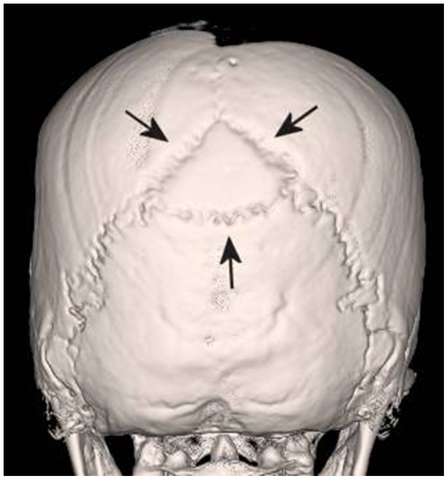
wormian bone
Panzer S, Peschel O, Haas-Gebhard B, Bachmeier BE, Pusch CM, Nerlich AG, CC BY 2.5, via Wikimedia Commons

Commonest Cause

Idiopathic (Anatomic variant)

Other Causes

Mnemonic: PORK CHOPS

1. Pyknodyostosis

2. Osteogenesis imperfecta

3. Rickets

4. Kinky hair syndrome

5. Cleidocranial dysostosis

6. Hypothyroidism/hypophosphatasia

7. Otopalatodigital syndrome

8. Primary acro-osteolysis/Pachydermoperiostosis/Progeria

9. Syndrome of Downs

  • Facebook
  • Twitter
PGMEE, MRCS, USMLE, MBBS, MD/MS Musculoskeletal systemRadiology

Post navigation

Previous post
Next post

Related Posts

PGMEE, MRCS, USMLE, MBBS, MD/MS

Pes Anserinus : Mnemonic

Apr 29, 2021Apr 29, 2021

Pes Anserinus is composed of the combination of tendinous insertions of the sartorius, gracilis and semitendinosus muscles (guy ropes muscles) which attaches to the medial side of tibia to generate a “goose’s foot” like appearance. These three muscles are mainly flexors of the knee but also have a role in…

Read More
PGMEE, MRCS, USMLE, MBBS, MD/MS

Skeletal Traction – Pin Insertion Sites

Feb 21, 2020Feb 21, 2020

Site Point of insertion Direction Indications Olecranon (K-wire) 1.25 inches (3 cm) distal to olecranon tip – deep to subcutaneous border of upper ulna (avoids ulnar joint and open epiphysis) Medial to Lateral – At right angles to longitudinal axis of ulna (Avoids ulnar nerve) Supracondylar or Distal humerus fractures…

Read More
PGMEE, MRCS, USMLE, MBBS, MD/MS

Physiology of Pulmonary Surfactant

Jun 16, 2020Jun 16, 2020

Origin Type II alveolar cells/pneumocytes (small but numerous) and Lamellar bodies (appear in Type II pneumocytes at around the 20th week of gestation) Type I alveolar cells (large and covers 95% alveoli) are squamous cells and involved in gas exchange process. Recycling 90% is reprocessed (through endocytosis); average time for…

Read More

Leave a Reply Cancel reply

Your email address will not be published. Required fields are marked *

This site uses Akismet to reduce spam. Learn how your comment data is processed.

Pre-clinical (Basic Sciences)

Anatomy

Biochemistry

Community medicine (PSM)

Embryology

Microbiology

Pathology

Pharmacology

Physiology

Clinical Sciences

Anesthesia

Dermatology

Emergency medicine

Forensic

Internal medicine

Gynecology & Obstetrics

Oncology

Ophthalmology

Orthopedics

Otorhinolaryngology (ENT)

Pediatrics

Psychiatry

Radiology

Surgery

RSS Ask Epomedicine

  • What to study for Clinical examination in Orthopedics?
  • What is the mechanism of AVNRT?

Epomedicine weekly

  • About Epomedicine
  • Contact Us
  • Author Guidelines
  • Submit Article
  • Editorial Board
  • USMLE
  • MRCS
  • Thesis
©2026 Epomedicine | WordPress Theme by SuperbThemes