Skip to content
Epomedicine

Mnemonics, Simplified Concepts & Thoughts

Epomedicine

Mnemonics, Simplified Concepts & Thoughts

TLICS vs SLICS

Epomedicine, Mar 15, 2025Mar 15, 2025

Thoracolumbar Injury Classification and Severity (TLICS) and Subaxial Cervical Spine Injury Classification System (SLICS) are based on 3 components of injury:

  1. Fracture morphology
  2. Neurological status
  3. Integrity of ligamentous structures

TLICS score and SLICS score provide a scoring system to guide management:

  • <4: Non-operatively
  • 4: Indeterminate (operative or non-operative based on surgeon’s clinical decision making)
  • >4: Operatively
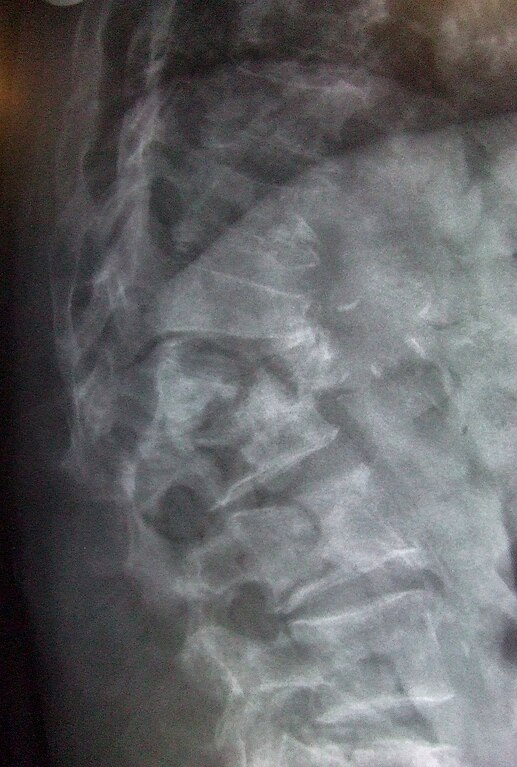
spine fracture
Glitzy queen00, Public domain, via Wikimedia Commons
CharacteristicsTLICSSLIC
1. Injury morphology (Radiographs, CT)
a. No abnormality00
b. Compression11
c. Burst22
d. Translation/rotation34
e. Distraction43
2. PLC/DLC integrity (MRI)
a. Intact00
b. Indeterminate21
c. Disrupted32
3. Neurological status (Clinical examination)
a. Intact00
b. Nerve root injury21
c. Complete cord injury22
d. Incomplete cord injury33
e. Cauda equina injury3–
f. Persistent cord compression in the setting of neuro-deficit–+1

  • Facebook
  • Twitter
PGMEE, MRCS, USMLE, MBBS, MD/MS Musculoskeletal systemOrthopedics

Post navigation

Previous post
Next post

Related Posts

PGMEE, MRCS, USMLE, MBBS, MD/MS tnm staging system

TNM Classification and Cancer Staging Simplified

Aug 14, 2016Aug 14, 2016

You must be asking yourself – “how to remember the TNM staging system?” and looking here and there for mnemonics only to find nowhere. Understanding the oncoanatomy helps to understand the staging system of the cancers. Tumor Status (T) T1 T2 T3 T4 Depth of invasion Solid organs Confined Capsule,…

Read More
PGMEE, MRCS, USMLE, MBBS, MD/MS carpal bones ossification

Carpal Bones Ossification: Mnemonic

Oct 29, 2017

Roughly one center appears per year from the age of 1 year to 7 years, anti-clockwise in right hand and clock-wise in left hand looking from the anterior surface, i.e. from ulnar side to radial side. Pisiform, being a sesamoid bone it gets left behind and only develops years later. capitate: 1-3 months hamate:…

Read More
PGMEE, MRCS, USMLE, MBBS, MD/MS biostatistics

Which statistical test to use?

May 21, 2019Aug 14, 2023

Steps: Types of data Mnemonic: NOIR Qualitative or Categorical data a. Nominal (relating to name): Groups e.g. gender (male/female), color (black/white), blood groups (A/B/AB/O), religions (hindu/muslim/christian) b. Ordinal (relating to order): Rank-ordered data but without meaningful difference; e.g. socio-economic status (low, middle and high), rank (1st, 2nd and 3rd)– without…

Read More

Leave a Reply Cancel reply

Your email address will not be published. Required fields are marked *

This site uses Akismet to reduce spam. Learn how your comment data is processed.

Pre-clinical (Basic Sciences)

Anatomy

Biochemistry

Community medicine (PSM)

Embryology

Microbiology

Pathology

Pharmacology

Physiology

Clinical Sciences

Anesthesia

Dermatology

Emergency medicine

Forensic

Internal medicine

Gynecology & Obstetrics

Oncology

Ophthalmology

Orthopedics

Otorhinolaryngology (ENT)

Pediatrics

Psychiatry

Radiology

Surgery

RSS Ask Epomedicine

  • What to study for Clinical examination in Orthopedics?
  • What is the mechanism of AVNRT?

Epomedicine weekly

  • About Epomedicine
  • Contact Us
  • Author Guidelines
  • Submit Article
  • Editorial Board
  • USMLE
  • MRCS
  • Thesis
©2026 Epomedicine | WordPress Theme by SuperbThemes