Skip to content
Epomedicine

Mnemonics, Simplified Concepts & Thoughts

Epomedicine

Mnemonics, Simplified Concepts & Thoughts

superficial vein forearm

Superficial Veins of Forearm : Mnemonic

Epomedicine, Jun 22, 2018

Origin: Dorsal venous network

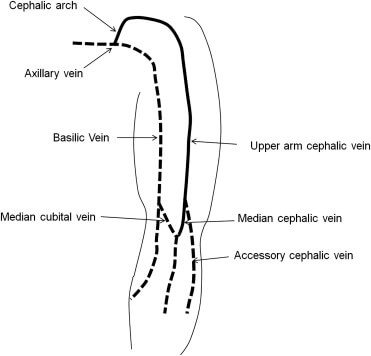
The 1st 2 letters of the word “biceps” that being the muscle with which the vein is in relation, will give a mnemonic aid to retain the relative position of the basilic and cephalic veins. (B.I., Basilic Internal)

  • Basilic vein courses medially
  • Cephalic vein course laterally

superficial vein forearm

At the elbow these 2 veins are connected by median cubital vein.

Cephalic vein courses more cephalad.

In the arm, at the lower border of teres major, basilic vein moves deep, combines with the brachial veins (venae comitantes) to form axillary vein. Cephalic vein travels to shoulder in deltopectoral groove and enters the axilla via clavipectoral triangle to terminate into axillary vein.
median antebrachial vein

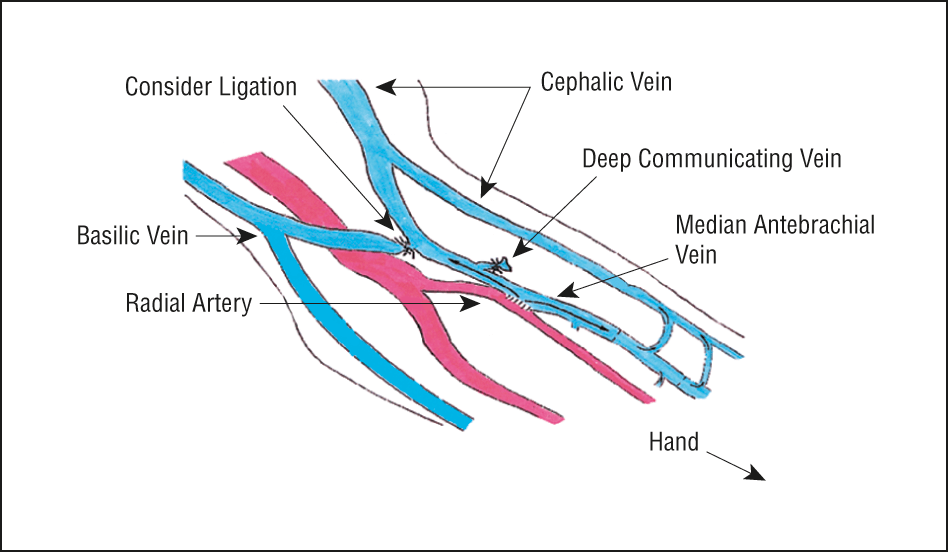
In approximately 20% of people, the median antebrachial vein (median vein of the forearm) divides into a median basilic vein, which joins the basilic vein, and a median cephalic vein which joins the cephalic vein. In these cases, a clear “M” formation is produced by the cubital veins.

It is important to observe and remember that either the median cubital vein or the median basilic vein, which ever pattern is present, crosses superficial to the brachial artery, from which it is separated by the bicipital aponeurosis. These veins are good sites for drawing blood but are not ideal for injecting an irritating drug because of the danger of injecting it into the brachial artery.

Clinical correlation:

1. Cephalic vein has a tortuous course in shoulder and has acute junction with axillary vein. Hence, basilic vein is better for insertion of SVC catheter.

2. The median cubital vein is a common site of venepuncture. It is a superficial vein that is located anteriorly to the cubital fossa region. It is thought to be fixed in place by perforating veins, which arise from the deep venous system and pierce the bicipital aponeurosis. Its ease of access, fixed position and superficial position make the median cubital vein a good site for venepuncture in many individuals.
  • Facebook
  • Twitter
PGMEE, MRCS, USMLE, MBBS, MD/MS AnatomyCardiovascular system

Post navigation

Previous post
Next post

Related Posts

PGMEE, MRCS, USMLE, MBBS, MD/MS

Coronary Arteries : Mnemonic

Jun 12, 2023Jun 12, 2023

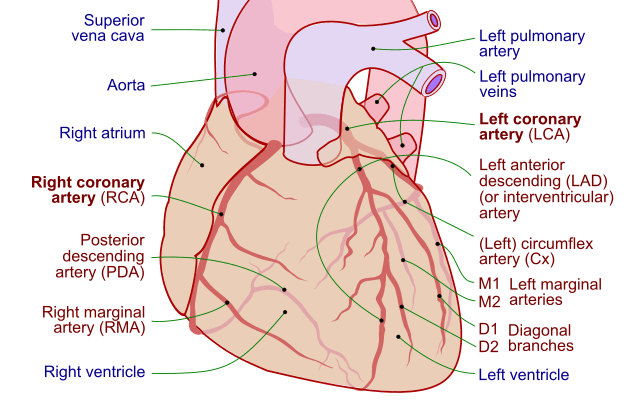
Right coronary artery (RCA) Course: Branches: Mnemonic: TRaP Me IN Large: Small: Left coronary artery (LCA) Course: Branches: Mnemonic: LaTe PAD Large: Left Anterior Descending (LAD) artery – Small: Arterial supply of conducting system of heart 1. RCA: SA node, AV node, AV bundle 2. LCA: Right bundle branch of…

Read More
PGMEE, MRCS, USMLE, MBBS, MD/MS pelvic dimensions

Pelvic Dimensions : Mnemonics

Jul 27, 2018May 15, 2023

Shapes of the female pelvis Mnemonic: GAP (In order of most common to the least common) Only pelvis with AP diameter > Transverse diameter is Anthropoid pelvis. Mnemonic: ANthrOPoid Android and Anthropoid (AN) pelvis are common causes of occipito-posterior (OP) presentation. In platypelloid pelvis (broad and flat): Sub-public angle: It…

Read More
PGMEE, MRCS, USMLE, MBBS, MD/MS

Straight Leg Raising Test (SLRT) – Pathophysiology

Apr 20, 2020Jun 3, 2020

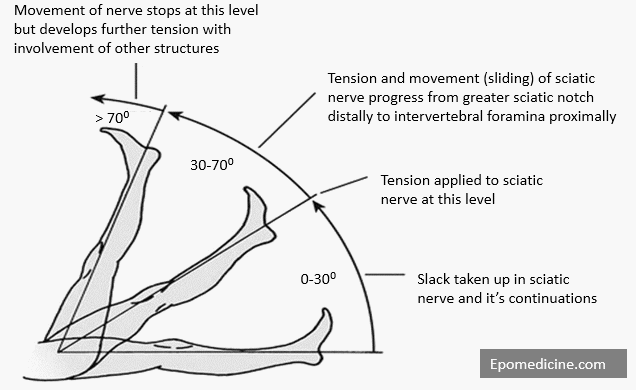
Epineurium of sciatic nerve (like all other nerves) is continuous with the duramater withing the spinal canal which is firmly attached to the foramen magnum above and the filum terminale below. In the elastic neuromeningeal pathway, tension applied at one point will spread through out the length of spine until…

Read More

Leave a Reply Cancel reply

Your email address will not be published. Required fields are marked *

This site uses Akismet to reduce spam. Learn how your comment data is processed.

Pre-clinical (Basic Sciences)

Anatomy

Biochemistry

Community medicine (PSM)

Embryology

Microbiology

Pathology

Pharmacology

Physiology

Clinical Sciences

Anesthesia

Dermatology

Emergency medicine

Forensic

Internal medicine

Gynecology & Obstetrics

Oncology

Ophthalmology

Orthopedics

Otorhinolaryngology (ENT)

Pediatrics

Psychiatry

Radiology

Surgery

RSS Ask Epomedicine

  • What to study for Clinical examination in Orthopedics?
  • What is the mechanism of AVNRT?

Epomedicine weekly

  • About Epomedicine
  • Contact Us
  • Author Guidelines
  • Submit Article
  • Editorial Board
  • USMLE
  • MRCS
  • Thesis
©2026 Epomedicine | WordPress Theme by SuperbThemes