Skip to content
Epomedicine

Mnemonics, Simplified Concepts & Thoughts

Epomedicine

Mnemonics, Simplified Concepts & Thoughts

SIMPLE approach to Nutritional Care in Elderly Patients

Epomedicine, Jul 4, 2025Jul 4, 2025

The essence of this approach is that, rather than requiring a highly specialized nutritionist, a systematic assessment on the part of all the disciplines that are interacting with the patients can achieve what is needed for the nutritional care of the older patient with a fragility fracture, regardless of setting or healthcare provider.

S – Screen for nutritional risk

  • 2 step process
    • First pass screening (can be done by anybody with minimal training) – skipped in high risk settings like acute hip fractures due to low sensitivity
      • Mini Nutrition Assessment – Short Form
      • Malnutrition Screening Tool
      • Malnutrition Universal Screening Tool
    • Detailed assessment (done by a qualified health professional) – for patients screened as “at risk” by Step 1

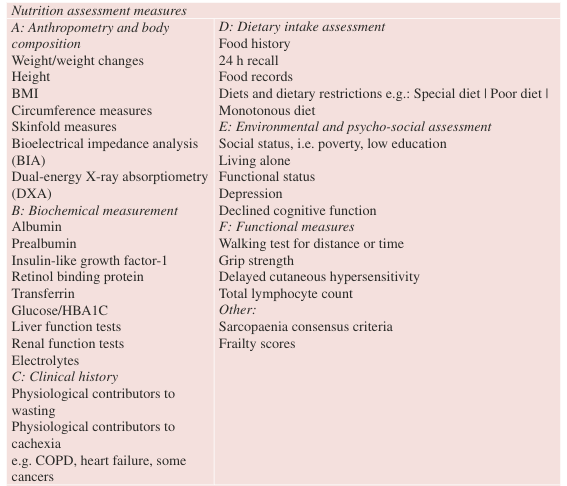
I – Interdisciplinary assessment (ABCDEF mnemonic)

  • Anthropometry and body composition
  • Biochemical markers
  • Clinical assessments and measures
  • Diet and medication history
  • Environmental and psycho-social factors
  • Functional measures
nutritional assessment

M – Make the diagnosis (es)

  • Subjective Global Assessment
  • Mini Nutritional Assessment – Short Form
  • Global Leadership on Malnutrition Criteria
  • ESPEN Criteria
  • ICD-10AM Criteria

P – Plan with the patient

A comprehensive nutrition care plan should consider:

  1. Short- and long-term nutritional goals with the patient
  2. Nutrient and fluid requirements
  3. Patient education and instructions for how to implement the nutrition intervention
  4. Estimated duration of the nutrition therapy
  5. Clinician re-assessment and monitoring parameters
  6. Discharge planning, continuity of care
  7. Contacts and further information sources
planning nutrition

L – impLement interventions

  • Improving access for nourishing foods and fluids, both in health care settings and for those living at home
  • Oral nutrition supplements
  • Nutritional support (enteral/parenteral nutrition)
  • Prescription and Deprescription of medications and therapies
  • Nutrition education, counselling and psychosocial support
  • Coordination of nutrition care interventions

Nutrition care plan is included in handover and discharge documentation, and is transferred to the next setting and health care provider/s.

E – Evaluate ongoing care requirements

  • Patients with or at risk of a nutrition-related diagnosis will routinely require nutrition monitoring or re-assessment strategies. Processes for re-screening should also be considered for those not currently at risk.

Further reading:
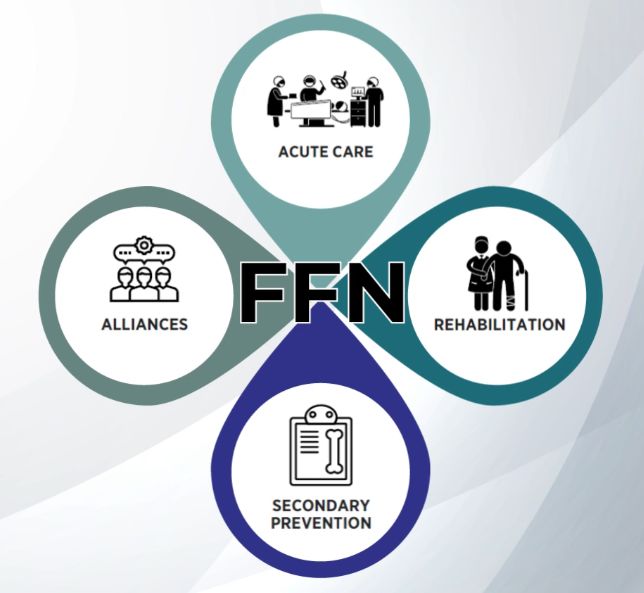
  • English – FF-Education
  • 2021_Book_Orthogeriatrics.pdf
  • Facebook
  • Twitter
PGMEE, MRCS, USMLE, MBBS, MD/MS Nutrition

Post navigation

Previous post
Next post

Related Posts

PGMEE, MRCS, USMLE, MBBS, MD/MS philadelphia chromosome

Oncogenic Translocations to remember

May 23, 2019May 23, 2019

t(8;14): Burkitt’s lymphoma t(14;18): Follicular lymphoma t(11;14): Mantle cell lymphoma t(11,18): Marginal zone lymphoma (MALT lymphoma) t(9;22): CML (Philadelphia chromosome), Bad prognosis ALL t(8;21): AML M2 t(15;17): AML M3 (Promyelocytic AML) t(X;18): Synovial cell sarcoma t(11;22): Ewing’s sarcoma t(12;21): Pre-B ALL (good prognosis ALL) t(4;11) and t(1;19): Bad prognosis ALL

Read More
PGMEE, MRCS, USMLE, MBBS, MD/MS

Thiocolchicoside vs Tizanidine vs Baclofen for Low Back Pain

Apr 30, 2025Apr 30, 2025

Thiocolchicoside is widely used in acute muscular low back pain due to its fast-acting and less sedative profile. Tizanidine is better suited for chronic cases but requires monitoring due to sedative and hepatic effects. Baclofen is more useful for spasticity of CNS origin and is less commonly used for routine…

Read More
PGMEE, MRCS, USMLE, MBBS, MD/MS

Parasympathetic ganglia of Head and Neck

Aug 25, 2023Aug 26, 2023

Important points: Mnemonics: 1. COPS 3977 2. C is 3rd letter hence related to cranial nerve III 3. S for Sphenopalatine and Submandibular and S for Seven and is related to Superior Salivatory nucleus 4. All postganglionic fibers are carried by trigeminal nerve (Cranial nerve V) Ganglion Nucleus Pre-ganglionic Post-ganglionic…

Read More

Leave a Reply Cancel reply

Your email address will not be published. Required fields are marked *

This site uses Akismet to reduce spam. Learn how your comment data is processed.

Pre-clinical (Basic Sciences)

Anatomy

Biochemistry

Community medicine (PSM)

Embryology

Microbiology

Pathology

Pharmacology

Physiology

Clinical Sciences

Anesthesia

Dermatology

Emergency medicine

Forensic

Internal medicine

Gynecology & Obstetrics

Oncology

Ophthalmology

Orthopedics

Otorhinolaryngology (ENT)

Pediatrics

Psychiatry

Radiology

Surgery

RSS Ask Epomedicine

  • What to study for Clinical examination in Orthopedics?
  • What is the mechanism of AVNRT?

Epomedicine weekly

  • About Epomedicine
  • Contact Us
  • Author Guidelines
  • Submit Article
  • Editorial Board
  • USMLE
  • MRCS
  • Thesis
©2026 Epomedicine | WordPress Theme by SuperbThemes