Skip to content
Epomedicine

Mnemonics, Simplified Concepts & Thoughts

Epomedicine

Mnemonics, Simplified Concepts & Thoughts

Sarcomere Structure : Mnemonic

Epomedicine, Feb 2, 2019Sep 10, 2020

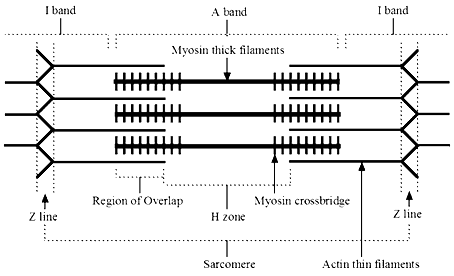
Remember the sequence: Zahir Is A Hungry Man

  1. Z line (Zwischen = between [German])
  2. I band
  3. A band
  4. H zone
  5. M line
Schematic representation of a sarcomere

Z is the final alphabet: Z lines represents the end of sarcomere

M for middle: M line represents the midline of sarcomere

I is a thin letter: I band has only thin filaments

H is a thick letter: H zone has only thick filaments

A is a hybrid of “I” and “H”: A band has both thin and thick filaments (remains constant during contraction)

1 shares
  • Facebook1
  • Twitter
PGMEE, MRCS, USMLE, MBBS, MD/MS Musculoskeletal systemPhysiology

Post navigation

Previous post
Next post

Related Posts

PGMEE, MRCS, USMLE, MBBS, MD/MS

NSAIDs : Mnemonics

Jul 28, 2022Jul 28, 2022

Classification Mnemonic: Prescribed By SOFIA Propionic acid derivatives: Ibuprofen, Ketoprofen, Flurbiprofen, Naproxen Pyrrolo-pyrrole derivates: Ketoroloac Pyrazolone derivatives: Phenylbutazone, Oxybutazone Benzoxazocine derivatives: Nefopam Salicyaltes: Aspirin Selective COX-2 inhibitor: Celecoxib, Etoricoxib, Parecoxib Oxicam derivatives: Piroxicam, Tenoxicam Fenamic acid derivatives: Mefenamic acid (Anthranilic acid derivative) Indol derivatives: Indomethacin, Sulindac Aryl acetic acid derivatives:…

Read More
PGMEE, MRCS, USMLE, MBBS, MD/MS

Surgical Anatomy of Diaphragm

Jan 20, 2024Jan 20, 2024

Diaphragm is a thoracoabdominal organ which is musculotendinous. It is the primary muscle of respiration.  Extension: There are 2 crura of diaphragm: 3 ligaments: Quadratus lumborum muscle is related to lateral arcuate whereas psoas muscle is related to medial arcuate ligament. The foramen of Morgagni shown in the above picture…

Read More
PGMEE, MRCS, USMLE, MBBS, MD/MS

Cervical Vertebrae Anatomy

May 4, 2024May 4, 2024

Osteology Vertebra Body Spinous process Transverse process Typical (C3-6) Relatively small; oval; uncinate process superiorly Bifid Has foramen transversarium, Has anterior and posterior tubercle separated by groove for spinal nerve (large anterior tubercle in C6 called Carotid/Chassaignac tubercle) Atlas (C1) None; Ring (2 lateral masses connected by anterior & posterior…

Read More

Comments (2)

  1. bharanidharan. says:
    Feb 6, 2019 at 9:17 am

    Nice.

    Reply
  2. anonymous says:
    Mar 31, 2021 at 6:16 pm

    thank you omg! this is so helpful

    Reply

Leave a Reply Cancel reply

Your email address will not be published. Required fields are marked *

This site uses Akismet to reduce spam. Learn how your comment data is processed.

Pre-clinical (Basic Sciences)

Anatomy

Biochemistry

Community medicine (PSM)

Embryology

Microbiology

Pathology

Pharmacology

Physiology

Clinical Sciences

Anesthesia

Dermatology

Emergency medicine

Forensic

Internal medicine

Gynecology & Obstetrics

Oncology

Ophthalmology

Orthopedics

Otorhinolaryngology (ENT)

Pediatrics

Psychiatry

Radiology

Surgery

RSS Ask Epomedicine

  • What to study for Clinical examination in Orthopedics?
  • What is the mechanism of AVNRT?

Epomedicine weekly

  • About Epomedicine
  • Contact Us
  • Author Guidelines
  • Submit Article
  • Editorial Board
  • USMLE
  • MRCS
  • Thesis
©2026 Epomedicine | WordPress Theme by SuperbThemes