Skip to content
Epomedicine

Mnemonics, Simplified Concepts & Thoughts

Epomedicine

Mnemonics, Simplified Concepts & Thoughts

Refeeding Syndrome : Mnemonics

Epomedicine, Jul 1, 2024Jul 1, 2024

Risk factors

Mnemonic: ABCD

  1. Alcohol abuse
  2. BMI <18.5 kg/sq.meter
  3. Chemotherapy
  4. Drugs (insulin) and Diuretics
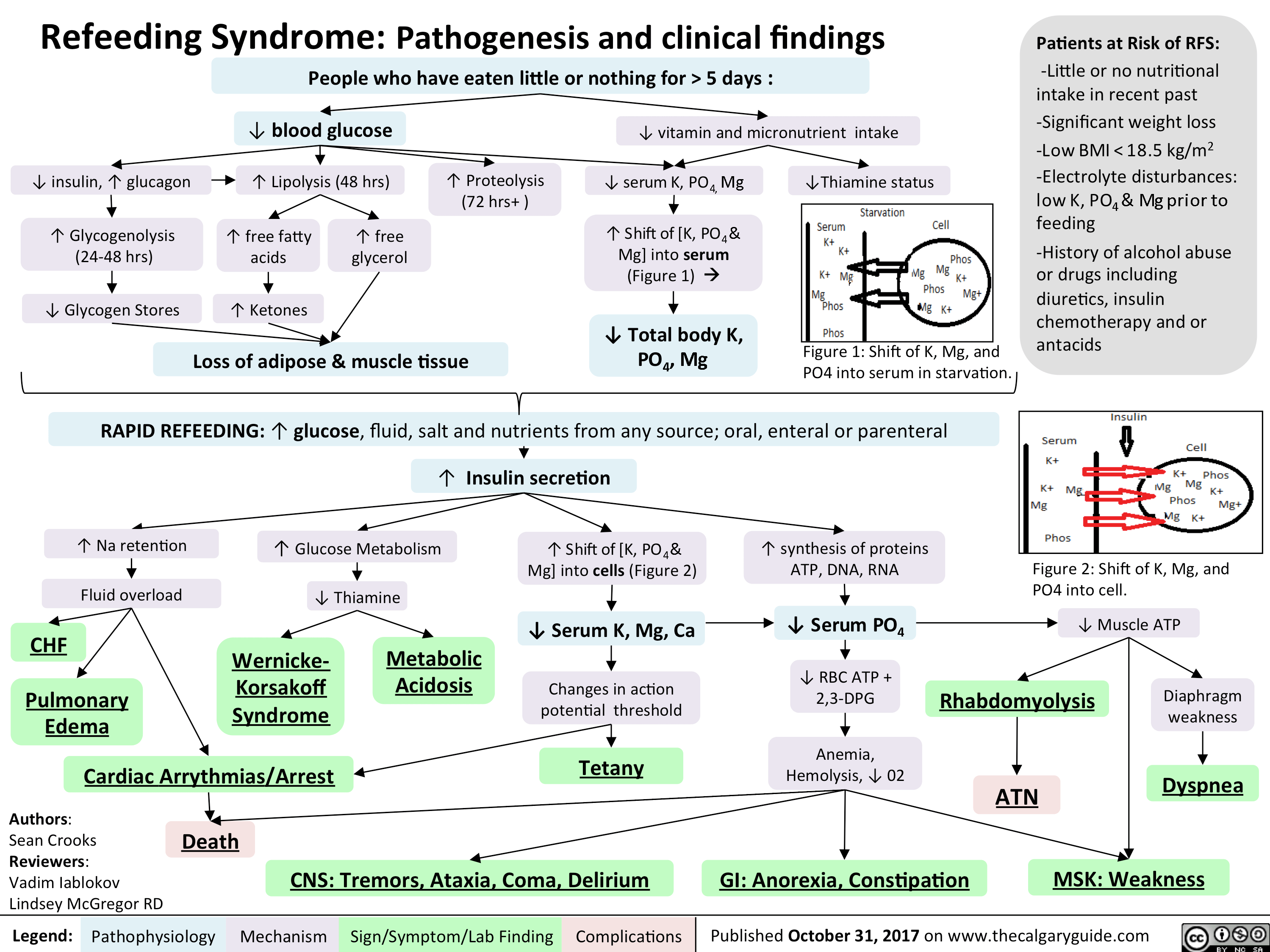
refeeding syndrome
Refeeding Syndrome: Pathogenesis and clinical findings | Calgary Guide (ucalgary.ca) [CC BY NC SA]

Pathophysiology

Mnemonic: PPM

Malnourished (depleted intracellular Phosphate, Potassium, Magnesium) → Refeeding → Increased glucose load → Insulin spikes → Drives PPM into cells → Hypophosphatemia (major abnormality), hypokalemia, hypomagnesemia

Prevention

If patient hasn’t not eaten for >5 days, aim to refeed at <50% energy and protein levels.

Monitor and aggresively supplement PPM.
  • Facebook
  • Twitter
PGMEE, MRCS, USMLE, MBBS, MD/MS BiochemistryInternal medicinePediatrics

Post navigation

Previous post
Next post

Related Posts

PGMEE, MRCS, USMLE, MBBS, MD/MS

Linea Aspera

Oct 26, 2022May 14, 2024

Linea aspera is a ridge of roughened surface on the posterior surface of the shaft of femur which serves as a site for attachment of muscles and intermuscular septum. The various structures attached to linea aspera can be remembered using few mnemonics: Mnemonic 1#: 1, 2, 3 It gives attachment…

Read More
PGMEE, MRCS, USMLE, MBBS, MD/MS

Hypertrophic Scar vs Keloid

May 21, 2024May 21, 2024

Hypertrophic scars and keloids are both raised, firm scars formed from excess fibrinogen production and collagen during healing. Mnemonic: BAD SCARS Mnemonic Basis Hypertrophic scar Keloid B Behavior Natural regression No spontaneous regressio A Acuteness Appears in weeks Appears over months to years D Demographic All races affected More prevalent…

Read More
PGMEE, MRCS, USMLE, MBBS, MD/MS

Temporal Arteritis : Mnemonic

Mar 16, 2022Mar 16, 2022

The 1990 ACR criteria for temporal arteritis can be remembered using the mnemonic: TEMPL3 T: Temporal artery abnormality (Tenderness or reduced pulse) E: Elevated ESR (50 mm/hr or more) M: Multinucleate giant cells (Present on biopsy) P: Pain (New onset localized headache) L: Later life (Age 50 years or over…

Read More

Leave a Reply Cancel reply

Your email address will not be published. Required fields are marked *

This site uses Akismet to reduce spam. Learn how your comment data is processed.

Pre-clinical (Basic Sciences)

Anatomy

Biochemistry

Community medicine (PSM)

Embryology

Microbiology

Pathology

Pharmacology

Physiology

Clinical Sciences

Anesthesia

Dermatology

Emergency medicine

Forensic

Internal medicine

Gynecology & Obstetrics

Oncology

Ophthalmology

Orthopedics

Otorhinolaryngology (ENT)

Pediatrics

Psychiatry

Radiology

Surgery

RSS Ask Epomedicine

  • What to study for Clinical examination in Orthopedics?
  • What is the mechanism of AVNRT?

Epomedicine weekly

  • About Epomedicine
  • Contact Us
  • Author Guidelines
  • Submit Article
  • Editorial Board
  • USMLE
  • MRCS
  • Thesis
©2026 Epomedicine | WordPress Theme by SuperbThemes