Skip to content
Epomedicine

Mnemonics, Simplified Concepts & Thoughts

Epomedicine

Mnemonics, Simplified Concepts & Thoughts

Paget’s Disease of bone : Mnemonic

Dr. Sulabh Kumar Shrestha, MS Orthopedics, Jul 20, 2022Jul 20, 2022

Synonyms:

  1. Osteitis deformans
  2. Collage of matrix madness
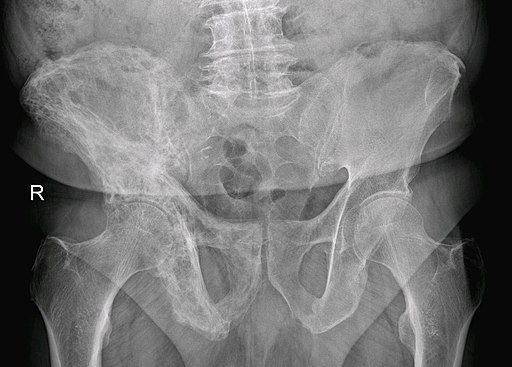
Paget's disease bone
Jmarchn, CC BY-SA 4.0, via Wikimedia Commons

Mnemonic: Sixteen “P”s

1. Paramyxovirus infection and inclusions in osteocalsts

2. Pain (most common symptom – localized fractures or nerve compressions)

3. Pelvis (most common site)

4. Polyostotic (more common; 85%)

5. Phases: Active (lytic, mixed, sclerotic) and Inactive

6. Plasma volume expansion due to AV shunting (high output cardiac failure)

7. Premalignant lesion (paget’s sarcoma in <1%)

8. Phosphorous and calcium normal

9. Phosphatase (ALP) elevated in blood (bone formation markers)

10. Proline (hydroxyproline), Peptides (N and C telopeptides), Pyridinoline (deoxypyridinoline) elevated in urine (bone resorption markers)

11. Pamidronate (bisPhosphonates) – 1st line drugs

12. PTH analogues (teriparatide) contraindicated (risk of secondary osteosarcoma)

13. Picture frame vertebra (pathognomic appearance in X-ray)

14. Pelvic brim sign (thickening of pelvic brim outlined by iliopectineal line)

15. Platybasia and basilar invagination

16. Pyre (candle flame or blade of grass) sign: lucent leading edge in a long bone seen during the lytic phase

dr. sulabh kumar shrestha
Dr. Sulabh Kumar Shrestha, MS Orthopedics

He is the section editor of Orthopedics in Epomedicine. He searches for and share simpler ways to make complicated medical topics simple. He also loves writing poetry, listening and playing music. He is currently pursuing Fellowship in Hip, Pelvi-acetabulum and Arthroplasty at B&B Hospital.
  • Facebook
  • Twitter
PGMEE, MRCS, USMLE, MBBS, MD/MS Musculoskeletal systemOrthopedics

Post navigation

Previous post
Next post

Related Posts

PGMEE, MRCS, USMLE, MBBS, MD/MS

Rheumatoid hand

Oct 2, 2022Oct 2, 2022

Ulnar drift or deviation of fingers Normal anatomical factors contributing to ulnar drift of fingers at MCP joint: Normal mechanical advantage of ulnar intrinsic muscles Asymmetry and ulnar slope of metacarpal heads of index and middle fingers Greater ulnar deviation permitted by radial collateral ligament when MCP joint is flexed…

Read More
PGMEE, MRCS, USMLE, MBBS, MD/MS

Foot muscles – Layers and Compartments

Sep 3, 2020Sep 3, 2020

Deep to the plantar fascia, muscles of plantar foot exist in 4 different layers. Extensor digitorum brevis makes dorsal layer of foot and remaining 18 muscles and 4 tendons make the 4 layers of plantar aspect or sole of foot. In general: Layer 1 and 3: 3 muscles each that…

Read More
PGMEE, MRCS, USMLE, MBBS, MD/MS tourniquet

Bruner’s Ten Rules of Pneumatic Tourniquet Use

Oct 17, 2019Oct 18, 2019

APPLICATION: Apply only to a healthy limb or with caution to an unhealthy limb SIZE OF TOURNIQUET: Arm, 10 cm; leg, 15 cm or wider in large legs SITE OF APPLICATION: Upper arm; mid/upper thigh ideally PADDING: At least two layers of orthopaedic felt SKIN PREPARATION: Occlude to prevent soaking…

Read More

Comment

  1. Pramitha says:
    Jul 23, 2022 at 5:11 pm

    Brilliant! covered almost all important points

    Reply

Leave a Reply Cancel reply

Your email address will not be published. Required fields are marked *

This site uses Akismet to reduce spam. Learn how your comment data is processed.

Pre-clinical (Basic Sciences)

Anatomy

Biochemistry

Community medicine (PSM)

Embryology

Microbiology

Pathology

Pharmacology

Physiology

Clinical Sciences

Anesthesia

Dermatology

Emergency medicine

Forensic

Internal medicine

Gynecology & Obstetrics

Oncology

Ophthalmology

Orthopedics

Otorhinolaryngology (ENT)

Pediatrics

Psychiatry

Radiology

Surgery

RSS Ask Epomedicine

  • What to study for Clinical examination in Orthopedics?
  • What is the mechanism of AVNRT?

Epomedicine weekly

  • About Epomedicine
  • Contact Us
  • Author Guidelines
  • Submit Article
  • Editorial Board
  • USMLE
  • MRCS
  • Thesis
©2026 Epomedicine | WordPress Theme by SuperbThemes