Skip to content
Epomedicine

Mnemonics, Simplified Concepts & Thoughts

Epomedicine

Mnemonics, Simplified Concepts & Thoughts

mathes and nahai

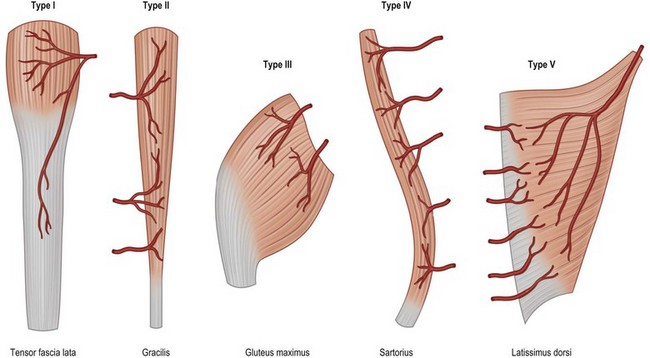
Mathes and Nahai Classification of Muscle Flap based on Vascular Anatomy

Epomedicine, Oct 16, 2017
Type Dominant pedicle Minor pedicle Example
I 1 – Tensor Fascia Lata (TFL)
II 1 1 Gracilis
III 2 – Gluteus maximus
IV – Multiple Sartorius
V 1 Multiple Lattisimus dorsi

mathes and nahai

Mnemonic: Ten Graceful Glutes Sat on Latrines

  • Type I: TFL
  • Type II: Gracilis
  • Type III: Gluteus maximus
  • Type IV: Sartorius
  • Type V: Lattisimus dorsi
18 shares
  • Facebook18
  • Twitter
PGMEE, MRCS, USMLE, MBBS, MD/MS AnatomyGeneral SurgeryMusculoskeletal system

Post navigation

Previous post
Next post

Related Posts

PGMEE, MRCS, USMLE, MBBS, MD/MS

Classifications of Sequelae of Septic Arthritis of Hip in Children

Nov 20, 2025

Several radiological classifications have been developed to describe the long-term changes in the hip following septic arthritis and to help guide management. Hunka classification Choi classification Forlin and Milani classification Grade 1: Hips with the head or the femoral neck within the acetabulum Grade 2: Hips are dislocated Johari classification…

Read More
PGMEE, MRCS, USMLE, MBBS, MD/MS

Proton Pump Inhibitors (PPI) Pharmacology : Mnemonics

Apr 28, 2021Apr 28, 2021

Relative Potency in Omeprazole Equivalent (OE) Mnemonic: PLOwER Pantoprazole (4.5 mg OE) Lansoprazole (13.5 mg OE) Omeprazole (20 mg OE) Esomeprazole (32 mg OE) Rabeprazole (36 mg OE) Side effects of PPI Mnemonic: KFC Kidney (Acute interstitial nephritis) Fractures (Hypochlorhydria leading to decreased serum calcium) C. difficile infection Besides, it…

Read More
PGMEE, MRCS, USMLE, MBBS, MD/MS biostatistics

Which statistical test to use?

May 21, 2019Aug 14, 2023

Steps: Types of data Mnemonic: NOIR Qualitative or Categorical data a. Nominal (relating to name): Groups e.g. gender (male/female), color (black/white), blood groups (A/B/AB/O), religions (hindu/muslim/christian) b. Ordinal (relating to order): Rank-ordered data but without meaningful difference; e.g. socio-economic status (low, middle and high), rank (1st, 2nd and 3rd)– without…

Read More

Leave a Reply Cancel reply

Your email address will not be published. Required fields are marked *

This site uses Akismet to reduce spam. Learn how your comment data is processed.

Pre-clinical (Basic Sciences)

Anatomy

Biochemistry

Community medicine (PSM)

Embryology

Microbiology

Pathology

Pharmacology

Physiology

Clinical Sciences

Anesthesia

Dermatology

Emergency medicine

Forensic

Internal medicine

Gynecology & Obstetrics

Oncology

Ophthalmology

Orthopedics

Otorhinolaryngology (ENT)

Pediatrics

Psychiatry

Radiology

Surgery

RSS Ask Epomedicine

  • What to study for Clinical examination in Orthopedics?
  • What is the mechanism of AVNRT?

Epomedicine weekly

  • About Epomedicine
  • Contact Us
  • Author Guidelines
  • Submit Article
  • Editorial Board
  • USMLE
  • MRCS
  • Thesis
©2026 Epomedicine | WordPress Theme by SuperbThemes