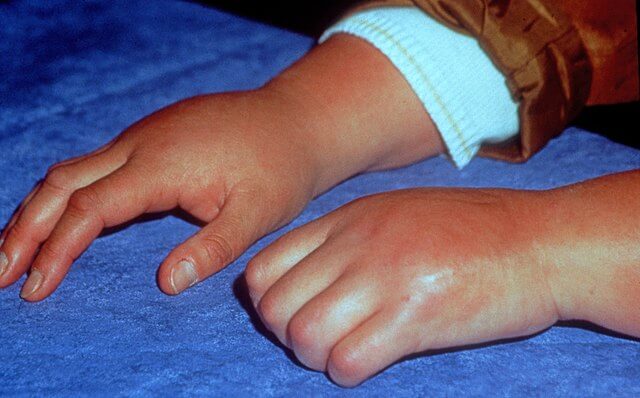
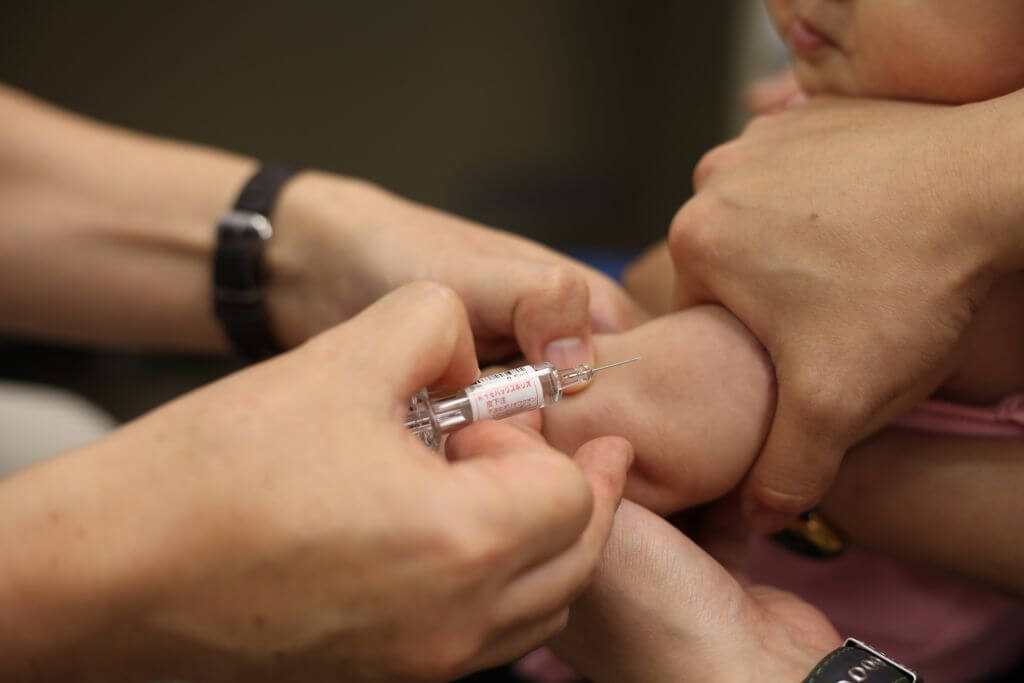
Swelling and pain at injection site after vaccination is a frequently observed problem by parents and is often of concern to them. These type of reactions are generally observed after intramuscular vaccine and vaccine containing aluminium component. DPT as pentavalent is a frequent vaccine after which infants develop swelling.
Types of Swelling after Immunization
Most of the time, mild swelling and pain that resolve within 2-3 days are not worrisome if the baby is happy and playful. Most of them resolve with cold compression and analgesics.
Abscess: It is a fluctuant or draining fluid-filled lesion at the injection site usually seen with in 7 days of vaccination. It may or may not be accompanied by fever. Sterile abscesses are typically not accompanied by fever. An abscess at the injection site is a rare local reaction. Contamination of multidose vials can result in infection and abscess formations. If the swelling becomes painful, tender and soft, see a Pediatrician. Manage abscesses with analgesics (e.g., acetaminophen, and ice to injection site). Incision and drainage of infected abscess may be required.
a. Sterile abscess: Persists for more than 1 month, is more than 2.5 centimeters in diameter and/or drainage is evident; AND Material from the mass is known to be non-purulent; AND Absence of signs of localized inflammation (erythema, pain to light touch, warmth to touch) OR Failure to improve on antimicrobial therapy.
b. Infected abscess: Physician-diagnosed; AND Material from the abscess is known to be purulent (positive gram stain or culture); OR There are one or more signs of localized inflammation (erythema, pain to light touch, warmth to touch); AND Evidence of improvement related to antimicrobial therapy.
Nodule: A nodule is a firm, small mass of tissue at the injection site with discrete or well demarcated borders in the absence of abscess formation, erythema and warmth. Nodules are mainly associated with aluminum-adsorbed vaccines, particularly if the dose is deposited subcutaneously rather then intramuscularly. Sterile nodules can take up to 1 year or more to resolve, they are rarely permanent.
Cellulitis: It is characterized by erythema, tenderness and induration by the more intense erythema, tenderness to light touch and substantial local warmth.
For cases, it is advisable to consult your doctor before resolving to any diagnosis.
Further readings at
http://www2.gnb.ca/content/dam/gnb/Departments/h-s/pdf/en/CDC/HealthProfessionals/AEFIsinterpretationandclinicaldefinitionsguide.pdf
http://www.beverlyhillspediatrics.com/medical-topics/vaccine-reactions/

MD Pediatrics and Fellowship Neonatology, he chooses to stay anonymous. He often writes his views online as well as share few important topics for medical students, doctors and specially parents. He does research in pediatrics.