Skip to content
Epomedicine

Mnemonics, Simplified Concepts & Thoughts

Epomedicine

Mnemonics, Simplified Concepts & Thoughts

Ivory Vertebra : Mnemonic

Epomedicine, May 16, 2025May 16, 2025

Ivory vertebra refers to diffuse and homogenous increase in opacity of a vertebral body that retains size and contour with no change is size and opacity of adjacent intervertebral discs.
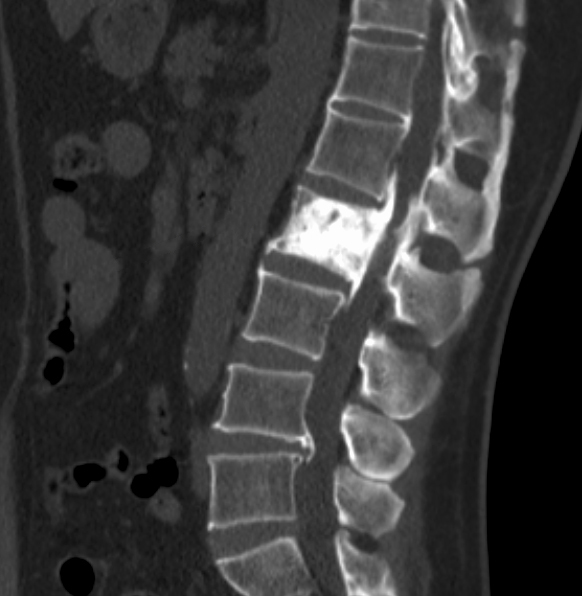
ivory vertebra

Mnemonic: PH FILMS

1. Paget disease of bone

2. Hemangioma

    3. Fluorosis

    4. Infection (tubercular spondylitis)

    5. Lymphoma (usually Hodgkin’s lymphoma)

    6. Metastases (osteoblastic) and Myelosclerosis

    • Causes of osteoblastic metastases can be remembered using the mnemonic: Five Bees Lick Pollen
      • Brain (medulloblastoma)
      • Bronchus
      • Breast
      • Bowel (esp. carcinoid)
      • Bladder
      • Lymphoma
      • Prostate

    7. Sickle cell disease

    Further reading: Ivory vertebra: imaging findings in different diagnoses – PMC
    • Facebook
    • Twitter
    PGMEE, MRCS, USMLE, MBBS, MD/MS Musculoskeletal systemOrthopedicsRadiology

    Post navigation

    Previous post
    Next post

    Related Posts

    PGMEE, MRCS, USMLE, MBBS, MD/MS

    Hypertrophic Scar vs Keloid

    May 21, 2024May 21, 2024

    Hypertrophic scars and keloids are both raised, firm scars formed from excess fibrinogen production and collagen during healing. Mnemonic: BAD SCARS Mnemonic Basis Hypertrophic scar Keloid B Behavior Natural regression No spontaneous regressio A Acuteness Appears in weeks Appears over months to years D Demographic All races affected More prevalent…

    Read More

    Applied Anatomy of Tympanic Membrane

    Nov 16, 2013May 11, 2024

    Synonyms: Ear drum, Myringa Definition: Tympanic membrane is a thin membrane that separates the external ear from the middle ear. Anatomy: Site: Located at medial end of the external auditory canal, separating it from the middle ear cavity Position: At an angle of 55° to the horizontal to the floor…

    Read More
    PGMEE, MRCS, USMLE, MBBS, MD/MS

    Oxygen Hemoglobin Dissociation Curve : Mnemonic

    Aug 28, 2021Aug 28, 2021

    The oxygen hemoglobin dissociation curve is sigmoidal in shape because the binding of 1st oxygen molecule is difficult, however once bound, they facilitate the binding of subsequent molecules until the saturation is reached (plateau). This is called the allosteric interaction (cooperativity). Lets come to the mnemonics now. The curve can…

    Read More

    Leave a Reply Cancel reply

    Your email address will not be published. Required fields are marked *

    This site uses Akismet to reduce spam. Learn how your comment data is processed.

    Pre-clinical (Basic Sciences)

    Anatomy

    Biochemistry

    Community medicine (PSM)

    Embryology

    Microbiology

    Pathology

    Pharmacology

    Physiology

    Clinical Sciences

    Anesthesia

    Dermatology

    Emergency medicine

    Forensic

    Internal medicine

    Gynecology & Obstetrics

    Oncology

    Ophthalmology

    Orthopedics

    Otorhinolaryngology (ENT)

    Pediatrics

    Psychiatry

    Radiology

    Surgery

    RSS Ask Epomedicine

    • What to study for Clinical examination in Orthopedics?
    • What is the mechanism of AVNRT?

    Epomedicine weekly

    • About Epomedicine
    • Contact Us
    • Author Guidelines
    • Submit Article
    • Editorial Board
    • USMLE
    • MRCS
    • Thesis
    ©2026 Epomedicine | WordPress Theme by SuperbThemes