Skip to content
Epomedicine

Mnemonics, Simplified Concepts & Thoughts

Epomedicine

Mnemonics, Simplified Concepts & Thoughts

hla

HLA association mnemonics

Epomedicine, Jun 1, 2019Jan 20, 2022

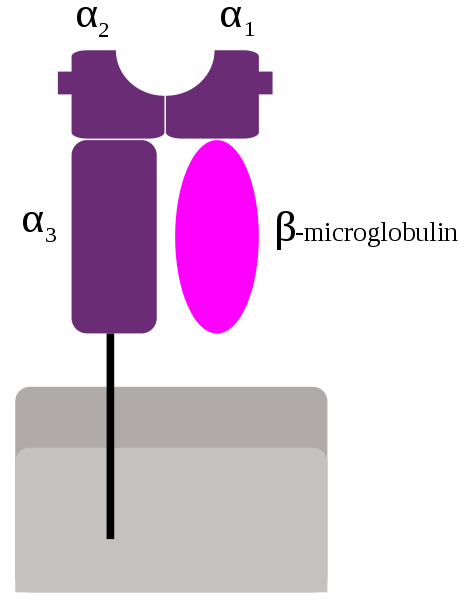
The genes that encode HLA (Human Leukocyte Antigen) are on chromosome 6.

MHC classTypeLocationFunction
IHLA-A, -B, -CAll cellsRecognized by CD8+ lymphocytes
IIHLA-DP, -DQ, -DRAntigen presenting cellsRecognized by CD4+ lymphocytes
IIIComplement componentsPlasmaChemotaxis, opsonization, lysis of bacteria and cells
User atropos235 on en.wikipedia [CC BY-SA 3.0], via Wikimedia Commons

The rhymes

Two and Three – SLE
Three and Four – Sugar

HLA DR-2 and DR-3: SLE

  • HLA DR-2: Japanese SLE
  • HLA DR-3: Caucasian SLE

HLA DR-3 and DR-4: Diabetes Mellitus type 1 (IDDM)

Bet (B8) – Death (Grave)

HLA B-8:

  • GRAVE’s disease
  • Myasthenia GRAVIS

HLA DR-3 and B-8 share same disease associations many times:

  1. Graves’ disease
  2. Myasthenia gravis
  3. Sarcoidosis
  4. Sjogren’s syndrome
  5. Celiac disease and Dermatitis herpetiformis
  6. SLE
  7. Dermatomyositis
  8. Addison’s disease

C 6 – Sis Vulgaris

  • HLA CW-6: Psoriasis vulgaris

Seven – Pee in Heaven

HLA-DR7: Steroid responsive nephrotic syndrome

Other Mnemonics

Two pairs of alphabets – GH and MN

HLA DR-2:

  • Goodpasture’s syndrome
  • Hayfever
  • Multiple Sclerosis (MS)
  • Narcolepsy

Take 1st letter from DM and 1st letter from RA, and in total they make 4 letters

DM + RA = DR4

HLA-DR4:

  • Diabetes Mellitus
  • Rheumatoid Arthritis (93% have HLA type)

If you see B with 5 it’s Behcet’s disease

  • HLA B-5
  • HLA B-51
  • HLA B-52

HLA DR-5:

  • Pernicious anemia
  • Juvenile idiopathic arthritis
  • Hashimoto’s thyroiditis
  • Alopecia areata

HLA A-3: Ferric ion is trivalent

  • Hemochromatosis

HLA B-27: PAIR

Seronegative arthritis:

  1. Psoriatic arthritis
  2. Ankylosing spondylitis (relative risk 70-90%)
  3. Inflammatory bowel disease
  4. Reiter’s syndrome (relative risk 40%)

4 shares
  • Facebook
  • Twitter
PGMEE, MRCS, USMLE, MBBS, MD/MS ImmunologyPathology

Post navigation

Previous post
Next post

Related Posts

PGMEE, MRCS, USMLE, MBBS, MD/MS Child Pugh Score

Child Pugh Score: Mnemonic and Explanation

Aug 15, 2016

The Child-Pugh-Turcot (CTP) score consists of 5 clinical features and is used to assess the prognosis of chronic liver disease and cirrhosis. Mnemonic: A BEAP Albumin (gm/dl) Bilirubin (mg/dl) Encephalopathy (Based on West Haven Criteria) Ascites Prothrombin Time (PT) Prolonged or INR Child-Pugh-Turcot Score Factor 1 point 2 points 3…

Read More
Clinical Skills and Approaches radial nerve course branches

Radial Nerve Anatomy : Course and Innervation

May 20, 2014Jun 1, 2024

Synonyms: Nervus radialis, Musculospiral nerve Recommended reading: Course 1. Origin: Terminal branch of Posterior cord of brachial plexus (Root value: C5, C6, C7, C8, T1) 2. Posterior axilla: It lies behind the axillary and upper part of the brachial arteries, passing anterior to tendons of subscapularis, lattisimus dorsi and teres…

Read More
PGMEE, MRCS, USMLE, MBBS, MD/MS

THA dislocation : WHAT mnemonic

May 28, 2021Oct 30, 2022

The incidence of THA dislocation is: Primary THA: 1-2% Revision THA: 5-7% Mnemonic: WHAT caused the total hip arthroplasty dislocation? Wear Types: Volumetric wear: proportional to r2 (diameter of head) Linear wear (related to penetration of femoral head into liner): smaller heads have higher linear wear Adhesive wear (most important):…

Read More

Leave a Reply Cancel reply

Your email address will not be published. Required fields are marked *

This site uses Akismet to reduce spam. Learn how your comment data is processed.

Epomedicine. HLA association mnemonics [Internet]. Epomedicine; 2019 Jun 1 [cited 2026 Jan 1]. Available from: https://epomedicine.com/medical-students/hla-association-mnemonics/.

Pre-clinical (Basic Sciences)

Anatomy

Biochemistry

Community medicine (PSM)

Embryology

Microbiology

Pathology

Pharmacology

Physiology

Clinical Sciences

Anesthesia

Dermatology

Emergency medicine

Forensic

Internal medicine

Gynecology & Obstetrics

Oncology

Ophthalmology

Orthopedics

Otorhinolaryngology (ENT)

Pediatrics

Psychiatry

Radiology

Surgery

RSS Ask Epomedicine

  • What to study for Clinical examination in Orthopedics?
  • What is the mechanism of AVNRT?

Epomedicine weekly

  • About Epomedicine
  • Contact Us
  • Author Guidelines
  • Submit Article
  • Editorial Board
  • USMLE
  • MRCS
  • Thesis
©2026 Epomedicine . All rights reserved.