Skip to content
Epomedicine

Mnemonics, Simplified Concepts & Thoughts

Epomedicine

Mnemonics, Simplified Concepts & Thoughts

Glucagonoma : 6 D’s

Epomedicine, Jun 18, 2023Jun 18, 2023

Glucagonoma is an alpha-cell tumor of pancreas.

Mnemonic: 6 D’s

1. Diabetes

  • Mechanism: Glycogenolysis, Gluconeogenesis and inhibition of glycolysis

2. Dermatitis (Necrolytic migratory erythema)

  • Mechanism: Hypoalbuminemia (albumin is required for carrying zinc and essential fatty acids) and Amino acid deficiency (tryptophan which is required for function of niacin) deficiency

3. Declining weight

  • Mechanism: Catabolic action of glucagon

4. Diarrhea

  • Mechanism: Gastrin secretion

5. Deep vein thrombosis

  • Mechanism: Increased production of factor X like molecule by pancreatic alpha cells

6. Dilated cardiomyopathy

  • Mechanism: Binding and activation of the glucagon receptor (GCGR) in heart
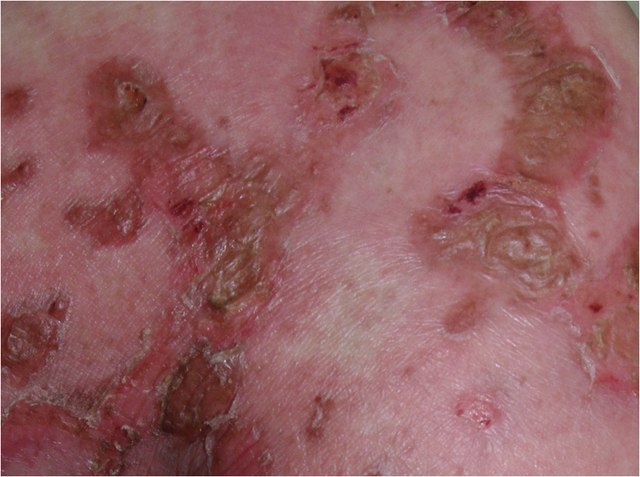
necrolytic migratory erythema
Sheng-li Wu, Ji-gang Bai, Jun Xu, Qing-yong Ma & Zheng Wu, CC BY 4.0 https://creativecommons.org/licenses/by/4.0, via Wikimedia Commons
  • Facebook
  • Twitter
PGMEE, MRCS, USMLE, MBBS, MD/MS Endocrine systemInternal medicineOncologyPathology

Post navigation

Previous post
Next post

Related Posts

PGMEE, MRCS, USMLE, MBBS, MD/MS germ layer derivatives

Germ Layer Derivatives – Mnemonics

Jul 11, 2016Aug 13, 2023

Principle of Germ Layer Segmentation Ectoderm gives further rise to neuroectoderm and neural crest cells. Endoderm remains intact. Mesoderm gives further rise to paraxial mesoderm (somitomeres and 35 pairs of somites), intermediate mesoderm, and lateral mesoderm: General Rule for Germ Layer Derivatives Ectodermal derivatives: 1. Everything that makes you attractive: Skin, hair,…

Read More
PGMEE, MRCS, USMLE, MBBS, MD/MS

Protected: MRCS Part A, September 2023 – Recalls

Jan 20, 2024May 17, 2024

There is no excerpt because this is a protected post.

Read More
PGMEE, MRCS, USMLE, MBBS, MD/MS

Salmonella Osteomyelitis in Sickle Cell Disease

May 21, 2014Nov 4, 2016

Sickle Cell Disease (SCD) is a hereditary disorder of hemoglobin synthesis caused by a mutation in the globin gene that changes the sixth amino acid from glutamic acid to valine resulting in abnormal sickling (rigid, inflexibled and sickle-shaped) of Red Blood Cells (RBCs) under low oxygen conditions. Sickle cell anemia…

Read More

Leave a Reply Cancel reply

Your email address will not be published. Required fields are marked *

This site uses Akismet to reduce spam. Learn how your comment data is processed.

Pre-clinical (Basic Sciences)

Anatomy

Biochemistry

Community medicine (PSM)

Embryology

Microbiology

Pathology

Pharmacology

Physiology

Clinical Sciences

Anesthesia

Dermatology

Emergency medicine

Forensic

Internal medicine

Gynecology & Obstetrics

Oncology

Ophthalmology

Orthopedics

Otorhinolaryngology (ENT)

Pediatrics

Psychiatry

Radiology

Surgery

RSS Ask Epomedicine

  • What to study for Clinical examination in Orthopedics?
  • What is the mechanism of AVNRT?

Epomedicine weekly

  • About Epomedicine
  • Contact Us
  • Author Guidelines
  • Submit Article
  • Editorial Board
  • USMLE
  • MRCS
  • Thesis
©2026 Epomedicine | WordPress Theme by SuperbThemes