Skip to content
Epomedicine

Mnemonics, Simplified Concepts & Thoughts

Epomedicine

Mnemonics, Simplified Concepts & Thoughts

Glucagonoma : 6 D’s

Epomedicine, Jun 18, 2023Jun 18, 2023

Glucagonoma is an alpha-cell tumor of pancreas.

Mnemonic: 6 D’s

1. Diabetes

  • Mechanism: Glycogenolysis, Gluconeogenesis and inhibition of glycolysis

2. Dermatitis (Necrolytic migratory erythema)

  • Mechanism: Hypoalbuminemia (albumin is required for carrying zinc and essential fatty acids) and Amino acid deficiency (tryptophan which is required for function of niacin) deficiency

3. Declining weight

  • Mechanism: Catabolic action of glucagon

4. Diarrhea

  • Mechanism: Gastrin secretion

5. Deep vein thrombosis

  • Mechanism: Increased production of factor X like molecule by pancreatic alpha cells

6. Dilated cardiomyopathy

  • Mechanism: Binding and activation of the glucagon receptor (GCGR) in heart
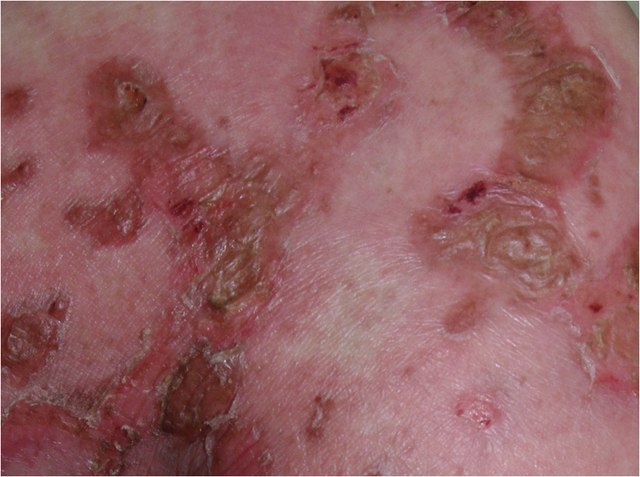
necrolytic migratory erythema
Sheng-li Wu, Ji-gang Bai, Jun Xu, Qing-yong Ma & Zheng Wu, CC BY 4.0 https://creativecommons.org/licenses/by/4.0, via Wikimedia Commons
  • Facebook
  • Twitter
PGMEE, MRCS, USMLE, MBBS, MD/MS Endocrine systemInternal medicineOncologyPathology

Post navigation

Previous post
Next post

Related Posts

PGMEE, MRCS, USMLE, MBBS, MD/MS

How Hyperchloremia Impairs Renal Function

Jul 7, 2025Jul 7, 2025

While historically, NS and RL have been thought to be generally equivalent for resuscitation, there has been an associated risk of hyperchloremic metabolic acidosis with large-volume resuscitation using normal saline. Hyperchoremic metabolic acidosis has been found to increase the risk of acute kidney injury. This is thought to be due to the…

Read More
PGMEE, MRCS, USMLE, MBBS, MD/MS retinal layers

Retinal Layers Simplified

Jul 28, 2016Oct 29, 2017

The ten layers of retina – this microscopic anatomy is frequently asked in examinations and also important from the physiological viewpoint. There are plenty of mnemonics around the web, but we will proceed in a different approach to remember the 10 retinal layers easily. A. Retina is 3 neuron system…

Read More
PGMEE, MRCS, USMLE, MBBS, MD/MS Anterior and posterior epistaxis

Epistaxis Basics : Anatomy, Physiology and Pathology

May 3, 2014

Synonyms: Nosebleed, Nasal bleeding Definition: Epistaxis is defined as bleeding from the nasal cavity. It ranges from minor blood-tinged mucus when blowing the nose to life-threatening hemorrhage. Epidemiology: Age: Bimodal distribution – common in <10 years and >60 years Season: Winter Anatomy and Physiology: Why is the nose prone to…

Read More

Leave a Reply Cancel reply

Your email address will not be published. Required fields are marked *

This site uses Akismet to reduce spam. Learn how your comment data is processed.

Pre-clinical (Basic Sciences)

Anatomy

Biochemistry

Community medicine (PSM)

Embryology

Microbiology

Pathology

Pharmacology

Physiology

Clinical Sciences

Anesthesia

Dermatology

Emergency medicine

Forensic

Internal medicine

Gynecology & Obstetrics

Oncology

Ophthalmology

Orthopedics

Otorhinolaryngology (ENT)

Pediatrics

Psychiatry

Radiology

Surgery

RSS Ask Epomedicine

  • What to study for Clinical examination in Orthopedics?
  • What is the mechanism of AVNRT?

Epomedicine weekly

  • About Epomedicine
  • Contact Us
  • Author Guidelines
  • Submit Article
  • Editorial Board
  • USMLE
  • MRCS
  • Thesis
©2026 Epomedicine | WordPress Theme by SuperbThemes