Skip to content
Epomedicine

Mnemonics, Simplified Concepts & Thoughts

Epomedicine

Mnemonics, Simplified Concepts & Thoughts

Clavipectoral Fascia

Epomedicine, Sep 7, 2023Sep 7, 2023

Extent:

  • Between subclavius and pectoralis minor
  • Deep to pectoralis major (which is enclosed anteriorly by pectoral fascia)

Function:

  • Acts to suspend the floor of axilla
  • Encloses 2 muscles – subclavius and pectoralis minor
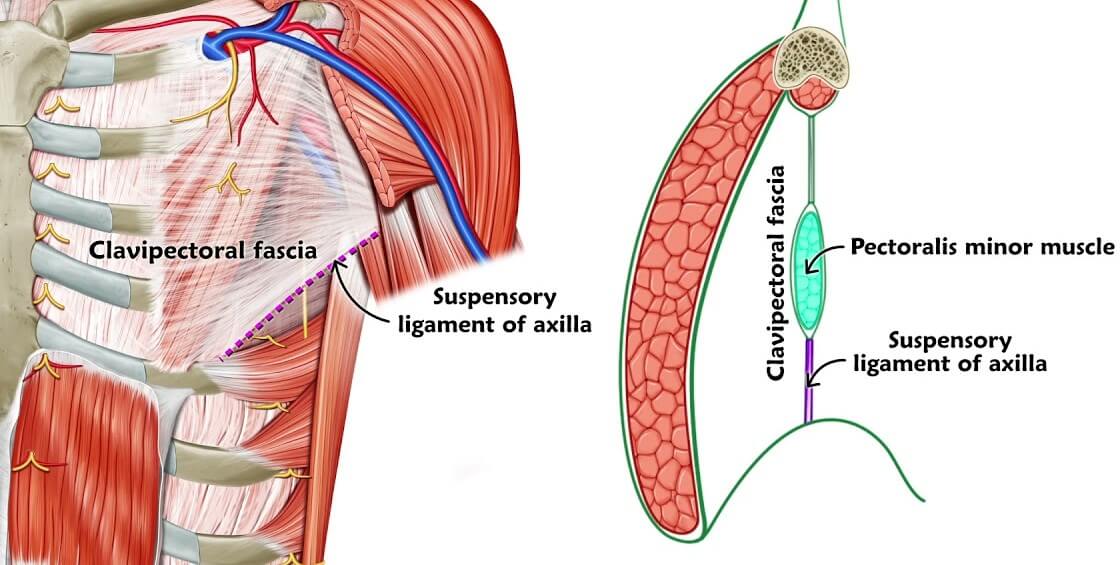
clavipectoral fascia

Structures piercing the clavipectoral fascia:

Mnemonic: CLAP

  1. Cephalic vein
  2. Lymphatics (passing between infraclavicular and apical nodes of axilla)
  3. Acromiothoracic artery
  4. Pectoral nerve (lateral)

Surgical relevance:

  • Joint immobility after shoulder arthroplasty – one of the factor is replacement of true clavipectoral fascia by fibrotic tissue.
  • Facebook
  • Twitter
PGMEE, MRCS, USMLE, MBBS, MD/MS AnatomyMusculoskeletal system

Post navigation

Previous post
Next post

Related Posts

PGMEE, MRCS, USMLE, MBBS, MD/MS hyperkalemia ecg

Hyperkalemia Management – Mnemonic Approach

Oct 24, 2020Oct 24, 2020

Mnemonic: C BIG K D Calcium gluconate (Cardiac stabilizer) It is generally accepted that calcium should be given when there are ECG changes associated with hyperkalaemia. Calcium gluconate 10% 10-30 ml IV (1-3 gm) over 5-10 minutes (Can be repeated after 5 minutes if ECG changes persistent) 0.5 ml/kg in…

Read More
PGMEE, MRCS, USMLE, MBBS, MD/MS

Trichomycosis Axillaris : Malodorous yellowish armpit hair

Apr 24, 2021Apr 24, 2021

Synonym: Trichobateriosis axillaris, Bacterial trichonodosis, Trychomycosis palmellina Definition: Asymptomatic superficial bacterial infection (mycosis is a misnomer because it is not a fungal infection) primarily of the axillary hairs (can also occur in pubic, perianal and scalp hair) caused by Corynebacterium sp. Causative organism: Corynebacterium species particularly Corynebacterium flavescens Mode of infection: Bacteria…

Read More
PGMEE, MRCS, USMLE, MBBS, MD/MS pedigree analysis

Solving Pedigree Analysis in 3 steps

Jan 23, 2017

First: Look for Mitochondrial Inheritance Female transmits disease to all the offsprings (both males and females). Male doesn’t transmit the disease and only the females transmit the disease. If Mitochondrial inheritance is absent, go to second step. Second: Look if the gene is Dominant, Recessive Dominant: Atleast one member in…

Read More

Leave a Reply Cancel reply

Your email address will not be published. Required fields are marked *

This site uses Akismet to reduce spam. Learn how your comment data is processed.

Pre-clinical (Basic Sciences)

Anatomy

Biochemistry

Community medicine (PSM)

Embryology

Microbiology

Pathology

Pharmacology

Physiology

Clinical Sciences

Anesthesia

Dermatology

Emergency medicine

Forensic

Internal medicine

Gynecology & Obstetrics

Oncology

Ophthalmology

Orthopedics

Otorhinolaryngology (ENT)

Pediatrics

Psychiatry

Radiology

Surgery

RSS Ask Epomedicine

  • What to study for Clinical examination in Orthopedics?
  • What is the mechanism of AVNRT?

Epomedicine weekly

  • About Epomedicine
  • Contact Us
  • Author Guidelines
  • Submit Article
  • Editorial Board
  • USMLE
  • MRCS
  • Thesis
©2026 Epomedicine | WordPress Theme by SuperbThemes