Skip to content
Epomedicine

Mnemonics, Simplified Concepts & Thoughts

Epomedicine

Mnemonics, Simplified Concepts & Thoughts

Charcot Arthropathy : Mnemonics

Epomedicine, Feb 23, 2023Feb 23, 2023

Causes of Charcot Arthropathy

Mnemonic: 10 S

  1. Sugar (diabetes) – most commonly foot and ankle
  2. Syringomyelia – 80% in shoulder and elbow
  3. Spinal cord injury – hip, knee, ankle and spine
  4. Spastic paraplegia
  5. Syphilis – most commonly knee
  6. Spirits (alcohol)
  7. Subacute combined degeneration
  8. Steroids
  9. Scaly disease (leprosy) – 2nd most common cause in upper extremity
  10. Scleroderma

3 Theories of Charcot Arthropathy

a. Neuro-traumatic: Damage to sensory feedback → Repeated microtrauma → Release of proinflammatory cytokines → Bone resorption

b. Neuro-vascular: Change in vascularity caused by dysregulation of vasomotor and trophic nerve supply

c. Neuro-inflammatory: Abnormal persistence of inflammatory response and inability to terminate inflammatory response
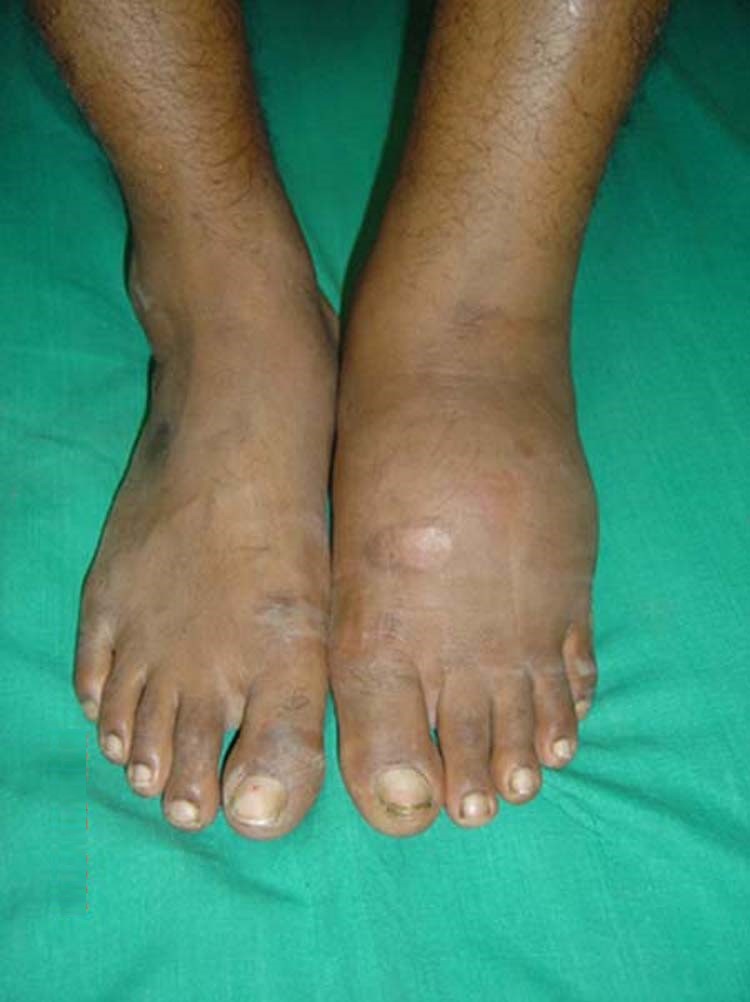
Charcot foot
J. Terrence Jose Jerome, CC BY 3.0, via Wikimedia Commons

Classic features

Mnemonic: 6 Ds

  1. Destruction
  2. Disorganization
  3. Debris (loose bodies)
  4. Density (sclerosis)
  5. Distension (joint effusion)
  6. Dislocation (dislocation/subluxation)

Eichenholz classification

Mnemonic: CDCR or IFCC

  1. Clinical (Inflammatory) – Demineralization
  2. Dissolution (Fragmentation) – Debris and Dislocation
  3. Coalescence – Debris absorption and Density increase
  4. Resolution (Consolidation) – Deformity

Treatment

Mnemonic: ABCDEF

  1. Activity limitation
  2. Bracing or Casting (Total contact cast)
  3. Discontinue when skin temperature normal
  4. Evade total joint arthroplasty
  5. Fusion after inflammatory phase in feet
StageTreatment
0 – ClinicalLimited weight bearing (possibly TCC or PPWB), close observation
1 – FragmentationTCC, limited weight bearing
2 – CoalescenceTCC followed by CROW
3 – ReparativePossible surgical intervention for removal of bony prominences associated with ulceration
TCC = Total Contact Cast; PPWB = Prefabricated Pneumatic Walking Brace; CROW = Charcot Restraint Orthotic Walker
  • Facebook
  • Twitter
PGMEE, MRCS, USMLE, MBBS, MD/MS Endocrine systemInternal medicineMusculoskeletal systemOrthopedics

Post navigation

Previous post
Next post

Related Posts

PGMEE, MRCS, USMLE, MBBS, MD/MS cellulitis

Cellulitis Assessment : Mnemonic

Sep 27, 2020Sep 27, 2020

Cellulitis is a rapidly spreading acute inflammation with infection of skin and subcutaneous tissue that spreads widely through tissue spaces. It is commonly caused by either Streptococcus pyogenes or Staphylococcus aureus. Erysipelas is a superficial form of cellulitis involving lymphatics; it has a peau d’orange appearance and a sharp border. It characteristically appears on the face. Since,…

Read More
PGMEE, MRCS, USMLE, MBBS, MD/MS venous draianage of face schematic

Venous drainage of Face : “W” shaped arrangement

Oct 18, 2017

When we look from lateral side, the veins on each side form a “W” shaped arrangement. Each corner of the “W” is prolonged upward into the scalp, and downward into the neck. Remember the 3 verticla stems of letter “W”: 1st stem (in face): Facial vein 2nd stem (behind mandible,…

Read More
PGMEE, MRCS, USMLE, MBBS, MD/MS urinary buffers

Most Important Urinary Buffer: Phosphate or Ammonia?

Jan 27, 2017

There are multiple choice questions (mcq) which asks: What is the most important urinary buffer? And the choices include both the phosphate and ammonia. Different textbooks on physiology and biochemistry have different opinions. Some say that the most important is Phosphate and the others say Ammonia is more important. So,…

Read More

Leave a Reply Cancel reply

Your email address will not be published. Required fields are marked *

This site uses Akismet to reduce spam. Learn how your comment data is processed.

Epomedicine. Charcot Arthropathy : Mnemonics [Internet]. Epomedicine; 2023 Feb 23 [cited 2025 Dec 20]. Available from: https://epomedicine.com/medical-students/charcot-arthropathy-mnemonics/.

Pre-clinical (Basic Sciences)

Anatomy

Biochemistry

Community medicine (PSM)

Embryology

Microbiology

Pathology

Pharmacology

Physiology

Clinical Sciences

Anesthesia

Dermatology

Emergency medicine

Forensic

Internal medicine

Gynecology & Obstetrics

Oncology

Ophthalmology

Orthopedics

Otorhinolaryngology (ENT)

Pediatrics

Psychiatry

Radiology

Surgery

RSS Ask Epomedicine

  • What to study for Clinical examination in Orthopedics?
  • What is the mechanism of AVNRT?

Epomedicine weekly

  • About Epomedicine
  • Contact Us
  • Author Guidelines
  • Submit Article
  • Editorial Board
  • USMLE
  • MRCS
  • Thesis
©2025 Epomedicine . All rights reserved.