Skip to content
Epomedicine

Mnemonics, Simplified Concepts & Thoughts

Epomedicine

Mnemonics, Simplified Concepts & Thoughts

Atropine Induced Paradoxical Bradycardia

Epomedicine, Jan 5, 2022Jan 5, 2022

Atropine induced paradoxical bradycardia is the sinus bradyarrhythmia following low-dose atropine resulting from the paradoxical slowing in the sinoatrial (SA) node discharge rate.
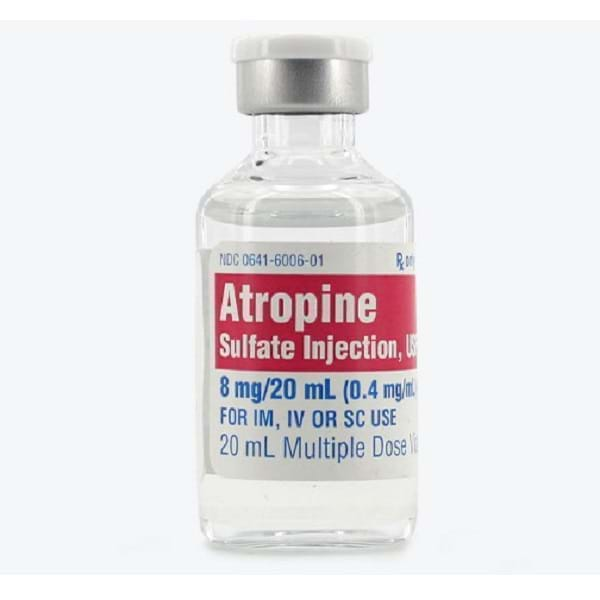
atropine injection

Mechanism of Atropine Induced Paradoxical Bradycardia

Central vagotonic effect (blocking M1 acetylcholine receptors in parasympathetic ganglion controlling SA node) of atropine which, at higher doses, is masked by muscarinic (M2 acetylcholine receptors) blockade at the sinoatrial node. The initial low dose of atropine may not be sufficient to ensure adequate peak concentration in peripheral tissues.

Cause of Atropine Induced Paradoxical Bradycardia

Dosage <0.5 mg

Scopolamine in low doses is also noted to result in paradoxical bradycardia. Scopolamine 0.1-0.2 mg usually causes more slowing than atropine.

Recommendations

In the latest 2020 AHA update the recommended single dose administration of atropine was increased from 0.5 mg to 1 mg based on data suggesting that at low doses, atropine may cause paradoxical bradycardia.

An article recommended the use of doses of 0.01 and 0.02 mg/kg rather than 0.1 mg as a minimum dose recommendation of atropine to prevent overdose in infants <5 kg body weight.

Concern

Atropine-induced bradycardia may be especially difficult to manage in patients who are morbidly obese or post cardiac transplantation.

Reference

  1. Clinical Anesthesia By Paul G Barash, Bruce F Cullen, Robert K Stoelting, Michael Cahalan, M Christine Stock
  2. https://associationofanaesthetists-publications.onlinelibrary.wiley.com/share/JU4DMYQUKHI5YMM9NBU8?target=10.1111/j.1365-2044.2005.04346.x
  3. Prakash S, Mullick P. Is a minimum dose of atropine in children justified? J Anaesthesiol Clin Pharmacol. 2017 Apr-Jun;33(2):282-283. doi: 10.4103/0970-9185.209735. PMID: 28781474; PMCID: PMC5520621.
1 shares
  • Facebook
  • Twitter
PGMEE, MRCS, USMLE, MBBS, MD/MS AnesthesiaInternal medicinePediatricsPharmacology

Post navigation

Previous post
Next post

Related Posts

PGMEE, MRCS, USMLE, MBBS, MD/MS hyperkalemia ecg

Hyperkalemia Management – Mnemonic Approach

Oct 24, 2020Oct 24, 2020

Mnemonic: C BIG K D Calcium gluconate (Cardiac stabilizer) It is generally accepted that calcium should be given when there are ECG changes associated with hyperkalaemia. Calcium gluconate 10% 10-30 ml IV (1-3 gm) over 5-10 minutes (Can be repeated after 5 minutes if ECG changes persistent) 0.5 ml/kg in…

Read More
PGMEE, MRCS, USMLE, MBBS, MD/MS

Adenoma-Carcinoma Sequence in Colorectal Cancer : Mnemonic

Jul 30, 2023Jul 30, 2023

Adenoma-carcinoma sequence is a stepwise development of normal epithelium to carcinoma due to accumulation of mutations over a number of years leading to activation of oncogenes and loss of tumor suppressor genes. One of the pathways follows adenoma–carcinoma sequence, that is, normal → adenoma → carcinoma. The other is pertaining…

Read More
PGMEE, MRCS, USMLE, MBBS, MD/MS psychiatry symbol

Definition of terms in Psychiatry

Nov 15, 2020Nov 15, 2020

1. Speech: Ideas, thoughts, feelings expressed through language 2. Emotion: Complex phenomenon involving reactions in 3 different components: Feeling experienced by subject (joy, sadness, anger) Behavioral (expressive component) Autonomic and endocrine component 3. Affect: Objective outward expression of the immediate cross-section emotion at a given time 4. Mood: Sustained pervasive…

Read More

Leave a Reply Cancel reply

Your email address will not be published. Required fields are marked *

This site uses Akismet to reduce spam. Learn how your comment data is processed.

Pre-clinical (Basic Sciences)

Anatomy

Biochemistry

Community medicine (PSM)

Embryology

Microbiology

Pathology

Pharmacology

Physiology

Clinical Sciences

Anesthesia

Dermatology

Emergency medicine

Forensic

Internal medicine

Gynecology & Obstetrics

Oncology

Ophthalmology

Orthopedics

Otorhinolaryngology (ENT)

Pediatrics

Psychiatry

Radiology

Surgery

RSS Ask Epomedicine

  • What to study for Clinical examination in Orthopedics?
  • What is the mechanism of AVNRT?

Epomedicine weekly

  • About Epomedicine
  • Contact Us
  • Author Guidelines
  • Submit Article
  • Editorial Board
  • USMLE
  • MRCS
  • Thesis
©2026 Epomedicine | WordPress Theme by SuperbThemes