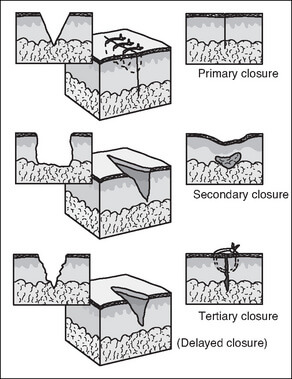
Before moving to the concept of wound closure, it is necessary to understand the pathophysiology behind different types of healing. We have covered stages of wound healing in general previously. There are three types of wound healing: Primary intention Secondary intention Tertiary intention Healing by primary intention occurs when the…
Category: PGMEE, MRCS, USMLE, MBBS, MD/MS
Medical knowledge in bullet points with understandable language, simplified images and graspable mnemonics.
PGMEE, MRCS, USMLE, MBBS, MD/MS

How to present a Journal Club?
A journal club is a group of individuals who meet regularly to critically evaluate recent articles in scientific literature. It is a part of postgraduate medical education aimed at improving the skills of critically appraising the journal articles. Critical appraisal is the process of systematically examining research evidence to assess…
PGMEE, MRCS, USMLE, MBBS, MD/MS
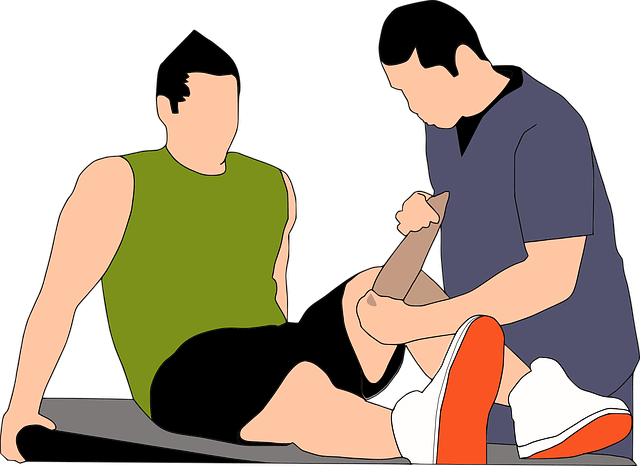
How To Become A Chiropractor?
There are so many ways to enter the healthcare field when you are the type of person that loves to help people. Since back pain and spinal injuries affect so many people, then becoming a chiropractor is an ideal way to help people regain their quality of life. Back pain…
PGMEE, MRCS, USMLE, MBBS, MD/MS
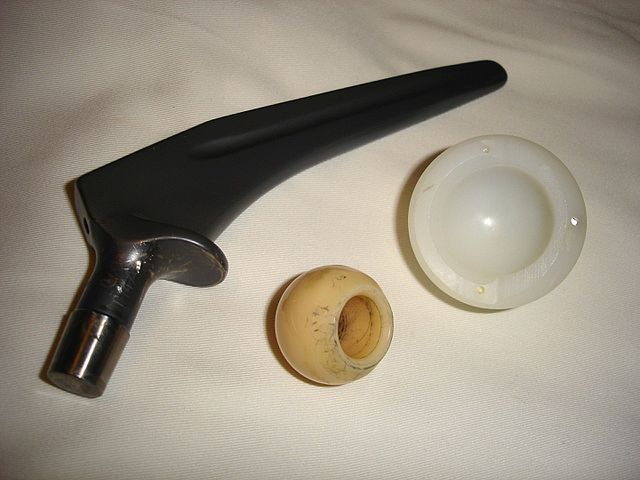
Periprosthetic Joint Infection (PJI) Criteria and Management
The 2013 ICM criteria for defining Periprosthetic joint infection (PJI) can be remembered using the mnemonic below: Mnemonic: 1 tract or 2 bact. and 3 of ABCDEF 1 sinus tract communication with the joint OR 2 positive periprosthetic cultures with phenotypically identical bacteria AND 3 of the following six minor…
PGMEE, MRCS, USMLE, MBBS, MD/MS
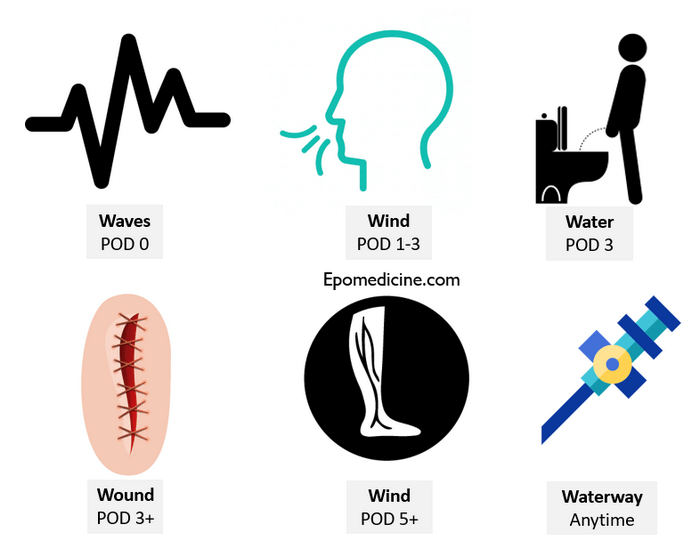
Postoperative fever – Rule of W (Mnemonic)
Postoperative fever is defined as a temperature >100°F (38°C) on 2 consecutive postoperative days, or >102.2°F (39°C) on any 1 postoperative day. The most common cause of fever within the first 48 hours is a pyretic response to surgery, which is self-limiting. Textbooks have long listed the common causes of…
PGMEE, MRCS, USMLE, MBBS, MD/MS
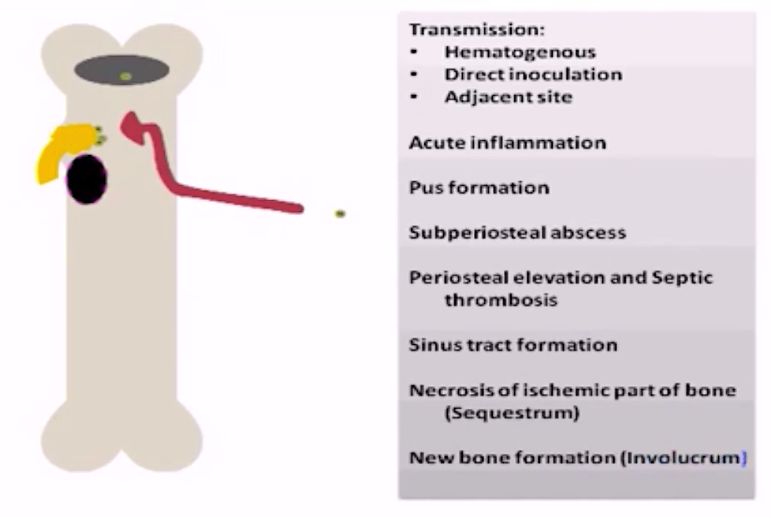
Pathophysiology of Osteomyelitis
Osteomyelitis is defined as an inflammation of the bone (single portion or numerous regions, like marrow, cortex, periosteum and surrounding soft tissue) caused by an infecting organism (usually monomicrobial but polymicrobial can occur, especially in diabetic foot). Definitions, Criteria and Classifications of different types of Osteomyelitis have been discussed in…
PGMEE, MRCS, USMLE, MBBS, MD/MS
Wound – It’s types
A wound is typically described as a break in the surface tissue (such as skin or mucous membrane) or any tissue under the surface. It may involve the superficial planes alone or the deep planes and deep tissue of the body alone or both. Superficial Tissue include: Skin, Superficial Fascia,…
PGMEE, MRCS, USMLE, MBBS, MD/MS
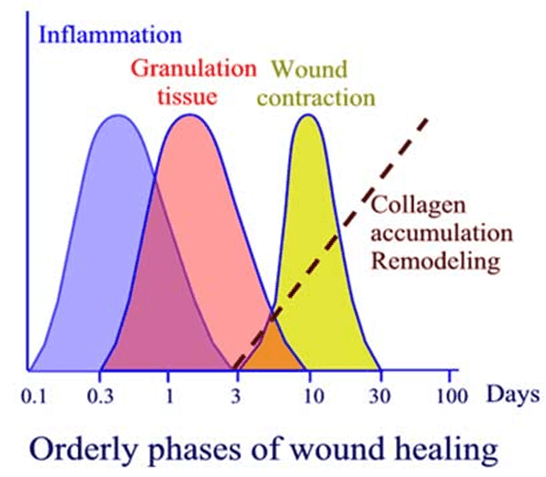
Wound Healing : Stages
1. Haemostasis (immediate): In response to exposed collagen, platelets aggregate at the wound and degranulate, releasing inflammatory mediators. Clotting and complement cascades activated. Thrombus formation and reactive vasospasm achieve haemostasis. 2. Inflammation (0-3 days): Vasodilatation and increased capillary permeability allow inflammatory cells to enter wound, and cause swelling. Neutrophils amplify inflammatory response by release…