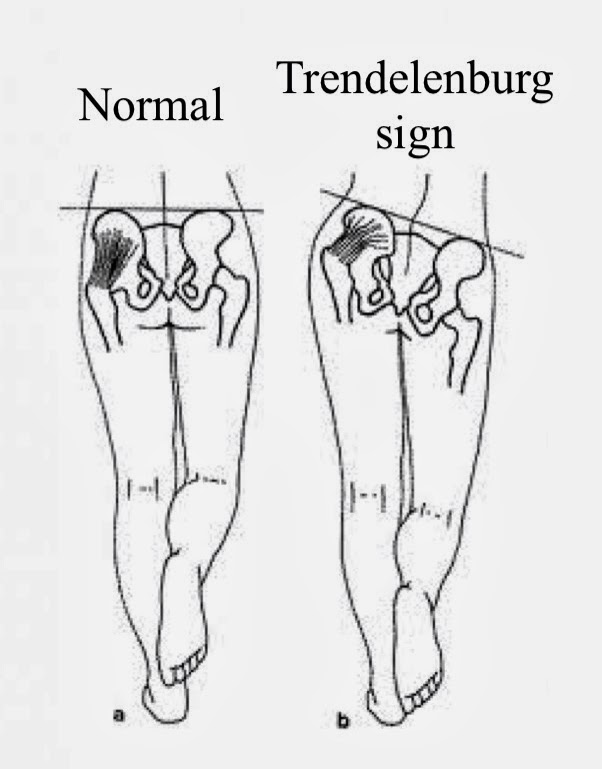
Method: The patient is then asked to stand on one leg and bend the opposite knee to 90° without flexing the hip. This action eliminates the role of hip flexors as they play a role in pelvic stability and may affect the Trendelenburg sign. The test is then repeated by…
Author: Epomedicine
Clinical Skills and Approaches
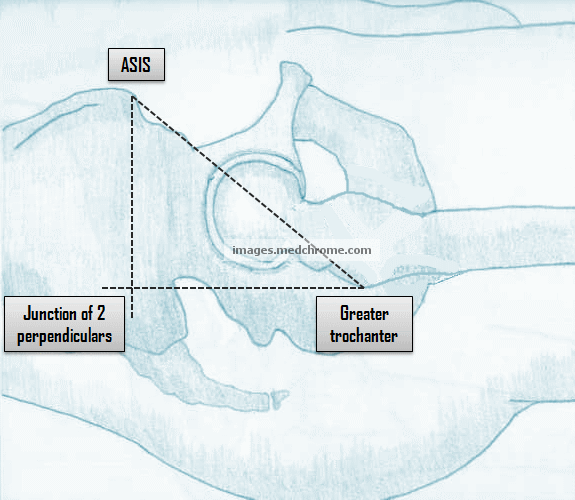
Bryant’s triangle (Examination of Hip)
Synonyms: Iliofemoral triangle Position: The patient lies supine with the pelvis square, and the limbs in identical position. Points of the Bryant’s triangle: The Bryant’s triangle is a right angled formed by: Anterior Superior Iliac Spine (ASIS) Tip of Greater trochanter Junction of perpendiculars from the 2 points above (1st draw…
Surgical Skills
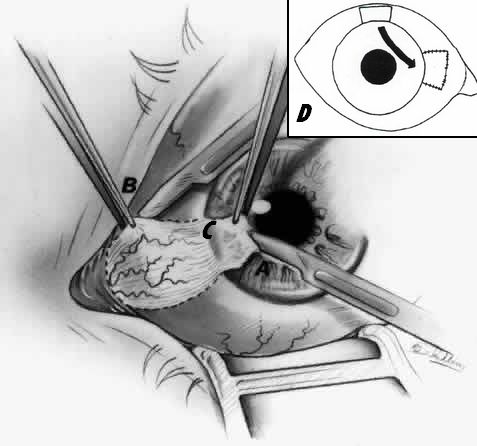
Pterygium Excision
Indications for surgery: 1. Reduced vision secondary to: Threatens visual axis: Pterygium advancing toward or already impinging visual axis Induced astigmatism: Due to flattening of meridian of pterygium by fibrosis in atrophic stage 2. Cosmesis 3. Significant discomfort not relieved by medical therapy 4. Diplopia: Resulting from limited ocular motility…
PGMEE, MRCS, USMLE, MBBS, MD/MS
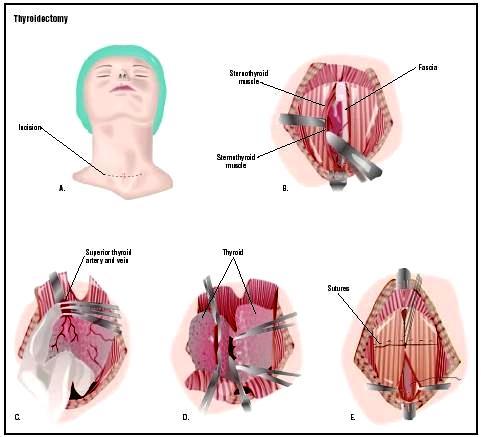
Thyroidectomy Basics
Synonyms: Thyroid resection surgery, Thyroid removal surge Definition: Thyroidectomy is the surgical removal of all or part of the thyroid gland. A “thyroidectomy” should not be confused with a “thyroidotomy” (“thyrotomy”), which is a cutting into the thyroid, to get access for a median laryngotomy, or to perform a biopsy. Indications: Proven neoplasm…
PGMEE, MRCS, USMLE, MBBS, MD/MS

Applied Anatomy of Submandibular Salivary Gland
Synonyms: Submaxillary gland (SMG), Mandibular gland Definition: Submandibular glands are one of the major salivary glands comprised of mixed serous and mucous acini and located below the lower border of the body of mandible. It is the second largest salivary gland and produces approximately 70% of the saliva. Location: Submandibular triangle…
Blog

Medical Memes
Meme (/mi:m/) is an image, video, piece of text, etc., typically humorous in nature, that is copied and spread rapidly by Internet users, often with slight variations. This is our small attempt to bring a sense of humour to the serious and hectic world of medicine. Send your meme creation…
Clinical Skills and Approaches
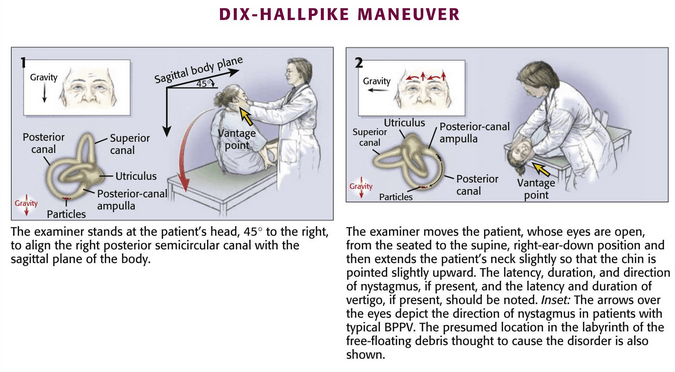
Vestibular examination : Dix-Hallpike Maneuver for BPPV
Benign Paroxysmal Positional Vertigo (BPPV) is the commonest cause of episodic vertigo and is characterized by acute attacks of transient vertigo initiated by certain head positions, lasting seconds to minutes, accompanied by nystagmus that fatigues on repeated testing. Important terminologies linked with pathogenesis of BPPV: Otoconia: Calcium carbonate crystals released…
Clinical Skills and Approaches
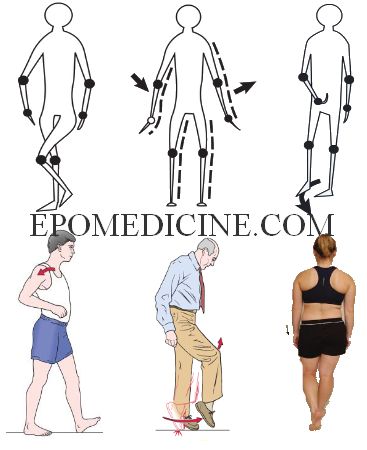
Examination of Gait
Definitions Gait: Gait is the cyclical pattern of musculoskeletal motion that carries the body forwards. It involves a cyclic loss and regaining of balance by a shift of the line of gravity in relation to the center of gravity. Normal gait is smooth, symmetrical and ergonomically economical. Gait cycle: The…