Skip to content
Epomedicine

Mnemonics, Simplified Concepts & Thoughts

Epomedicine

Mnemonics, Simplified Concepts & Thoughts

Temporal Arteritis : Mnemonic

Epomedicine, Mar 16, 2022Mar 16, 2022

The 1990 ACR criteria for temporal arteritis can be remembered using the mnemonic: TEMPL3

T: Temporal artery abnormality (Tenderness or reduced pulse)

E: Elevated ESR (50 mm/hr or more)

M: Multinucleate giant cells (Present on biopsy)

P: Pain (New onset localized headache)

L: Later life (Age 50 years or over at onset)

3: 3 out of 5 criteria above needed to make diagnosis

From Correspondence of Alex Cumberworth/Joseph M Norris/Fuad Huq/Matthew Smith in British Journal of Hospital Medicine, December 2012, Vol. 73, No. 12

The 2016 revised ACR criteria for Giant cell arteritis can be found here: The 2016 revised ACR criteria for diagnosis of giant cell arteritis – Our case series: Can this avoid unnecessary temporal artery biopsies? – ScienceDirect
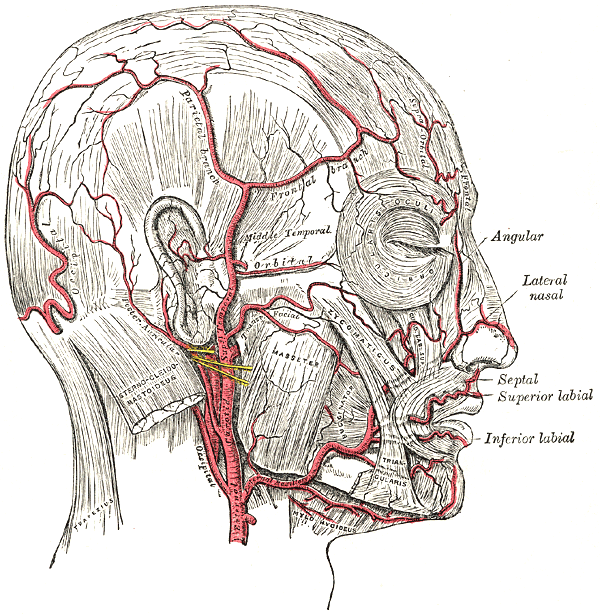
temporal artery
Henry Vandyke Carter, Public domain, via Wikimedia Commons

One-half of the patients with Giant cell arteritis (GCA) present the condition of Polymyalgia rheumatica (PMR) and 15 percent of the cases with PMR progress toward GCA. Polymyalgia rheumatica is an inflammatory rheumatologic condition that is diagnosed by existence of all below features:

  1. Age at onset ≥ 50 years old
  2. Pain and morning stiffness ≥ 30 minutes involving at least two areas of neck, shoulder girdle and hip girdle for at least two weeks or more
  3. ESR ≥ 40 mm/hour
  4. Dramatic response of symptoms to low-dose corticosteroids
  • Facebook
  • Twitter
PGMEE, MRCS, USMLE, MBBS, MD/MS Cardiovascular systemInternal medicineRheumatology

Post navigation

Previous post
Next post

Related Posts

PGMEE, MRCS, USMLE, MBBS, MD/MS

Eponyms in Tuberculosis (TB)

Jul 27, 2024Jul 27, 2024

Tuberculosis (TB) is a multi-systemic, granulomatous disease caused by the bacilli Mycobacterium tuberculosis which is also known as Koch’s bacillus. Primary Pulmonary Tuberculosis 1. Ghon focus or lesion: Subpleural fibro-caseous lesion of lung parenchyma (common site is upper part of lower lobe or lower part of upper lobe) 2. Ghon’s…

Read More
PGMEE, MRCS, USMLE, MBBS, MD/MS chemotherapy action

Principles of Chemotherapy

Dec 26, 2015Jul 2, 2016

Master the knowledge of clinically relevant cell cycle to understand the principles of chemotherapy. Tumors that are highly responsive to chemotherapeutic agents (e.g., testicular cancer, lymphomas) tend to have a very rapid doubling time compared to tumors that are less responsive to chemotherapy (e.g., pancreatic and prostate cancers). The tumor doubling time of metastases…

Read More
PGMEE, MRCS, USMLE, MBBS, MD/MS

Z-effect and Reverse Z-effect in PFN

Apr 27, 2023Jan 20, 2024

‘Z-effect’ and ‘Reverse Z-effect’ are complications relating to differential migration of screws that arise from fixation of unstable proximal femoral fractures with Proximal Femoral Nail (PFN) having 2 interlocking head screws. The 4 patterns of unstable intertrochanteric fracture hip are: Z-effect: The Z-effect involves the lateral migration of the lag…

Read More

Leave a Reply Cancel reply

Your email address will not be published. Required fields are marked *

This site uses Akismet to reduce spam. Learn how your comment data is processed.

Pre-clinical (Basic Sciences)

Anatomy

Biochemistry

Community medicine (PSM)

Embryology

Microbiology

Pathology

Pharmacology

Physiology

Clinical Sciences

Anesthesia

Dermatology

Emergency medicine

Forensic

Internal medicine

Gynecology & Obstetrics

Oncology

Ophthalmology

Orthopedics

Otorhinolaryngology (ENT)

Pediatrics

Psychiatry

Radiology

Surgery

RSS Ask Epomedicine

  • What to study for Clinical examination in Orthopedics?
  • What is the mechanism of AVNRT?

Epomedicine weekly

  • About Epomedicine
  • Contact Us
  • Author Guidelines
  • Submit Article
  • Editorial Board
  • USMLE
  • MRCS
  • Thesis
©2026 Epomedicine | WordPress Theme by SuperbThemes