Skip to content
Epomedicine

Mnemonics, Simplified Concepts & Thoughts

Epomedicine

Mnemonics, Simplified Concepts & Thoughts

Tay Sach’s Disease : Mnemonic

Epomedicine, Oct 31, 2024Oct 31, 2024

Mnemonic: SACHS GO

1. Spots in macula (Cherry red spots)

2. Ashkenazic jews

3. CNS degeneration

4. Hexosaminidase A enzyme deficiency

5. Storage disorder

6. GM2 ganglioside accumulation

7. Onion skin appearance of lysosomes
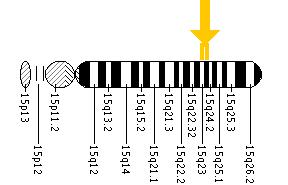
HEXA gene 15q
United States, National Institutes for Health, Public domain, via Wikimedia Commons
HexA gene is located on 15q

Further reading:
Lysosomal Storage Disorders Made Easy
  • Facebook
  • Twitter
PGMEE, MRCS, USMLE, MBBS, MD/MS Biochemistry

Post navigation

Previous post
Next post

Related Posts

PGMEE, MRCS, USMLE, MBBS, MD/MS skin graft

Stages of Skin Graft take : Mnemonic

Jul 6, 2021Jul 6, 2021

Mnemonic: AIIRR I – Adherence Formation of fibrin bonds between graft and it’s recipient wound bed II – Imbibition (1st 2-4 days) Donor tissue receives nutrition from absorption from the recipient site wound bed via capillary action (graft drinks from recipient bed) Graft increases in weight and volume and appears…

Read More
PGMEE, MRCS, USMLE, MBBS, MD/MS

Wrist Extensor Compartments

Jun 20, 2020Oct 15, 2020

The Extensor Zone VII (wrist) contains 6 extensor compartments comprising of 6 synovial sheath lined tunnels separated from each other by fibrous sheath. These compartments contain tendons of muscles that pass from forearm to hand. The number of tendons passinf thorugh the compartments (radial to ulnar) can be remembered using…

Read More
PGMEE, MRCS, USMLE, MBBS, MD/MS

Renal Tubular Acidosis (RTA) : Mnemonics

Nov 18, 2020Nov 18, 2020

Renal Tubular Acidosis (RTA) cause non-anion gap metabolic acidosis. Type 1: H+ excretion defect (A proton or 1st element of periodic table) This occurs in distal tubule (hence, distal defect) K+ is excreted instead of H+ causing Hypokalemia. Distal tubule H+ is non-functioning – urine pH >5.5. Chronic acidosis leads…

Read More

Leave a Reply Cancel reply

Your email address will not be published. Required fields are marked *

This site uses Akismet to reduce spam. Learn how your comment data is processed.

Pre-clinical (Basic Sciences)

Anatomy

Biochemistry

Community medicine (PSM)

Embryology

Microbiology

Pathology

Pharmacology

Physiology

Clinical Sciences

Anesthesia

Dermatology

Emergency medicine

Forensic

Internal medicine

Gynecology & Obstetrics

Oncology

Ophthalmology

Orthopedics

Otorhinolaryngology (ENT)

Pediatrics

Psychiatry

Radiology

Surgery

RSS Ask Epomedicine

  • What to study for Clinical examination in Orthopedics?
  • What is the mechanism of AVNRT?

Epomedicine weekly

  • About Epomedicine
  • Contact Us
  • Author Guidelines
  • Submit Article
  • Editorial Board
  • USMLE
  • MRCS
  • Thesis
©2026 Epomedicine | WordPress Theme by SuperbThemes