Skip to content
Epomedicine

Mnemonics, Simplified Concepts & Thoughts

Epomedicine

Mnemonics, Simplified Concepts & Thoughts

Post-snake bite compartment syndrome : Predictors

Epomedicine, Aug 29, 2020Aug 29, 2020

The indentification of snake species is often difficult at the time of presentation of snake bite and as the interaction between the victim and snake venom is variable.

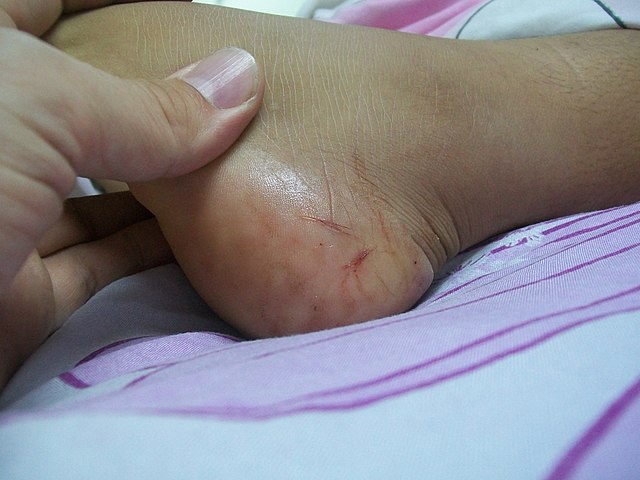
snake bite compartment syndrome
Bobjgalindo / CC BY-SA

Hsu et.al. conducted a single center retrospective study to find out the possible predictors of the post-snake bite compartment syndrome (PSCS). They found out that:

  1. Elevated WBC and AST can be useful predictors of PSCS
  2. Cutoff value for WBC: 11,650/μL
  3. Cutoff value for AST: 33.5 U/L
6 Ps and 3 As of Compartment Syndrome

What may be the explanation for WBC and AST as the markers of post-snake bite compartment syndrome?

These markers may indicate an increase in the inflammatory or cytokine reaction after a severe snakebite and envenomation. Proteins and cytokines produced during the acute phase will induce further leukocytosis. Release of AST from RBC from acute hemolysis and skeletal muscle from necrosis causes further rise in AST.

Advice from the study

Patients with snakebites and locoregional symptoms with elevated markers should be observed for 48 h to exclude the possibility of PSCS.

Further reading: Hsu, C., Chuang, J., Hsu, Y. et al. Predictors of the development of post-snakebite compartment syndrome. Scand J Trauma Resusc Emerg Med 23, 97 (2015). https://doi.org/10.1186/s13049-015-0179-y
  • Facebook
  • Twitter
PGMEE, MRCS, USMLE, MBBS, MD/MS Emergency medicine

Post navigation

Previous post
Next post

Related Posts

PGMEE, MRCS, USMLE, MBBS, MD/MS Child Pugh Score

Hepatorenal syndrome (HRS) – Quick revision

Apr 18, 2017

New Criteria for HRS 1. Cirrhosis with ascites 2. Serum creatinine >1.5mg/dl 3. No sustained improvement in renal function after 2 days of diuretic withdrawl (if on diuretics) and volume expansion with albumin infusion at 1 gm/kg/day upto a maximum of 100 gm/day. 4. No evidence of shock 5. No…

Read More
PGMEE, MRCS, USMLE, MBBS, MD/MS

Casting technique related Radiographic indices

Jul 5, 2020Jul 5, 2020

Cast index Formula: Inner diameter of cast on lateral view (m) / Inner diameter of cast on AP view (n) Cut-off: 0.7-0.8 Padding index Formula: Dorsal fracture site gap (h) / Maximum interosseous length in AP view (g) Cut-off: 0.3 Cantebury index Formula: Cast index (m/n) + Padding index (h/g)…

Read More
PGMEE, MRCS, USMLE, MBBS, MD/MS venous draianage of face schematic

Venous drainage of Face : “W” shaped arrangement

Oct 18, 2017

When we look from lateral side, the veins on each side form a “W” shaped arrangement. Each corner of the “W” is prolonged upward into the scalp, and downward into the neck. Remember the 3 verticla stems of letter “W”: 1st stem (in face): Facial vein 2nd stem (behind mandible,…

Read More

Leave a Reply Cancel reply

Your email address will not be published. Required fields are marked *

This site uses Akismet to reduce spam. Learn how your comment data is processed.

Pre-clinical (Basic Sciences)

Anatomy

Biochemistry

Community medicine (PSM)

Embryology

Microbiology

Pathology

Pharmacology

Physiology

Clinical Sciences

Anesthesia

Dermatology

Emergency medicine

Forensic

Internal medicine

Gynecology & Obstetrics

Oncology

Ophthalmology

Orthopedics

Otorhinolaryngology (ENT)

Pediatrics

Psychiatry

Radiology

Surgery

RSS Ask Epomedicine

  • What to study for Clinical examination in Orthopedics?
  • What is the mechanism of AVNRT?

Epomedicine weekly

  • About Epomedicine
  • Contact Us
  • Author Guidelines
  • Submit Article
  • Editorial Board
  • USMLE
  • MRCS
  • Thesis
©2026 Epomedicine | WordPress Theme by SuperbThemes