Important features of Rickettsia and Rickettsial Diseases
- Obligate intracellular parasites like Chlamydia – can survive only in host cells
- Cannot produce their own ATP, so they utilize the ATP of a host cell
- Gram negative coccobacillia, and short bacilli that grow strictly in eukaryotic cells (unable to grow in cell media)
- Contain DNA, RNA; divide by binary fission
- All rickettsial infections are transmitted by an insect vector except Q fever (respiratory spread)
- Humans are only incidental hosts except in louse born epidemic typhus
- All are associated with a rash, except Q fever and ehrlichiosis
- Rocky mountain spotted fever (RMSF) rash (on 2nd-6th day of fever) begins on the extremities (involvement of palms and soles is characteristic) and moves centrally (centripetal)
- Rash of typhus (both murine and epidemic typhus) begins centrally (on 4th day of fever; spares face) and moves toward the extremities, i.e. centrifugal (spares palms and soles)
- Rickettsial pox is the only rickettsial disease characterized by vesicular rash (with eschar at the site of bite)
- No rash is observed in Q fever
- All the members of the spotted fever group, except Rocky Mountain spotted fever, cause an eschar, as does scrub typhus.
- Rochalimaea or Bartoneall quintana (Trench fever) can be cultivated in blood agar under 10% CO2
- Doxycycline (drug of choice), Chloramphenicol and others (macrolides, rifampicin) are effective for the treatment of rickettsial diseases
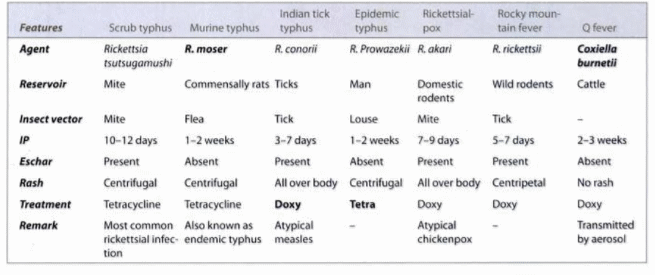
Rickettsial Disease, Agents and Vectors
| Disease | Agent | Vectors | |
| Typhus group | Epidemic typhus or Brill Zinsser disease | R. prowazekii | Louse |
| Murine/Endemic typhus | R.typhi (R.mooseri) | Flea | |
| Spotted fever group | Rocky mountain spotted fever | R.rickettsii | Tick (Dermacentor) |
| R. pox | R.akari | Mite | |
| Fever boutonneuse or Mediterranean spotted fever or Indian tick typhus | R.conorii | Tick | |
| Other | Q. fever | Coxiella burnettii | Nil (Air borne) |
| Trench fever / Five day fever / Quintan fever | Rochalimaea Quintana (Bartonella Quintana) | Louse | |
| Scrub typhus (Chigger borne typhus) | Rickettsia or Orientia tsutsugambushi | Mite | |
| Ehrlichiosis | Ehrlichiae – human granulocytic ehrlichiosis (Anaplasma phagocytophilum); human monocytic ehrlichiosis (Ehrlichia chaffeensis) | Tick |
Mnemonics to remember vectors and agents of rickettsial diseases
LET
Louse-borne
- Epidemic typhus
- Trench fever
Take the 2nd letter from these. The name of the agent starts with the same letter.
- ePidemic typhus: Prowazekii (R.prowazekii)
- tRench fever: Rochalimaea quintana
TERM
Tick-borne
- Ehrlichiosis
- Rocky mountain spotted fever
- Mediterranean spotted fever
Take the 1st letter from these. The name of the agent starts with the same letter.
- Ehrlichiosis: Ehrlichia chaffeensis
- Rocky mountain spotted fever: R. Rickettsii
- Mediterranean spotted fever (exception): R.conorii
MPS
Mite-borne
- Pox (R.pox) – R.akari
- Scrub typhus – Orientia tsutsugambushi
At last, Endemic typhus is flea borne and caused by R.typhi.
Weil-Felix reaction
It is a heterophile agglutination test based on sharing of a common antigen between Typhus rickettsia and some strain of Proteus bacilli (OX 19, OX – 2, OX K). It doesn’t differentiate between epidemic and endemic typhus and is of no value in rickettsial pox, trench fever and Q fever.

OX-19 (+++): In Epidemic and Endemic typhus
OX 19, OX-2 (++): In Rocky Mountain Spotted fever
OX-K (+++): In Scrub typhus
OX-19, OX-2 and OX-L (all negative): In Rickettsial pox, Q fever, Trench fever (Quintan fever)
Mnemonic for Weil-felix reaction:
OK! Scrub now (Scrub typhus OX-K)
Two typhus (Endemic and epidemic): OX-2
1920 m Rocky Mountain (RMSF OX-19 and OX-2)
God Bless you. You’ve made a whole week work as simple as 1 minute. God Bless your Generation