Skip to content
Epomedicine

Mnemonics, Simplified Concepts & Thoughts

Epomedicine

Mnemonics, Simplified Concepts & Thoughts

Postoperative Febrile Morbidity After Myomectomy

Dr. Pooja Shrestha, Aug 9, 2026Aug 9, 2026

Definition of febrile morbidity: Variable

Temperature ≥38°c measured at least twice at an interval of at least 6 hours apart, except within the first 24 hours postoperative.

It has also been defined as a body temperature of 38.0 °C or higher, taken by mouth as a standard technique at least four times daily, that occurred in any two consecutive days of the first 10 days postoperative, excluding the first 24 h.

Some authors have also defined febrile morbidity as T= 100.4° F in the first 72 hours after surgery.
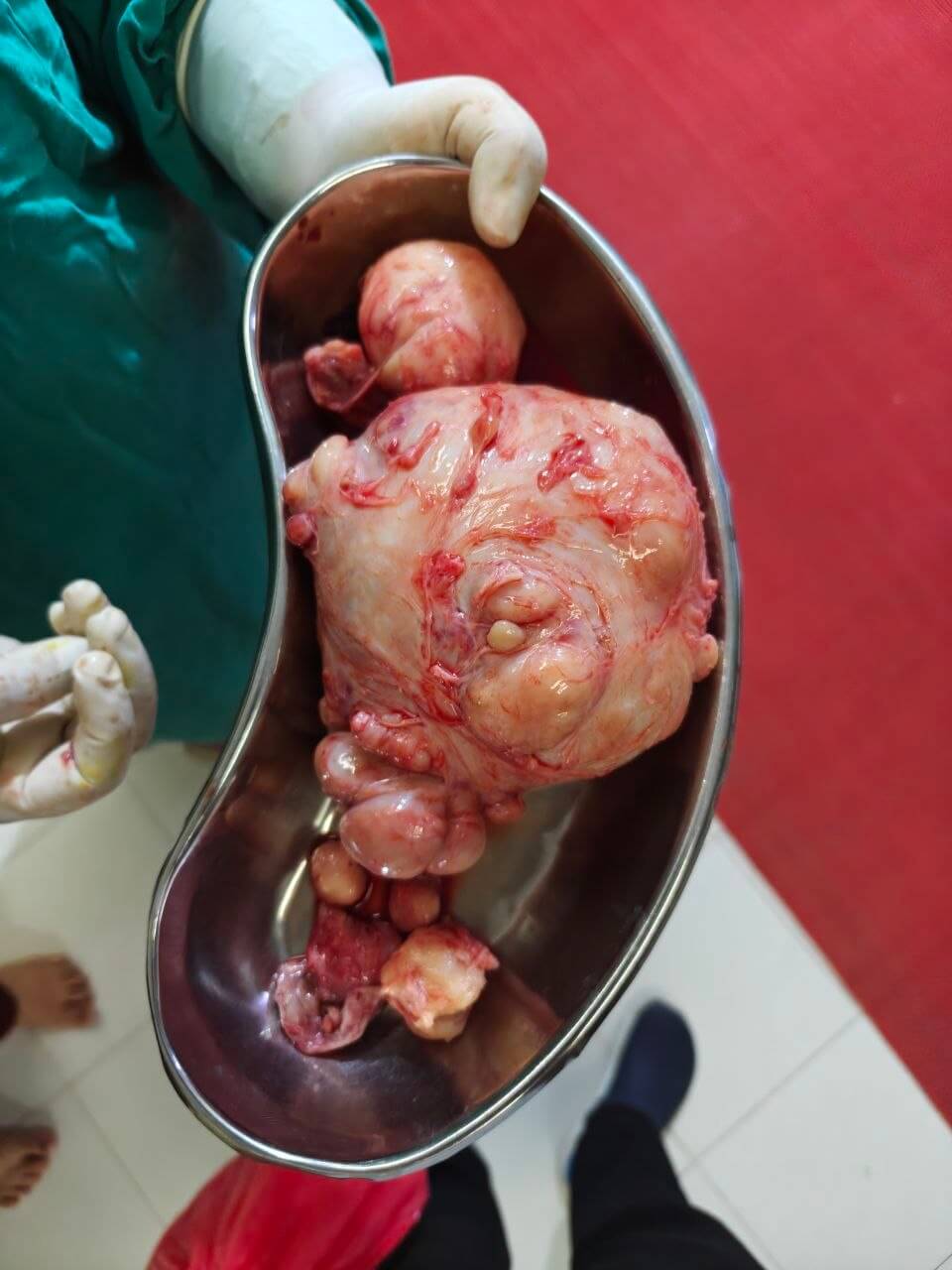
Operative specimen – multiple and large fibroids

Pathophysiology of febrile morbidity:

Febrile morbidity occurs without obvious signs of infection due to either or both of the following:

  1. Formation of an intra-myometrial hematoma
  2. Release of nonspecific febrile factors from the myoma during dissection

It is often difficult to distinguish infection from fever caused by the release prostaglandins during myomectomy.

Postoperative fever – Rule of W (Mnemonic)

Important points related to febrile morbidity:

  1. Incidence of febrile morbidity post-myomectomy is approximately one-third (33%)
  2. Important risk factors:
    • Overweight
    • Pre- and postoperative anemia
    • Open myomectomy (most strongly associated risk factor)
      • The risk for febrile morbidity in women undergoing abdominal myomectomy is 6.34 times that of laparoscopic myomectomy
      • Might be associated with more extensive manipulation, higher amount of blood loss, and more exposure of visceral abdominal structures.
    • Prolonged operation (>180 minutes)
  3. The causes of febrile morbidity cannot be identified in most cases and the fever spontaneously resolves with expectant management.

References:

  1. https://www.glowm.com/section-view/heading/Myomectomy/item/40
  2. Wattanasiri K, Lattiwongsakorn W, Sreshthaputra RA, Tongsong T. Incidence and Risk Factors of Postoperative Febrile Morbidity among Patients Undergoing Myomectomy. Medicina (Kaunas). 2023 May 20;59(5):990. doi: 10.3390/medicina59050990. PMID: 37241222; PMCID: PMC10223126.
  3. D. Vavilis; E. Togaridou; T. Agorastos. (2005). Abdominal myomectomy and febrile morbidity. , 88(1), 0–62. doi:10.1016/j.ijgo.2004.09.021
  4. Garg D, Tang N, Homel P. Febrile Morbidity After Robotic versus Abdominal Myomectomy. Journal of Minimally Invasive Gynecology, 23S22

Dr. Pooja Shrestha
Dr. Pooja Shrestha

Anesthesiology Resident (PGY-1) at Tribhuvan University Teaching Hospital, Institute of Medicine (TUTH, IOM). Her academic interests include perioperative medicine, regional anesthesia, and evidence-based practices in anesthesiology. She contributes scholarly articles on anesthesia to Epomedicine.
  • Facebook
  • Twitter
PGMEE, MRCS, USMLE, MBBS, MD/MS ObGyn

Post navigation

Previous post
Next post

Related Posts

PGMEE, MRCS, USMLE, MBBS, MD/MS

Simplified Guide to Statin Therapy

Aug 15, 2019Aug 15, 2019

Statins Equivalent Dose Mnemonic: PRASLPF 2-5-10-20-40-40-80 Pituvastatin 2 mg Rosuvastatin 5 mg Atorvastatin 10 mg Simvastatin 20 mg Lovastatin 40 mg Pravastatin 40 mg Fluvastatin 80 mg Intensity of Statins a. High intensity (LDL lowering >/= 50%) Atorvastatin 40-80 mg Rosuvastatin 20-40 mg b. Moderate intenstity (LDL lowering 30-49%) Atorvastatin…

Read More
PGMEE, MRCS, USMLE, MBBS, MD/MS Anterior and posterior epistaxis

Epistaxis Basics : Anatomy, Physiology and Pathology

May 3, 2014

Synonyms: Nosebleed, Nasal bleeding Definition: Epistaxis is defined as bleeding from the nasal cavity. It ranges from minor blood-tinged mucus when blowing the nose to life-threatening hemorrhage. Epidemiology: Age: Bimodal distribution – common in <10 years and >60 years Season: Winter Anatomy and Physiology: Why is the nose prone to…

Read More
PGMEE, MRCS, USMLE, MBBS, MD/MS

Lynch Syndrome (HNPCC) : Mnemonics

Jul 21, 2023Jul 30, 2023

Inheritance: Autosomal Dominant (AD) Cause: Microsatellite instability (MLH1, MSH2 mismatch repair gene mutation) Types: Amsterdam II Criteria for Diagnosis Mnemonic: 3-2-1-0 rule Colorectal cancers: More likely to be mucinous and right-sided Treatment: Total colectomy with ilio-rectal anastomosis Annual screening: Age 25 onwards or beginning no later than 5 years before…

Read More

Leave a Reply Cancel reply

Your email address will not be published. Required fields are marked *

This site uses Akismet to reduce spam. Learn how your comment data is processed.

Shrestha P. Postoperative Febrile Morbidity After Myomectomy [Internet]. Epomedicine; 2026 Aug 9 [cited 2026 Sep 17]. Available from: https://epomedicine.com/medical-students/postoperative-febrile-morbidity-after-myomectomy/.

Pre-clinical (Basic Sciences)

Anatomy

Biochemistry

Community medicine (PSM)

Embryology

Microbiology

Pathology

Pharmacology

Physiology

Clinical Sciences

Anesthesia

Dermatology

Emergency medicine

Forensic

Internal medicine

Gynecology & Obstetrics

Oncology

Ophthalmology

Orthopedics

Otorhinolaryngology (ENT)

Pediatrics

Psychiatry

Radiology

Surgery

RSS feed: Ask Epomedicine Ask Epomedicine

  • What to study for Clinical examination in Orthopedics?
  • What is the mechanism of AVNRT?

Epomedicine weekly

  • About Epomedicine
  • Contact Us
  • Author Guidelines
  • Submit Article
  • Editorial Board
  • USMLE
  • MRCS
  • Thesis
©2026 Epomedicine | WordPress Theme by SuperbThemes