Skip to content
Epomedicine

Mnemonics, Simplified Concepts & Thoughts

Epomedicine

Mnemonics, Simplified Concepts & Thoughts

Nail Bed Injuries : Van Beek Classification and Management

Epomedicine, Sep 19, 2020Sep 19, 2020

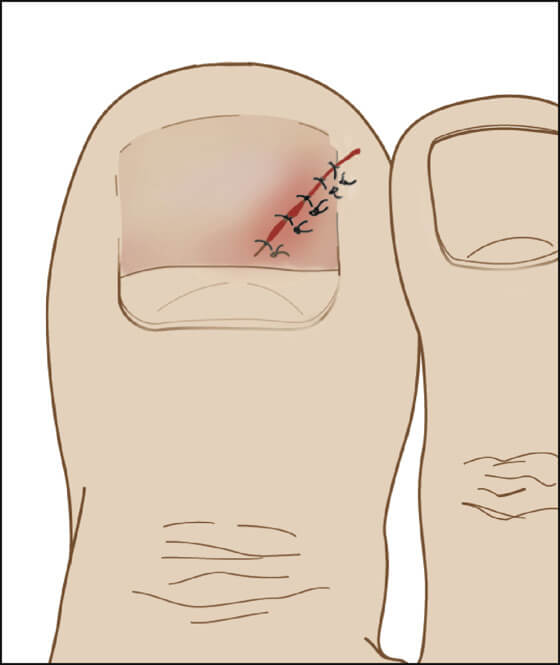
Clinically, the Van Beek classification system denominates 5 principal nail bed injuries, subclassified by location within the nailbed (involving either the sterile and/or germinal matrix, respectively) and the extent of injury.
nail bed injury

Germinal Matrix Injury

  • GI: Small subungual hematoma proximal nail (<25%)
  • GII: Germinal matrix laceration, large subungual hematoma (>50%)
  • GIII: Germinal matrix laceration and fracture of distal phalanx
  • GIV: Germinal matrix fragmentation
  • GV: Germinal matrix avulsion

Sterile Matrix Injury

  • SI: Small subungual hematoma (<25%)
  • SII: Sterile matrix laceration, large subungual hematoma (>50%)
  • SIII: Sterile matrix laceration with tuft fracture
  • SIV: Sterile matrix fragmentation
  • SV: Sterile matrix avulsion

Grade I injuries can be treated non-operatively or decompression or nail removal if the condition is very painful.

Grade II, III and IV injuries require nail removal, debridement of nail bed and repair of the nailbed followed by nail replacement +/- K wire fixation for distal phalanx fracture.

Grade V (avulsion) injuries require suturing of nail bed in anatomic position.

Use absorbable sutures (6-0, 7-0) to suture nail bed lacerations. Use non-absorable suture to fix nailplate to the nail bed.


16 shares
  • Facebook16
  • Twitter
PGMEE, MRCS, USMLE, MBBS, MD/MS Emergency medicine

Post navigation

Previous post
Next post

Related Posts

PGMEE, MRCS, USMLE, MBBS, MD/MS

Kienbock’s Disease : Mnemonic Approach

Jul 18, 2024Jul 18, 2024

Etiology Mnemonic: RSTUV Lichtman Classification and Management Stage Description Treatment Mnemonic: ABCD Mnemonic: ABCD I Abnormal MRI (decreased T1 intensity; variable T2 intensity) or scintigraphy Analgesics + immobilization II Bone sclerosis ± Bone breaks (fracture lines) Bony procedures:1. Negative or Neutral ulnar variance: Joint levelling procedure (Radius shortening osteotomy; Ulnar…

Read More
PGMEE, MRCS, USMLE, MBBS, MD/MS groin hernia

Hernia – Inguinal Hernia

Apr 23, 2020May 20, 2020

Groin is the area between abdomen and the upper thigh on either sides of pubic symphysis. Protrusions of the abdominal contents through the weak areas in this region are grouped under groin hernias. Groin Hernia can be classified into Inguinal and Femoral Hernias. Please go though another article of the…

Read More
PGMEE, MRCS, USMLE, MBBS, MD/MS

Drug Elimination Kinetics : Mnemonics

Aug 18, 2024Aug 18, 2024

Zero-order First-order Amount of drug eliminated per unit time Constant amount Constant fraction (Mnemonic: first = fraction) Rate of elimination with plasma concentration Independent Directly proportional (greater the drug, greater is elimination) Elimination Capacity-limited, i.e. liver/kidney are saturated/maxed out on how much they can eliminate Flow-limited, i.e. liver/kidney are not…

Read More

Comment

  1. Aaradhya says:
    Sep 27, 2020 at 7:08 am

    Please consider creating an app.. it will be very helpful 🙏

    Reply

Leave a Reply Cancel reply

Your email address will not be published. Required fields are marked *

This site uses Akismet to reduce spam. Learn how your comment data is processed.

Pre-clinical (Basic Sciences)

Anatomy

Biochemistry

Community medicine (PSM)

Embryology

Microbiology

Pathology

Pharmacology

Physiology

Clinical Sciences

Anesthesia

Dermatology

Emergency medicine

Forensic

Internal medicine

Gynecology & Obstetrics

Oncology

Ophthalmology

Orthopedics

Otorhinolaryngology (ENT)

Pediatrics

Psychiatry

Radiology

Surgery

RSS Ask Epomedicine

  • What to study for Clinical examination in Orthopedics?
  • What is the mechanism of AVNRT?

Epomedicine weekly

  • About Epomedicine
  • Contact Us
  • Author Guidelines
  • Submit Article
  • Editorial Board
  • USMLE
  • MRCS
  • Thesis
©2026 Epomedicine | WordPress Theme by SuperbThemes