Skip to content
Epomedicine

Mnemonics, Simplified Concepts & Thoughts

Epomedicine

Mnemonics, Simplified Concepts & Thoughts

Irritable Bowel Syndrome (IBS) : Mnemonic Approach

Epomedicine, Jul 27, 2023Jul 27, 2023

Rome IV Criteria for IBS

Mnemonic: 1, 2, 3

Recurrent abdominal pain on average:

  • ≥1 day/week associated with
  • ≥2 of the following in
  • last 3 months:
    • Related to defecation
    • Associated with a change in stool frequency
    • Associated with a change in stool form (appearance)

Criteria fulfilled for the last 3 months with symptom onset at least 6 months prior to diagnosis
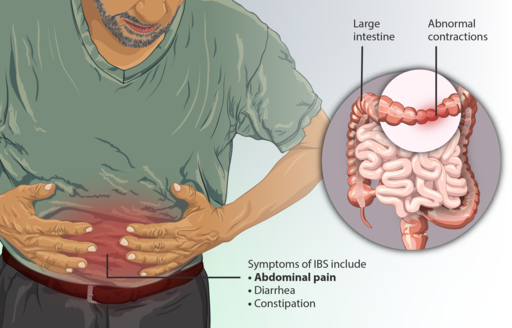
Irritable bowel syndrome
“Depiction of a person suffering from Irritable Bowel Syndrome (IBS)” by https://www.myupchar.com/en is licensed under CC BY-SA 4.0.

Alarm findings (Red flags)

Mnemonic: ALARMING

  1. Age 50 or more
  2. Loss of weight (unintentional), Lymphadenopathy
  3. Anemia
  4. Recent change in bowel habit
  5. Mass (abdominal)
  6. Intestinal bleeding (melena, hematochezia, FOBT positive)
  7. Night diarrhea
  8. Genealogy (family) history of Colon carcinoma, Inflammatory Bowel Disease or Celiac disease

Additional diagnostic testing

Mnemonic: Rule out 4 “C”
1. Carcinoma
2. Celiac disease
3. Colitis
4. Carbohydrate (lactose) intolerance

Additional diagnostic testing is not indicated if the patient meets the Rome IV diagnostic criteria in the absence of alarm features. Some recommended additional diagnostic tests are:

  1. All patients ≥ 50 years old or those with alarm features: Colonoscopy for Colorectal carcinoma screening
  2. IBS with Diarrhea or Mixed: Serologic tests for celiac disease
  3. IBS with Diarrhea: Colonoscopy with random biopsies (to rule out microscopic colitis)
  4. When no response to diet and still suspicious: Breath testing for lactose intolerance

Management

Mnemonic: BCDEF

1. Cognitive Behavioral therapy

2. Drugs:

Constipation predominantDiarrhea predominant
1st lineConstipation: Osmotic laxatives
Pain: Antispasmodics
Diarrhea: Loperamide, Cholestyramine (Bile acid sequestrants)
Pain: Antispasmodics
2nd lineSecretagogues:
Linaclotide
Lubiprostone
Rifaximin
Low dose TCA
Eluxadoline (mixed opioid receptor agonist)
3rd lineTegaserod (Serotonin-4 agonist)Alosetron (Serotonin-3 antagonist)

3. Education and reassurance (most important)

4. Food modifications:

  • Lactose restriction
  • Gluten restriction
  • Fiber supplementation
  • Low-FODMAP diet
  • Facebook
  • Twitter
PGMEE, MRCS, USMLE, MBBS, MD/MS Gastrointestinal systemInternal medicine

Post navigation

Previous post
Next post

Related Posts

PGMEE, MRCS, USMLE, MBBS, MD/MS

Micturition reflex

Jun 13, 2020Sep 24, 2022

Micturition (Urination) is the ejection of urine from the urinary bladder through the urethra to the outside of the body. It is a type of reflex with voluntary control. The micturition cycle occurs in 2 phases: Urinary Storage Mnemonic: Storage = Sympathetic 1. Stimulus: Urine filling until tension in the…

Read More
PGMEE, MRCS, USMLE, MBBS, MD/MS

Laryngeal Muscles : Mnemonics

Apr 29, 2024Apr 29, 2024

Extrinsic muscles Nerve supply: Ansa cervicalis (CN XII + C1, C2, C3) Infrahyoid muscles (Depressors of larynx): Mnemonic: TOSS Suprahyoid muscles (Elevators of larynx): Mnemonic: MDGS Intrinsic muscles Muscles Origin Insertion Function Thyroepiglotticus Thyroaryetenoid muscle Epiglottis (lateral surface) Opens laryngeal inlet Aryepiglotticus Oblique arytenoid muscle Epiglottis Closes laryngeal inlet Posterior…

Read More
PGMEE, MRCS, USMLE, MBBS, MD/MS cholangiocarcinoma tnm

Cholangiocarcinoma (Bile Duct Cancer) – Quick Review

Jan 30, 2017Oct 26, 2022

This article is in response to the request made by a reader in the comment section. Today, we will try to simplify the biliary tree cancers. Classification of Cholangiocarcinoma Second-order bile ducts act as the separation point between intrahepatic and extrahepatic cholangiocarcinoma. A. Inhtrahepatic – 10 to 20% B. Extrahepatic…

Read More

Comment

  1. Kelvin says:
    Jul 29, 2023 at 5:48 pm

    Genius 🙏🏾🙏🏾🙏🏾🙏🏾. Awesome. I will keep praying for you man. This is Gold 👏👏👏

    Reply

Leave a Reply Cancel reply

Your email address will not be published. Required fields are marked *

This site uses Akismet to reduce spam. Learn how your comment data is processed.

Epomedicine. Irritable Bowel Syndrome (IBS) : Mnemonic Approach [Internet]. Epomedicine; 2023 Jul 27 [cited 2025 Dec 6]. Available from: https://epomedicine.com/medical-students/irritable-bowel-syndrome-ibs-mnemonic-approach/.

Pre-clinical (Basic Sciences)

Anatomy

Biochemistry

Community medicine (PSM)

Embryology

Microbiology

Pathology

Pharmacology

Physiology

Clinical Sciences

Anesthesia

Dermatology

Emergency medicine

Forensic

Internal medicine

Gynecology & Obstetrics

Oncology

Ophthalmology

Orthopedics

Otorhinolaryngology (ENT)

Pediatrics

Psychiatry

Radiology

Surgery

RSS Ask Epomedicine

  • What to study for Clinical examination in Orthopedics?
  • What is the mechanism of AVNRT?

Epomedicine weekly

  • About Epomedicine
  • Contact Us
  • Author Guidelines
  • Submit Article
  • Editorial Board
  • USMLE
  • MRCS
  • Thesis
©2025 Epomedicine . All rights reserved.