Skip to content
Epomedicine

Mnemonics, Simplified Concepts & Thoughts

Epomedicine

Mnemonics, Simplified Concepts & Thoughts

Gastric Acid Secretion Made Easy

Epomedicine, Aug 12, 2023Aug 12, 2023

Steps for gastric acid secretion by parietal cells

1. H+ and HCO3- are produced from CO2 and H2O.

2. H+ is secreted into the lumen by H+/K+ ATPase pump.

3. HCO3- moves out of the cell, across the basolateral membrane via antiport with Cl-.

4. Cl- diffuses passively into the lumen via Cl- channel.
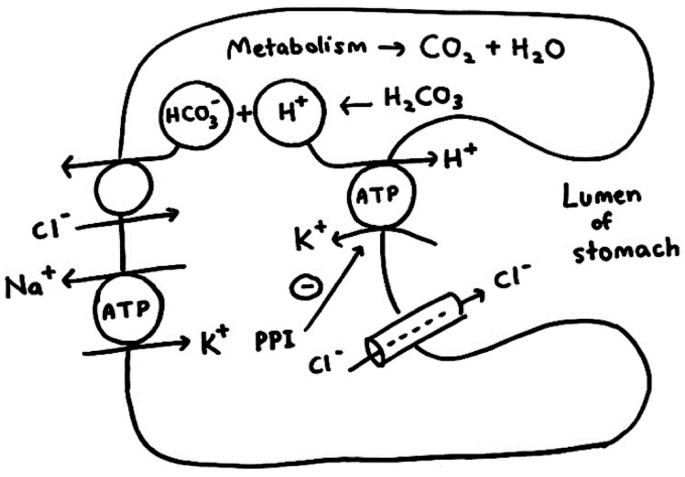
gastric acid secretion

Phases of Gastric Acid Secretion

PhasesAcid productionTriggerMechanismInhibition
1. Cephalic30%Psychic stimuliVagal stimulationLoss of appetite/Depression (lack of parasympathetic center stimulation)
2. Gastric60%Presence of food in stomach (mechanical and chemical)Distension: Vagovagal and local reflex

Chemical (high pH): G cells release Gastrin
Low PH: Gastrin secretion decreases

Emotional distress: Sympathetic stimulation
3. Intestinal10%Presence of food in duodenum (chemical)Chemical (low pH): Intestinal gastrin releasedDistension, Fatty acids, Hypertonic chyme:
a. Enterogastric reflex
b. Intestinal hormones (secretin, GIP, CCK, VIP)
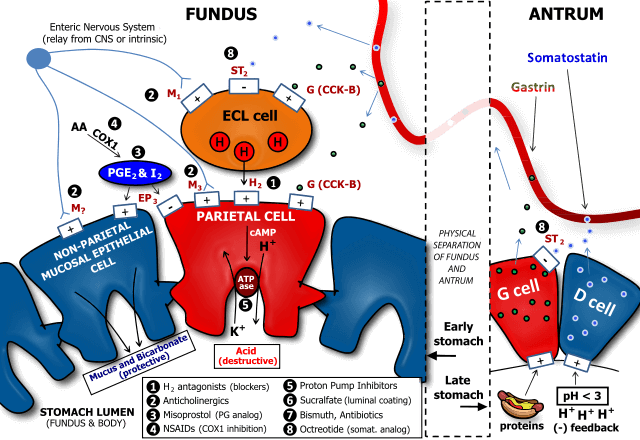
Cholinergic stimulation and Gastrin both also stimulates Histamine secretion from ECL cells which in turn stimulates acid secretion.

Pharmacology

gastric acid pharmacology
Adam L. VanWert, Pharm.D., Ph.D., CC BY 3.0, via Wikimedia Commons

1. Reduction of gastric acid secretion: H2 antihistaminics, Proton pump inhibitors (PPI), M1 anticholinergics, PG analogs (EP3 receptor)

2. Neutralization of gastric acid: Antacids

3. Ulcer protectives: Sucralfate, Bismuth, PG analogs

4. Ulcer healing: Carbenoxolone

5. Anti-H. pylori medications: Amoxicillin, metronidazole, tinidazole, tetracycline

Gastrointestinal peptides

NameSourceStimulusMechanismAction
GastrinG cells (gastric antrum)Stomach distensionHormoneHCl, pepsinogen, IF secretion
Gastric motility
Trophic to gastric mucosa
CCKI cells (duodenum)Partially digested peptides and triglyceridesHormoneEnzyme rich pancreatic fluid
Gallbladder contraction and sphincter of Oddi relaxation
Gastric emptying reduction
Trophic to pancreatic acinar cells
Satiety
SecretinS cells (duodenum/proximal jejunum)Acid chyme, fatty acidsHormoneBicarbonate rich pancreatic fluid
Gastric acid reduction
Trophic to pancreatic acinar cells
VIPNeuron (GI tract, pancreas)NeuralNeurocrinePancreatic and intestinal secretion
Inhibits gastric acid and pepsinogen secretion
SomatostatinD cells (pancreas, stomach)Fat, bile salts, glucose in intestinal lumenParacrine/NeurocrineDecreases acid, pepsin, gastrin, pancreatic enzyme secretion
Decreases insulin and glucagon
Stimulates gastric mucous production
  • Facebook
  • Twitter
PGMEE, MRCS, USMLE, MBBS, MD/MS Gastrointestinal systemPhysiology

Post navigation

Previous post
Next post

Related Posts

PGMEE, MRCS, USMLE, MBBS, MD/MS

Popliteal Fossa : Mnemonics

May 13, 2023Aug 9, 2023

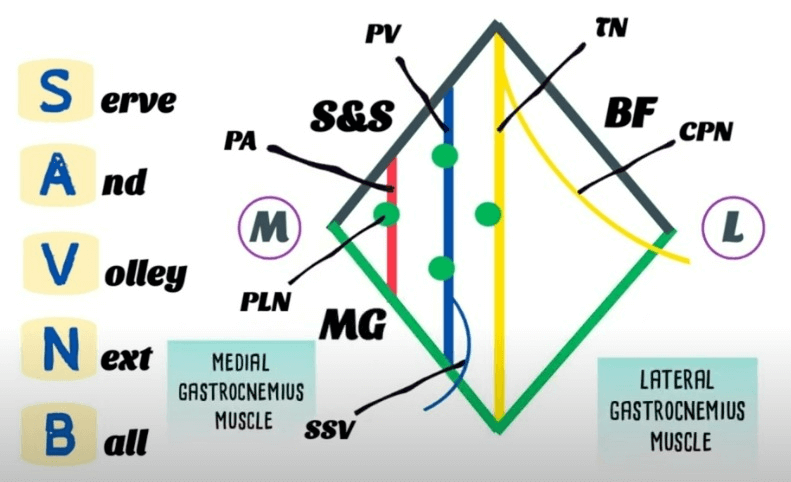
Mnemonic: Serve And Volley Next Ball Think of popliteal fossa as a diamond-shaped space. The floor is formed by Popliteus muscle. Membranosus = Medial (The 2 “Semis” go together – hence medial border is formed by semimembranosus, semitendinosus and medial head of gastrocnemius) Therefore, biceps femoris and lateral head of…

Read More
PGMEE, MRCS, USMLE, MBBS, MD/MS macrophage

Tissue Specific and Named Macrophages

Jan 17, 2017Jan 19, 2017

Subtle differences in the morphology and functions of macrophages develop as a result of the influence of a particular microenvironment. Appearance of macrophages to histologists have been described as a kind of mythological Proteus, “a creature who had the power of changing his appearance at will”. The life-span of these fixed…

Read More
PGMEE, MRCS, USMLE, MBBS, MD/MS

Hypertensive Disorders in Pregnancy – Basics

Aug 30, 2014Aug 17, 2015

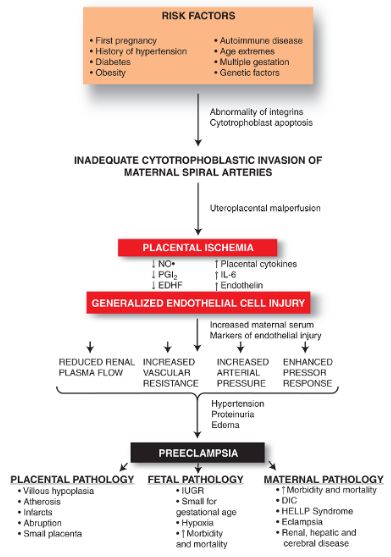
Hypertensive disorders in pregnancy is a term that encompass wide range of blood pressure related disorders during pregnancy like gestational hypertension, pre-eclampsia, eclampsia, etc. Blood pressure in Normal Pregnancy: During middle trimester, due to the reduction in Systemic Vascular Resistance (SVR) and Arterio-venous (AV) shunting within the uterus and intervillous…

Read More

Leave a Reply Cancel reply

Your email address will not be published. Required fields are marked *

This site uses Akismet to reduce spam. Learn how your comment data is processed.

Pre-clinical (Basic Sciences)

Anatomy

Biochemistry

Community medicine (PSM)

Embryology

Microbiology

Pathology

Pharmacology

Physiology

Clinical Sciences

Anesthesia

Dermatology

Emergency medicine

Forensic

Internal medicine

Gynecology & Obstetrics

Oncology

Ophthalmology

Orthopedics

Otorhinolaryngology (ENT)

Pediatrics

Psychiatry

Radiology

Surgery

RSS Ask Epomedicine

  • What to study for Clinical examination in Orthopedics?
  • What is the mechanism of AVNRT?

Epomedicine weekly

  • About Epomedicine
  • Contact Us
  • Author Guidelines
  • Submit Article
  • Editorial Board
  • USMLE
  • MRCS
  • Thesis
©2026 Epomedicine | WordPress Theme by SuperbThemes