Skip to content
Epomedicine

Mnemonics, Simplified Concepts & Thoughts

Epomedicine

Mnemonics, Simplified Concepts & Thoughts

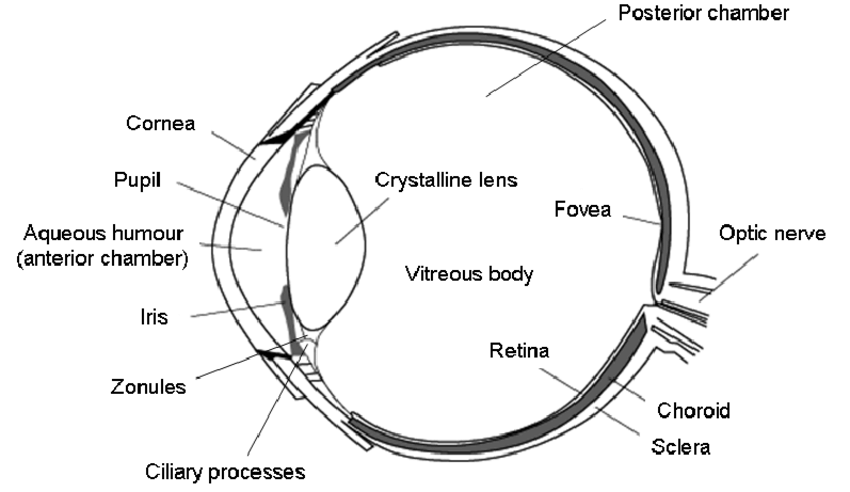
eye schematic

Embryology of Eye : Mnemonic

Epomedicine, Mar 3, 2019Mar 3, 2019

Surface ectoderm derivatives

Mnemonic: LEVeL

  1. Lens
  2. Epithelium
    • All ocular adnexa including mebomian gland and glands of Zeis and Moll
    • Skin
    • Cornea
    • Conjunctiva
  3. Vitreous (portion)
  4. Lacrimal glands and drainage system

Neuro-ectoderm (Optic vesicle and cup) derivatives

Mnemonic: MORE

  1. Muscles of pupil (constrictor and dilator pupillae)
  2. Optic nerve
  3. Retinal pigment epithelium
  4. Epithelium of iris and ciliary body

Mesoderm derivatives

Mnemonic: MESO

  1. Muscles (Extraocular)
  2. Endothelium of eye and orbital blood vessels
  3. Sclera (temporal portion)
  4. Others (Vitreous)

All other structures are derived from Neural crest cells.
55 shares
  • Facebook53
  • Twitter
PGMEE, MRCS, USMLE, MBBS, MD/MS AnatomyEmbryologyOphthalmology

Post navigation

Previous post
Next post

Related Posts

PGMEE, MRCS, USMLE, MBBS, MD/MS

Oestern and Tscherne Classification for Closed fractures

Sep 6, 2020Sep 6, 2020

The classification system for closed fractures is based on the physiologic concept that the energy imparted to the bone (and the resultant fracture pattern) directly correlates with the energy transferred to the surrounding soft tissues. Grade Soft tissue injury Fracture Compartment C0 Absent or Negligible Simple (Spiral) Soft and/or Normal…

Read More

Anatomy and Physiology of Sebaceous glands

Nov 11, 2013

Definition: Sebaceous glands are numerous microscopic glands in the dermis that usually open into the hair follicles and secrete sebum. They are holocrine glands, i.e., the sebum consists of the entire secreting cells. Location: Found everywhere on the skin apart from the palms and soles Types of Sebaceous glands: 1….

Read More
PGMEE, MRCS, USMLE, MBBS, MD/MS shoulder xray

Shoulder X-ray views

Jan 2, 2021Aug 7, 2024

Shoulder X-ray views AP Shoulder: in plane of thorax AP in plane of scapula: Angled 45 degrees lateral Scapular Y lateral: Erect with opposite shoulder rotated 40 degrees out and beam centered on spine of scapula (shoulder dislocations and scapula fractures) Supraspinatus outlet view: Scapular Y view with beam caudally…

Read More

Leave a Reply Cancel reply

Your email address will not be published. Required fields are marked *

This site uses Akismet to reduce spam. Learn how your comment data is processed.

Pre-clinical (Basic Sciences)

Anatomy

Biochemistry

Community medicine (PSM)

Embryology

Microbiology

Pathology

Pharmacology

Physiology

Clinical Sciences

Anesthesia

Dermatology

Emergency medicine

Forensic

Internal medicine

Gynecology & Obstetrics

Oncology

Ophthalmology

Orthopedics

Otorhinolaryngology (ENT)

Pediatrics

Psychiatry

Radiology

Surgery

RSS Ask Epomedicine

  • What to study for Clinical examination in Orthopedics?
  • What is the mechanism of AVNRT?

Epomedicine weekly

  • About Epomedicine
  • Contact Us
  • Author Guidelines
  • Submit Article
  • Editorial Board
  • USMLE
  • MRCS
  • Thesis
©2026 Epomedicine | WordPress Theme by SuperbThemes