Skip to content
Epomedicine

Mnemonics, Simplified Concepts & Thoughts

Epomedicine

Mnemonics, Simplified Concepts & Thoughts

Apt Test in Newborn: Maternal vs Neonatal Blood

Dr. Pedchrome, Nov 19, 2022Nov 19, 2022

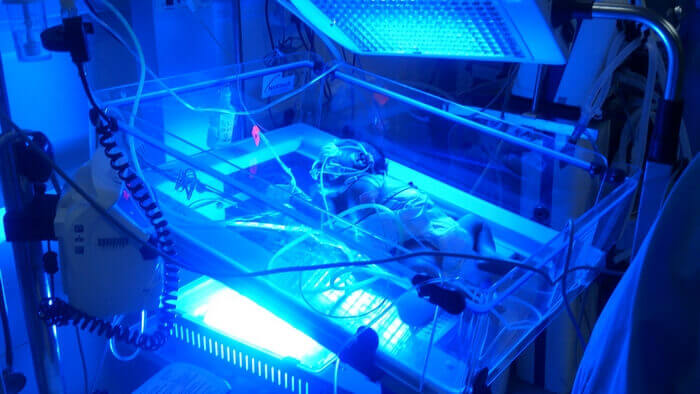
We had few cases of suspected GI bleeding, admitted or referred to our NICU. One was case of Hematochezia and other was case of fresh blood in vomitus. Both babies were born to mother with Antepartum hemorrhage. The general condition of the babies were fine, and the vitals. There was no other reason for GI bleed at such early period in these neonates.
nicu

Generally, in absence of Apt test, we would get Sepsis workup, PT, aPTT, platelets done, and baby would also be given IV antibiotics, Vitamin K and possibly FFP. But a Simple test can prevent unnecessary interventions when history is clear, and baby is well.

Vomiting of blood mixed content on first day or two in newborn is a commonly encountered problem. In Neonates, swallowed maternal blood is the most common cause in case of suspected GI bleeding. Blood can be either swallowed during delivery or swallowed from cracked maternal nipples during breast feeding. 1. As gastric transit is quick, newborn even present mimicking hematochezia or malena. A simple bedside test can rule out lot of confusion and prevent unnecessary intervention, specially when amount is significant and requires evaluation. Apt test is useful for differentiating between newborn swallowing mother’s blood and fetal gastrointestinal bleeding. One is a benign condition and other is a worrisome one.

How is Apt Test done?

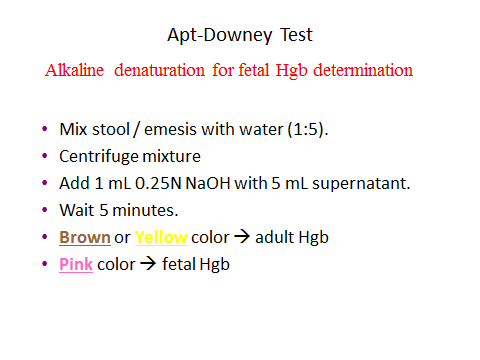
Non-quantitative method based on resistance of hemoglobin F to alkali denaturation. This test is useful ONLY on frankly bloody (red) stool or gastric specimens, not tarry (black) specimens. Concept is- Fetal Hb is resistant to alkali denaturation.
apt test steps

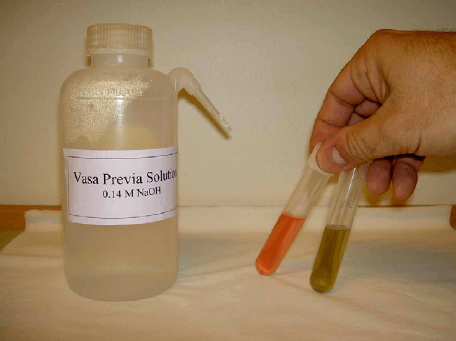
Color change in Positive and Negative test. Alkali Denaturation Test
apt test vasa previa

Limitations:

1. False-positive result as oxyhemoglobin has been converted to hematin.

2. Visual judgement of color produced by test procedure may lead to error if only a small amount of blood is present.

3. Bilirubin containing meconium and possibly other substances may cause stool color interference.

Other Diagnsotic consideration should be:

1. NEC
2. Midgut volvulus
3. Sepsis – DIC
4. Early onset hemorrhagic disease of Newborn
5. Stress gastic ulcer
6. Traumatic bleed – NG or CPAP induced nasal or gastric mucosal bleed.

In a sick newborn, just relying on Apt test does not seem logical and detail work up is needed.

Pediatric doctor
Dr. Pedchrome

MD Pediatrics and Fellowship Neonatology, he chooses to stay anonymous. He often writes his views online as well as share few important topics for medical students, doctors and specially parents. He does research in pediatrics.
  • Facebook
  • Twitter
PGMEE, MRCS, USMLE, MBBS, MD/MS NeonatesObGynPediatrics

Post navigation

Previous post
Next post

Related Posts

PGMEE, MRCS, USMLE, MBBS, MD/MS amino acid structure

Amino Acids Mnemonics

Jun 22, 2016Aug 12, 2018

What are amino acids ? Amino acids are molecules containing: An amine group A carboxylic acid group A side chain that varies between different amino acids Assign the names of these amino acids to 20 different alphabets The technique that you are going to use to remember all these are given…

Read More
PGMEE, MRCS, USMLE, MBBS, MD/MS

Elbow Anastomoses : Mnemonic

Mar 14, 2021Mar 14, 2021

First things first. It is essential to understand the meaning of collateral and recurrent arteries. Recurrent arteries turn back so as to reverse direction. Collateral arteries refer to side branches of the major arteries. Mnemonic: M.R. Deep On the posterior aspect of the shaft of the humerus: Profunda brachii (Deep…

Read More
PGMEE, MRCS, USMLE, MBBS, MD/MS cellular adaptations

Cellular Adaptations

Jun 17, 2016Aug 31, 2018

Hypertrophy, Hyperplasia, Atrophy and Metaplasia are the main four types of cellular adaptations. Adaptations are: Reversible changes In the number, size, phenotype, metabolic activity or functions of cells In response to the changes in the environment (stress).   Hypertrophy Definition: Increase in cell size Occurs in: non-dividing (permanent) cells: cardiac and…

Read More

Leave a Reply Cancel reply

Your email address will not be published. Required fields are marked *

This site uses Akismet to reduce spam. Learn how your comment data is processed.

Pre-clinical (Basic Sciences)

Anatomy

Biochemistry

Community medicine (PSM)

Embryology

Microbiology

Pathology

Pharmacology

Physiology

Clinical Sciences

Anesthesia

Dermatology

Emergency medicine

Forensic

Internal medicine

Gynecology & Obstetrics

Oncology

Ophthalmology

Orthopedics

Otorhinolaryngology (ENT)

Pediatrics

Psychiatry

Radiology

Surgery

RSS Ask Epomedicine

  • What to study for Clinical examination in Orthopedics?
  • What is the mechanism of AVNRT?

Epomedicine weekly

  • About Epomedicine
  • Contact Us
  • Author Guidelines
  • Submit Article
  • Editorial Board
  • USMLE
  • MRCS
  • Thesis
©2026 Epomedicine | WordPress Theme by SuperbThemes