Skip to content
Epomedicine

Mnemonics, Simplified Concepts & Thoughts

Epomedicine

Mnemonics, Simplified Concepts & Thoughts

Do and Don’t during episode of seizure

Epomedicine, Apr 3, 2014Apr 3, 2014

During and after an episode of seizure, (epilepsy, fit or convulsion), here are few recommended things that you should do and you shouldn’t do.

Dos

Protect the person from injury- remove harmful objects from nearby
Place something soft such as folded sweater below the head
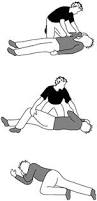
Help the person to breath by gently placing them in recovery position once the seizure has finished.
Stay with the person until they come round and are fully recovered.
Be calmly reassuring
download


Don’ts
Restraints the person’s movements
Put anything in the person’s mouth
Try to move them unless they are in danger
Give them anything to eat or drink until they are fully recovered.
Attempt to bring them round.

Source- British Pediatric Neurology Association- 
International Pediatric Epilepsy Training course materials


  • Facebook
  • Twitter
Emergency Medicine

Post navigation

Previous post
Next post

Related Posts

Emergency Medicine

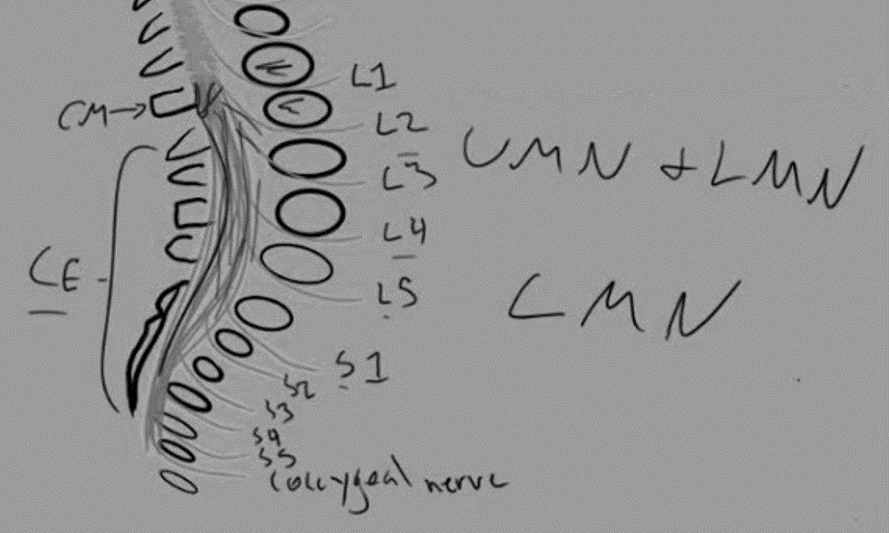
Conus Medullaris Syndrome vs Cauda Equina Syndrome : Anatomical basis and Mnemonic

May 8, 2022May 8, 2022

Definitions Condition Vertebral level of injury Neurological level of injury ISNCI level of injury Conus Medullaris Syndrome (CMS) T12-L2 T12-S5 T11 Cauda Equina Syndrome (CES) L3-L5 L3-S5 L2 Anatomy The spinal cord ends as a tapered structure called the conus medullaris at the level of L2–L3 disc in the neonate…

Read More
Emergency Medicine Canadian C-spine rule

C-spine Clearance

Oct 26, 2017Feb 9, 2023

C-spine clearance refers to a clinical decision suggesting the absence of acute bone related, ligamentous and neurologic abnormalities of the cervical spine based on history, physical exam and/or negative radiologic studies. NEXUS criteria for C-spine Clearance NEXUS (National Emergency X-Radiography Utilization Study) is a set of validated criteria used to decide…

Read More
Emergency Medicine gustilo anderson type III

Open fractures : Mnemonics

Apr 17, 2017Oct 9, 2022

Gustilo Anderson Classification Mnemonics:1. Parameters: ABCD’S (Area, Bone, Circulation, Dirt, Soft tissue)2. Classification: I, II, III then A, B, C Progression for grade I to III C implies a higher degree of energy involved in the injury, higher soft tissue and bone damage, and higher potential for complications. Type I:…

Read More

Leave a Reply Cancel reply

Your email address will not be published. Required fields are marked *

This site uses Akismet to reduce spam. Learn how your comment data is processed.

Pre-clinical (Basic Sciences)

Anatomy

Biochemistry

Community medicine (PSM)

Embryology

Microbiology

Pathology

Pharmacology

Physiology

Clinical Sciences

Anesthesia

Dermatology

Emergency medicine

Forensic

Internal medicine

Gynecology & Obstetrics

Oncology

Ophthalmology

Orthopedics

Otorhinolaryngology (ENT)

Pediatrics

Psychiatry

Radiology

Surgery

RSS Ask Epomedicine

  • What to study for Clinical examination in Orthopedics?
  • What is the mechanism of AVNRT?

Epomedicine weekly

  • About Epomedicine
  • Contact Us
  • Author Guidelines
  • Submit Article
  • Editorial Board
  • USMLE
  • MRCS
  • Thesis
©2026 Epomedicine | WordPress Theme by SuperbThemes