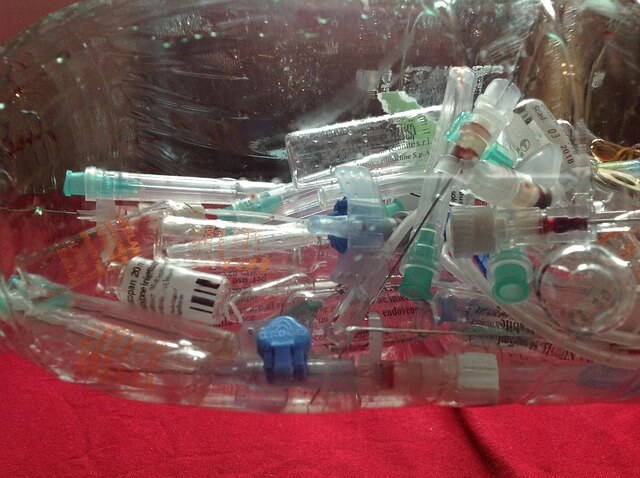
Custom plastic injection molding is a versatile manufacturing process used to produce precise, repeatable plastic components at scale. From medical devices and aerospace components to electronic housings and industrial parts, injection molding allows manufacturers to create complex geometries while maintaining tight dimensional tolerances and consistent quality. Plastic Molded Concepts (PMC) is an example of a manufacturer with extensive experience in this field. PMC is an ISO 9001:2015 certified company with 50 years of experience providing high-precision injection molding, overmolding, and insert molding services for demanding industries including aerospace, medical, and electronics. For businesses seeking specialized expertise, medical plastic injection molding companies can help meet the stringent precision, quality, and performance requirements of healthcare applications.
What Is Custom Plastic Injection Molding?
Custom plastic injection molding involves melting plastic resin and injecting it under pressure into a specially designed mold. Once the material cools and solidifies, the finished component is ejected from the mold.
Unlike standard molding applications, custom injection molding is tailored to the specific requirements of a product. Factors such as material properties, component geometry, tolerances, surface finish, production volume, and intended application all influence the design and manufacturing process.
The result is a production method capable of delivering thousands or even millions of consistent components with highly repeatable dimensions.
Key Custom Injection Molding Services
A comprehensive molding partner can support a project from the initial concept through full-scale production. Common services include:
High-Precision Injection Molding
Precision injection molding is designed for components that require tight dimensional control and repeatability. It is particularly valuable in industries where even small variations can affect product performance, safety, or assembly.
Manufacturers can work with engineering-grade thermoplastics and other specialized materials to produce components suited to demanding operating environments.
Overmolding
Overmolding combines two or more materials or substrates into a single component. A softer material may be molded over a rigid plastic part, for example, to create a comfortable grip, improve sealing, provide insulation, or enhance impact resistance.
This approach can reduce assembly requirements while integrating multiple functions into one finished component.
Insert Molding
Insert molding incorporates components such as metal inserts directly into a molded plastic part. The insert becomes securely integrated during the molding process, potentially reducing secondary assembly steps and improving overall component durability.
Insert molding is useful for applications requiring threaded connections, electrical contacts, reinforcement, or other integrated features.
From Mold Design to Production
Successful injection molding begins well before the first component is produced. Mold design has a direct impact on part quality, cycle time, tooling life, and manufacturing cost.
Experienced manufacturers can evaluate a component’s geometry and identify potential issues such as uneven wall thickness, difficult draft angles, undercuts, sink marks, warpage, or inadequate material flow. Addressing these considerations during design can prevent costly tooling modifications later.
Design-for-manufacturing expertise is therefore an important part of selecting a custom injection molding partner.
Material Selection Matters
The right plastic material depends on the component’s intended environment and performance requirements. Different materials offer different combinations of strength, stiffness, flexibility, chemical resistance, temperature resistance, wear resistance, and electrical properties.
Material selection may also depend on regulatory or industry requirements. Medical, aerospace, and electronics applications can have particularly demanding specifications.
A knowledgeable molding partner can help evaluate available materials based on the application’s mechanical and environmental requirements rather than simply selecting a resin based on cost.
Prototype Development and Product Validation
Prototyping allows manufacturers and product developers to evaluate a component before committing to high-volume production. Depending on the project, prototype development can help assess fit, function, manufacturability, and design performance.
Early testing can identify opportunities to modify the component or mold design before production tooling is finalized. This can reduce development risks and help shorten the path from concept to commercial manufacturing.
Forensic Failure Analysis
When a molded plastic component fails in service, determining the underlying cause is often more important than simply replacing the part.
Forensic failure analysis can examine factors such as material selection, molding conditions, component design, environmental exposure, mechanical loading, and manufacturing defects. Understanding why a component failed can help engineers implement corrective measures and prevent similar failures in future production.
This type of technical support can be particularly valuable for critical components used in aerospace, medical, electronics, and industrial applications.
Secondary Operations
Injection molding does not always represent the final manufacturing step. Depending on the component, secondary operations may be required to achieve the desired finished product.
These can include processes such as trimming, machining, assembly, finishing, printing, or other post-molding operations. Having these capabilities available through the same manufacturing partner can simplify production management and reduce the number of separate suppliers involved in a project.
Industries That Depend on Custom Plastic Components
Custom injection molding is used across a wide range of industries.
Aerospace: Components may need to withstand demanding mechanical, thermal, and environmental conditions while maintaining low weight and precise dimensions.
Medical: Medical components often require consistent manufacturing, appropriate material selection, and close attention to quality requirements.
Electronics: Plastic housings, connectors, insulation components, and other parts can require precise dimensions and specialized electrical or thermal properties.
Other applications include automotive, industrial equipment, consumer products, and specialized engineering systems.
Why Experience and Quality Systems Matter
Choosing a molding supplier is not simply a matter of comparing production costs. Engineering expertise, quality systems, tooling capabilities, material knowledge, and experience with similar applications can all affect the final result.
An ISO 9001:2015 certification demonstrates that a manufacturer operates within a structured quality management system. Combined with decades of manufacturing experience, this can provide customers with greater confidence in process consistency and quality control.
PMC’s 50 years of experience, ISO 9001:2015 certification, and capabilities in precision injection molding, overmolding, and insert molding illustrate the type of integrated expertise that can benefit complex manufacturing projects.
Choosing the Right Injection Molding Partner
When evaluating a custom plastic injection molding company, consider more than its ability to produce a molded part. Important questions include:
- Can the manufacturer assist with mold and component design?
- Does it have experience with the required plastic materials?
- Can it support prototyping and design validation?
- Does it have experience with the application’s industry?
- Can it investigate component failures when problems arise?
- Are secondary operations available when needed?
- Does the company maintain a recognized quality management system?
- Can it scale production while maintaining consistent quality?
A supplier capable of supporting these stages can become a long-term manufacturing partner rather than simply a production vendor.
Conclusion
Custom plastic injection molding provides manufacturers with a practical way to produce accurate, durable, and repeatable components across a wide range of industries. However, achieving consistent results requires more than the molding process itself. Effective mold design, appropriate material selection, prototype development, quality control, failure analysis, and secondary operations can all contribute to the success of a project.
Companies such as Plastic Molded Concepts demonstrate how an experienced, quality-focused manufacturer can support customers throughout the product development and manufacturing lifecycle. For organizations developing precision plastic components for aerospace, medical, electronics, or other demanding applications, partnering with an experienced injection molding specialist can help turn a design concept into a reliable finished product.