Skip to content
Epomedicine

Mnemonics, Simplified Concepts & Thoughts

Epomedicine

Mnemonics, Simplified Concepts & Thoughts

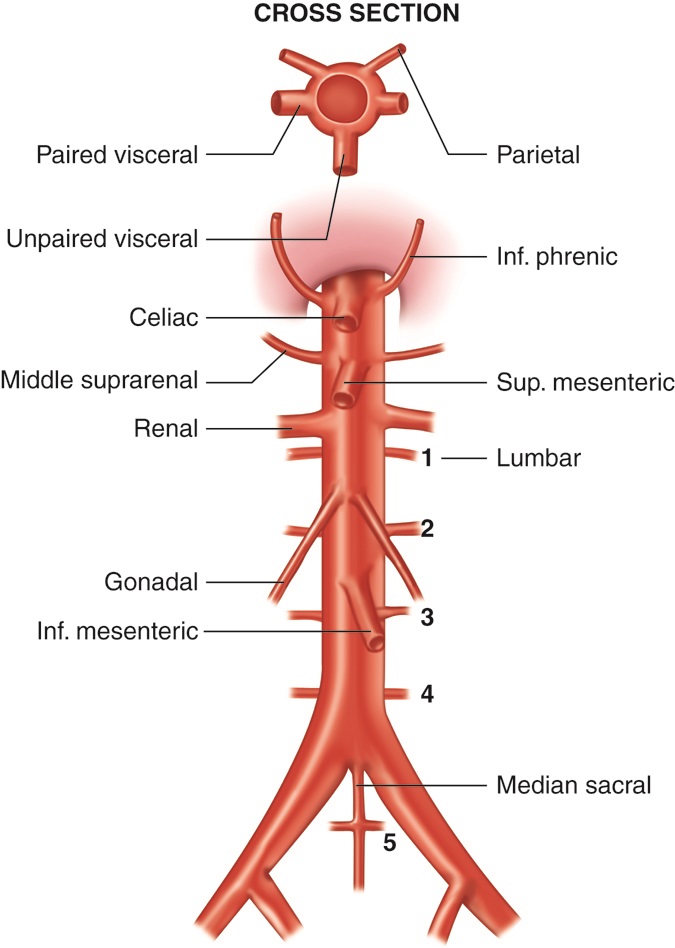
Unpaired Branches of Abdominal Aorta : Mnemonic

Epomedicine, Jul 2, 2024Jul 2, 2024
abdominal aorta branches
Retrieved from Anatomy & Physiology by Open Learning Initiative (CC BY-NC-SA).
Celiac trunkSuperior mesenteric artery (SMA)Inferior mesenteric artery (IMA)
LevelT12L1L3
BranchesLHS (Left Hand Side)MRI (distal to proximal)LeSS
1.Left gastric arteryMiddle colic arteryLeft colic artery
2.common Hepatic arteryRight colic arterySigmoid arteries
3.Splenic arteryIleocolic arterySuperior rectal artery
4.Intenstinal branches (ileal, jejunal)
5.Inferior pacreaticoduodenal artery
  • Facebook
  • Twitter
PGMEE, MRCS, USMLE, MBBS, MD/MS AnatomyCardiovascular system

Post navigation

Previous post
Next post

Related Posts

PGMEE, MRCS, USMLE, MBBS, MD/MS

Irritable Bowel Syndrome (IBS) : Mnemonic Approach

Jul 27, 2023Jul 27, 2023

Rome IV Criteria for IBS Mnemonic: 1, 2, 3 Recurrent abdominal pain on average: Criteria fulfilled for the last 3 months with symptom onset at least 6 months prior to diagnosis Alarm findings (Red flags) Mnemonic: ALARMING Additional diagnostic testing Mnemonic: Rule out 4 “C” 1. Carcinoma 2. Celiac disease…

Read More
PGMEE, MRCS, USMLE, MBBS, MD/MS sleep eeg

Sleep Stages and EEG : Mnemonic

Jul 2, 2018

Mnemonic: BATS Drink Blood – in sleep 1. Awake with eyes open: Beta wave (highest frequency and lowest amplitude) 2. Awake with eyes closed: Alpha wave (synchronized brain activity) 3. NREM/Slow wave/Orthodox sleep (70-80%): Stage 1 (light sleep): Theta waves Stage 2 (intermediate): Sleep spindles and K-complex Stage 3 and…

Read More
PGMEE, MRCS, USMLE, MBBS, MD/MS Child Pugh Score

Hepatorenal syndrome (HRS) – Quick revision

Apr 18, 2017

New Criteria for HRS 1. Cirrhosis with ascites 2. Serum creatinine >1.5mg/dl 3. No sustained improvement in renal function after 2 days of diuretic withdrawl (if on diuretics) and volume expansion with albumin infusion at 1 gm/kg/day upto a maximum of 100 gm/day. 4. No evidence of shock 5. No…

Read More

Leave a Reply Cancel reply

Your email address will not be published. Required fields are marked *

This site uses Akismet to reduce spam. Learn how your comment data is processed.

Pre-clinical (Basic Sciences)

Anatomy

Biochemistry

Community medicine (PSM)

Embryology

Microbiology

Pathology

Pharmacology

Physiology

Clinical Sciences

Anesthesia

Dermatology

Emergency medicine

Forensic

Internal medicine

Gynecology & Obstetrics

Oncology

Ophthalmology

Orthopedics

Otorhinolaryngology (ENT)

Pediatrics

Psychiatry

Radiology

Surgery

RSS Ask Epomedicine

  • What to study for Clinical examination in Orthopedics?
  • What is the mechanism of AVNRT?

Epomedicine weekly

  • About Epomedicine
  • Contact Us
  • Author Guidelines
  • Submit Article
  • Editorial Board
  • USMLE
  • MRCS
  • Thesis
©2026 Epomedicine | WordPress Theme by SuperbThemes