Skip to content
Epomedicine

Mnemonics, Simplified Concepts & Thoughts

Epomedicine

Mnemonics, Simplified Concepts & Thoughts

Pregabalin : Pharmacology

Dr. Henrique Durão, FCP (CMSA), Dec 5, 2021Dec 5, 2021

Pharmacokinetics

  • After oral ingestion, Pregabalin is rapidly absorbed (Tmax 1.3 hr)
  • Bioavailability is >90% and independent of dose
  • Pregabalin is NOT protein bound
  • Vd is 0.4 L/kg
  • Serum pregabalin concentrations are linearly related to dosage
  • Pregabalin is NOT metabolized
  • Pregabalin is primarily excreted unchanged in urine (98%) with a clearance similar to the GFR
  • Patients with impaired renal function show a reduced drug clearance and require a reduction in dosage
  • The t1/2 elimination half life in serum is 4.6-6.8 hr
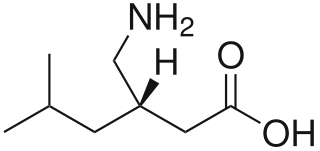
pregabalin

Recommended dose adjustments based on varying degrees of renal impairment

CrCl (mL/min)GabapentinPregabalin
59-30700 mg BD150 mg BD
100 mg TDS
29-15700 mg OD75 mg BD
50 mg TDS
<15300 mg OD75 mg OD
Hemodialysis supplemental doses post dialysis100-300 mg75-150 mg

Rowland Tozer Method

Q = 1 – [Fe * (1-KF)]

Q = drug dose adjustment factor

Fe = drug fraction excreted unchanged in urine

KF = ratio of patient’s CrCl to normal 120 ml/min

If CrCl = 60 ml/min, Fe = 0.98, KF = 0.5, Q = 0.51

i.e., Administer 50% dose at the normal dosing interval, or administer the normal dose at twice the dosing interval.

[CP_CALCULATED_FIELDS id=”17″]

Therapeutic Drug Monitoring

The role of TDM Therapeutic Drug Monitoring for Pregabalin has not yet been established and a reference range for the drug has yet to be identified.

There are 2 published methods for the determination of serum pregabalin.

  1. HPLC with fluorescence detection
  2. HPLC analysis by UV detection

Therapeutic and toxic ranges are not well defined.

Therapeutic concentrations are reported to be from 2 to 5 mcg/ml, while toxicity may occur at concentrations above 10 mcg/ml.

[CP_CALCULATED_FIELDS id=”18″]

[CP_CALCULATED_FIELDS id=”19″]

Effects of other drugs on Pregabalin concentrations

Pharmacokinetic interactions with concurrently administered drugs are not expected because Pregabalin is neither bound to serum proteins not metabolized.

A study suggested that enzyme inducers AEDs (e.g., carbamazepine) can moderately decrease pregabalin serum concentration by +/- 20-30%.

henrique durao
Dr. Henrique Durão, FCP (CMSA)

Hard worker, Reliable, Team player, Family man.

MBChB (O’Porto Univ.), Dip HIV Man (CMSA), DTM&H (Wits), DipPEC (CMSA), Dip Internal Medicine (CMSA), M. Med. Clinical Pharm [Cum Laude] (Univ. Pretoria), FCP (CMSA)

  • Facebook
  • Twitter
PGMEE, MRCS, USMLE, MBBS, MD/MS Internal medicinePharmacology

Post navigation

Previous post
Next post

Related Posts

PGMEE, MRCS, USMLE, MBBS, MD/MS

Pharmacokinetics Mnemonics

Aug 12, 2019Aug 18, 2024

ADME is the 4-letter acronym used to describe pharmacokinetics: ABCD is another 4-letter acronym used to describe pharmacokinetics: The most important pharmacokinetic parameters from a dosing point of view are: Vd = Volume of distributionD = DoseCo = Concentration in plasmaCL = ClearancekE = Elimination constantt1/2 = Half life In…

Read More
PGMEE, MRCS, USMLE, MBBS, MD/MS

Refeeding Syndrome : Mnemonics

Jul 1, 2024Jul 1, 2024

Risk factors Mnemonic: ABCD Pathophysiology Mnemonic: PPM Malnourished (depleted intracellular Phosphate, Potassium, Magnesium) → Refeeding → Increased glucose load → Insulin spikes → Drives PPM into cells → Hypophosphatemia (major abnormality), hypokalemia, hypomagnesemia Prevention If patient hasn’t not eaten for >5 days, aim to refeed at <50% energy and protein…

Read More
PGMEE, MRCS, USMLE, MBBS, MD/MS

Branches of Celiac trunk, Superior and Inferior mesenteric arteries and veins

May 13, 2024May 13, 2024

Celiac trunk (T12) Mnemonic: LHS (Left Hand Side) Supplies Foregut (Upto opening of bile duct in 2nd part of duodenum) 1. Left gastric artery 2. Hepatic artery (common) 3. Splenic artery Superior Mesenteric Artery (L1) Mnemonic: IMRIS Supplies Midgut (Upto proximal 2/3 of transverse colon) 1. Inferior pancreaticoduodenal artery 2….

Read More

Leave a Reply Cancel reply

Your email address will not be published. Required fields are marked *

This site uses Akismet to reduce spam. Learn how your comment data is processed.

Pre-clinical (Basic Sciences)

Anatomy

Biochemistry

Community medicine (PSM)

Embryology

Microbiology

Pathology

Pharmacology

Physiology

Clinical Sciences

Anesthesia

Dermatology

Emergency medicine

Forensic

Internal medicine

Gynecology & Obstetrics

Oncology

Ophthalmology

Orthopedics

Otorhinolaryngology (ENT)

Pediatrics

Psychiatry

Radiology

Surgery

RSS Ask Epomedicine

  • What to study for Clinical examination in Orthopedics?
  • What is the mechanism of AVNRT?

Epomedicine weekly

  • About Epomedicine
  • Contact Us
  • Author Guidelines
  • Submit Article
  • Editorial Board
  • USMLE
  • MRCS
  • Thesis
©2026 Epomedicine | WordPress Theme by SuperbThemes