Skip to content
Epomedicine

Mnemonics, Simplified Concepts & Thoughts

Epomedicine

Mnemonics, Simplified Concepts & Thoughts

Osteogenesis Imperfecta : Mnemonic

Epomedicine, Oct 28, 2022Aug 13, 2023

Synonym: Brittle Bone Disease

Incidence: 1 in 20,000

Gene defect: Col1A1 (17q) and Col1A2 (7q)

Mnemonic: Remember “one” for “bone”. Collagen one is the main composition of bone. OI is a disorder of bone. Hence, the defect is is in Col1.
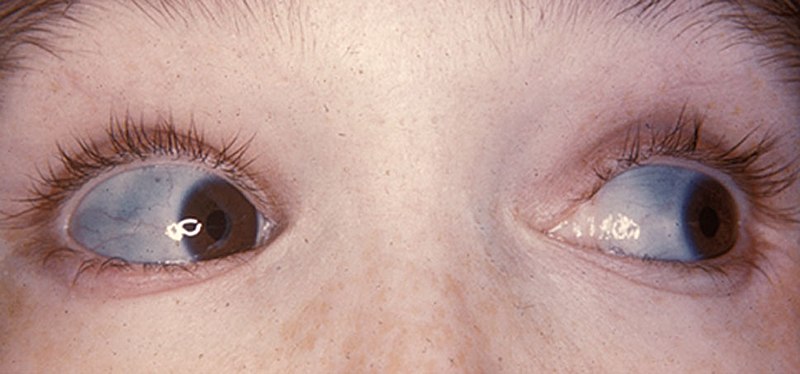
blue sclera osteogenesis imperfecta
Herbert L. Fred, MD and Hendrik A. van Dijk, CC BY-SA 3.0, via Wikimedia Commons

Features

Mnemonic: BLOOD

  1. Blue sclera
  2. Otosclerosis (SNHL)
  3. Osseous fragility
  4. Dentinogenesis imperfecta
Sillence TypeInheritanceFeaturesMnemonicCollagen
IADBlue sclera, Otosclerosis; Osseous fragility (variable) – mildBlONormal quality; Insufficient quantity
IIAD, ARLethal perinatalLPoor quantity and quality
IIIAROsseous fragility (moderate to severe) – progressive deformingOCollagen poorly formed; normal quantity
IVADOsseous fragility, Dentinogenesis imperfecta – deforming with normal scleraODSufficient quantity but poor quality

Treatment

Mnemonic: BDSM

1. Basilar invagination: Bone resection via transoral approach

2. Deformities: Realignment osteotomy with rod fixation (Sofield-Miller procedure)

3. Scoliosis: Operate when curves >45 degrees in mild forms and >35 degrees in severe forms

4. Multiple fractures:

  • Prevention: Bracing and Bisphosphonate
  • <2 years old: Conservative
  • >2 years old: Telescoping rods (Duval)
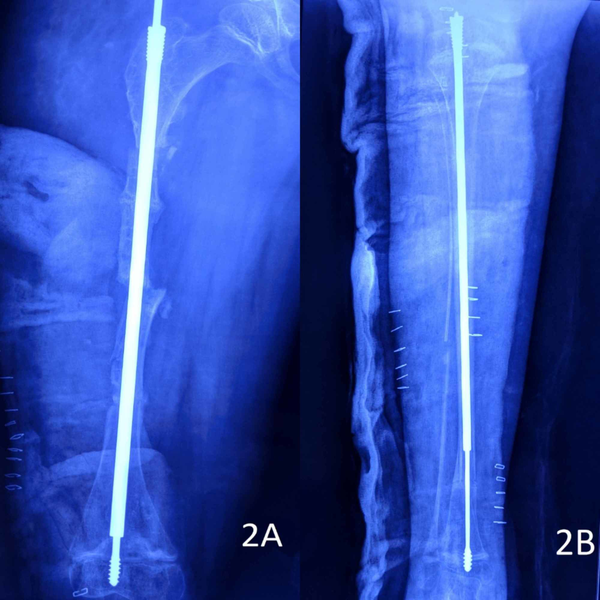
Telescoping rod osteogenesis imperfecta
Herbert L. Fred, MD and Hendrik A. van Dijk, CC BY-SA 3.0, via Wikimedia Commons

Reference:

  1. General Orthopaedics and Basic Science edited by Nikolaos K. Paschos, George Bentley
  2. Sillence DO, Senn A, Danks DM. Genetic heterogeneity in osteogenesis imperfecta. J Med Genet. 1979;16:101–116.
  • Facebook
  • Twitter
PGMEE, MRCS, USMLE, MBBS, MD/MS GeneticsOrthopedicsPediatrics

Post navigation

Previous post
Next post

Related Posts

PGMEE, MRCS, USMLE, MBBS, MD/MS

Oestern and Tscherne Classification for Closed fractures

Sep 6, 2020Sep 6, 2020

The classification system for closed fractures is based on the physiologic concept that the energy imparted to the bone (and the resultant fracture pattern) directly correlates with the energy transferred to the surrounding soft tissues. Grade Soft tissue injury Fracture Compartment C0 Absent or Negligible Simple (Spiral) Soft and/or Normal…

Read More
PGMEE, MRCS, USMLE, MBBS, MD/MS

Kambin’s Triangle or Prism

Apr 10, 2025Apr 10, 2025

There is confusion regarding the borders of Kambin’s triangle across the literature. Kambin originally described the borders of this triangular working zone as: Though it was named as a “triangle” it was described with 4 borders with 2 triangles (in AP view and Lateral view) which gives a 3D structure…

Read More
PGMEE, MRCS, USMLE, MBBS, MD/MS

APGAR score in practice and its implications

Sep 2, 2020Sep 2, 2020

A baby is born. Pediatrician receives the delivery, fetal bradycardia with maternal hypertension is the scenario. Baby is efficiently resuscitated. By the time everything is settled its around 7-8 minutes of babies life. In such a rush scenario, APGAR now has to be awarded retrospectively. A skilled pediatrician or neonatologist…

Read More

Leave a Reply Cancel reply

Your email address will not be published. Required fields are marked *

This site uses Akismet to reduce spam. Learn how your comment data is processed.

Pre-clinical (Basic Sciences)

Anatomy

Biochemistry

Community medicine (PSM)

Embryology

Microbiology

Pathology

Pharmacology

Physiology

Clinical Sciences

Anesthesia

Dermatology

Emergency medicine

Forensic

Internal medicine

Gynecology & Obstetrics

Oncology

Ophthalmology

Orthopedics

Otorhinolaryngology (ENT)

Pediatrics

Psychiatry

Radiology

Surgery

RSS Ask Epomedicine

  • What to study for Clinical examination in Orthopedics?
  • What is the mechanism of AVNRT?

Epomedicine weekly

  • About Epomedicine
  • Contact Us
  • Author Guidelines
  • Submit Article
  • Editorial Board
  • USMLE
  • MRCS
  • Thesis
©2026 Epomedicine | WordPress Theme by SuperbThemes