Skip to content
Epomedicine

Mnemonics, Simplified Concepts & Thoughts

Epomedicine

Mnemonics, Simplified Concepts & Thoughts

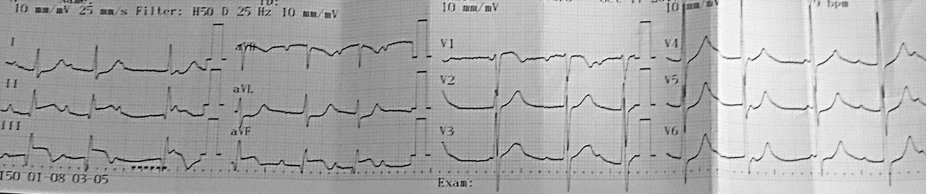
inferior wall stemi ecg

GRACE, HEART and TIMI score Mnemonics : Cardiac Chest Pain Risk Stratification

Epomedicine, Oct 18, 2020Oct 18, 2020
inferior wall stemi ecg

GRACE Score

Mnemonic: GRACE

A. Global Registry of Acute Coronary Events

B. Renal: Creatinine

C. Age

D. Cardiac:

  • Heart rate
  • Systolic blood pressure
  • Cardiac arrest at admission
  • Killip class:
    • I – No CHF
    • II – Basal rales and/or JVD
    • III – Pulmonary edema
    • IV – Cardiogenic shock

E. ECG and Enzyme:

  • ST segement deviation on ECG
  • Abnormal cardiac enzymes

For GRACE 6 month risk score:

2 varibales are not used:

  1. Killip class
  2. Cardiac arrest at admission

3 other variables are used:

  1. History of congestive heart failure
  2. History of myocardial infarction
  3. No in-hospital PCI

HEART score

Mnemonic: HEART

a. History:

  • 2: Highly suggestive of cardiac origins
  • 1: Moderately suspicious
  • 0: Slightly suspicious

b. ECG:

  • 2: Significant ST depression
  • 1: Non-specific repolarization differences
  • 0: Normal

c. Age:

  • 2: >65 years
  • 1: 45-65 years
  • 0: <45 years

d. Risk factors:

  • 2: 3 or more risk factors or history of atherosclerotic disease
  • 1: 1-2 risk factors
  • 0: No known risk factors

e. Troponin:

  • 2: >3 x normal limit
  • 1: 1-3 x normal limit
  • 0: Within normal limit

Interpretation:

HEART score <4: Low risk (0.9-1.7%) of Major Adverse Cardiac Events (MACE) at 6 weeks (Can be considered for direct ED discharge or early discharge)

HEART score 4-6: Moderate risk (12-16.6%) of MACE at 6 weeks (Recommend admission for medical optimization and further workup)

HEART score >6: High tisk (50-65%) of MACE at 6 weeks (Recommend advancing for early coronary angiogram)

TIMI Score

Mnemonic: AMERICA

  1. Age (greater than 65 years)
  2. Markers (raised serum cardiac markers)
  3. ECG (ST segment depression ≥0.5 mm at presentation)
  4. Risk factors (atleast 3 for coronary artery disease)
  5. Ischemia (atleast 2 anginal events previous 24 hours)
  6. Coronary stenosis (prior stenosis of 50% or more)
  7. Aspirin (use in previous 7 days)

1 point for each risk factor (maximum score 7).

Interpretation:

  1. Low risk: 0-2
  2. Intermediate risk: 3-4
  3. High risk: 5-7
  • Facebook
  • Twitter
PGMEE, MRCS, USMLE, MBBS, MD/MS Cardiovascular systemInternal medicine

Post navigation

Previous post
Next post

Related Posts

PGMEE, MRCS, USMLE, MBBS, MD/MS cruciate knee mnemonic

Cruciate ligaments of Knee : Mnemonics

Apr 15, 2020Sep 18, 2022

Mnemonic: Cross your long fingers over the index finger and superimpose this hand over your ipsilateral knee. This will help us to remember the orientation of the anterior cruciate ligament (ACL) and posterior cruciate ligament (PCL) of knee. Also remember the mnemonic “LAMP” which means Lateral ACL and Medial PCL….

Read More
PGMEE, MRCS, USMLE, MBBS, MD/MS

Liver Anatomy : Mnemonics

May 13, 2024May 13, 2024

Ligaments Mnemonic: TV TFCL 1. True ligaments: 2. False ligaments (Peritoneal folds): Posteroinferior (Visceral) Surface of Liver Anatomical halves are separated by Ligamentum venosum and Ligamentum teres. Vascular halves are separated by IVC and Gall bladder. Caudate lobe and Quadrate lobe: Mnemonic: IVC are in one line Mnemonic: LGBTQ are…

Read More
PGMEE, MRCS, USMLE, MBBS, MD/MS

Enzyme Inducers and Inhibitors : Mnemonic

Oct 1, 2021Oct 1, 2021

Cytochrome P450 Inducers Mnemonic: SCRAP GP Sulfonylureas, Smoking Carbamazepine, Corticosteroids Rifamycins (Rifampicin, Rifabutin) Alcohol (Chronic) Phenytoin Griseofulvin Phenobarbital Cytochrome P450 Inhibitors Mnemonic 1: VIDEOCASE Valproate Isoniazid Disulfiram Erythromycin, Clarithromycin (not Azithromycin) Omeprazole Cimetidine Allopurinol Sulfonamides Ethanol (Acute) Mnemonic 2: SICKFACES.COM Sodium valproate Isoniazid Cimetidine Ketoconazole Fluconazole Alcohol (Acute) Chloramphenicol Erythromycin…

Read More

Leave a Reply Cancel reply

Your email address will not be published. Required fields are marked *

This site uses Akismet to reduce spam. Learn how your comment data is processed.

Pre-clinical (Basic Sciences)

Anatomy

Biochemistry

Community medicine (PSM)

Embryology

Microbiology

Pathology

Pharmacology

Physiology

Clinical Sciences

Anesthesia

Dermatology

Emergency medicine

Forensic

Internal medicine

Gynecology & Obstetrics

Oncology

Ophthalmology

Orthopedics

Otorhinolaryngology (ENT)

Pediatrics

Psychiatry

Radiology

Surgery

RSS Ask Epomedicine

  • What to study for Clinical examination in Orthopedics?
  • What is the mechanism of AVNRT?

Epomedicine weekly

  • About Epomedicine
  • Contact Us
  • Author Guidelines
  • Submit Article
  • Editorial Board
  • USMLE
  • MRCS
  • Thesis
©2026 Epomedicine | WordPress Theme by SuperbThemes