Skip to content
Epomedicine

Mnemonics, Simplified Concepts & Thoughts

Epomedicine

Mnemonics, Simplified Concepts & Thoughts

Avascular Necrosis (Osteonecrosis) of Various Bones : Stages and Management

Epomedicine, Jul 23, 2024Jul 23, 2024

Propensity

  1. Subarticular regions:
    • Lie at the most distant parts of the body’s vascular territory
    • Largely enclosed by cartilage, giving restricted access to blood vessels
    • Endarterioles with limited collateral connections
  2. Marrow and bone cells:
    • Vascular sinusoids unlike arterial capillaries have no adventitial layer and their patency is determined by the volume and pressure of the surrounding marrow tissue
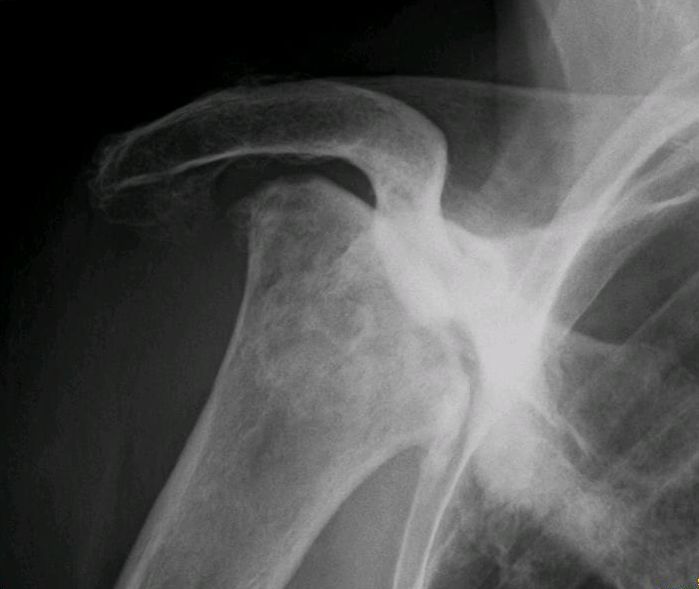
osteonecrosis of humerus head
Jmarchn, CC BY-SA 3.0, via Wikimedia Commons

Stages and Management

StagesHip (modified Ficat-Arlet)Shoulder (Cruess)Lunate (Lichtman)Knee (Koshino)Scaphoid (Herbert and Lanzetta)Management
0 – Silent+NWB joints – Immobilization, NSAIDs

WB joints –
a. Realignment osteotomy
b. Core decompression +/- bone grafting or MSC therapy
I – Suggestive clinically and MRI+++++As above

NWB joints – Arthrodesis

Kienbock (ulnar negative variance): Joint levelling procedure
II – Sclerosis or Subchondral cysts+; IIb – Subchondral fracture (Crescent sign)++; IIb – Subchondral fracture++As above
III – Subchondral collapse and Sphericity loss+++; IIIa – rotational dislocation of scaphoid absent; IIIb – rotational dislocation of scaphoid present (ring sign)++Arthrodesis
Partial or total joint replacement

Kienbock IIIb – Proximal row carpectromy
IV – Space narrowing and Secondary arthrosis++; humeral head+++As above
V – Space narrowing and Secondary arthrosis+; also glenoidAs above
  • Facebook
  • Twitter
PGMEE, MRCS, USMLE, MBBS, MD/MS Musculoskeletal systemOrthopedics

Post navigation

Previous post
Next post

Related Posts

PGMEE, MRCS, USMLE, MBBS, MD/MS retinal layers

Retinal Layers Simplified

Jul 28, 2016Oct 29, 2017

The ten layers of retina – this microscopic anatomy is frequently asked in examinations and also important from the physiological viewpoint. There are plenty of mnemonics around the web, but we will proceed in a different approach to remember the 10 retinal layers easily. A. Retina is 3 neuron system…

Read More
PGMEE, MRCS, USMLE, MBBS, MD/MS

Mediastinum : Simplified

Aug 7, 2023Sep 7, 2023

It is the region in thoracic cavity between the pulmonary cavities (covered by mediastinal pleura and excludes the lungs). Extent: Thoracic outlet (1st rib) to Diaphragm (T12) Superior mediastinum: Upper extent Thoracic outlet Contents (superficial to deep) 1. Glands (Thymus and Lymph nodes)2. 3 Veins (Brachiocephalic Lt. and Rt. and…

Read More
PGMEE, MRCS, USMLE, MBBS, MD/MS

BIND score in severe hyperbilirubinemia

Oct 27, 2022Oct 27, 2022

Bilirubin-induced neurologic dysfunction (BIND) Score is used to assess bilirubin induced encephalopathy in neonates with severe hyperbilirubinemia. Johnson et al developed the BIND score to help identify an infant who requires more aggressive monitoring and management. The scoring system has 3 parameters: 1. Cry pattern 2. Behavior and mental status…

Read More

Leave a Reply Cancel reply

Your email address will not be published. Required fields are marked *

This site uses Akismet to reduce spam. Learn how your comment data is processed.

Pre-clinical (Basic Sciences)

Anatomy

Biochemistry

Community medicine (PSM)

Embryology

Microbiology

Pathology

Pharmacology

Physiology

Clinical Sciences

Anesthesia

Dermatology

Emergency medicine

Forensic

Internal medicine

Gynecology & Obstetrics

Oncology

Ophthalmology

Orthopedics

Otorhinolaryngology (ENT)

Pediatrics

Psychiatry

Radiology

Surgery

RSS Ask Epomedicine

  • What to study for Clinical examination in Orthopedics?
  • What is the mechanism of AVNRT?

Epomedicine weekly

  • About Epomedicine
  • Contact Us
  • Author Guidelines
  • Submit Article
  • Editorial Board
  • USMLE
  • MRCS
  • Thesis
©2026 Epomedicine | WordPress Theme by SuperbThemes