Digestive symptoms are among the most common reasons people seek medical help. Abdominal pain, bloating, constipation, diarrhea, nausea, reflux, and changes in bowel habits can appear in everyday primary care visits, urgent care settings, gastroenterology clinics, and emergency departments. Some cases are mild and functional. Others may point to infection, inflammation, obstruction, bleeding, medication side effects, or a condition that needs urgent attention.
This is what makes digestive health care challenging. The symptoms are common, but the decisions behind them are not always simple. A patient with abdominal discomfort may need reassurance and lifestyle guidance. Another patient with a similar complaint may need imaging, lab work, endoscopy, urgent referral, or immediate emergency care. Better training in gastroenterology is therefore not only about learning disease names. It is about building clinical judgment.
Simulation training can support that process by giving students, residents, nurses, and clinical teams a safer way to practice assessment, communication, procedural readiness, and emergency response before they meet real patients in high-pressure situations.
Digestive Symptoms Are Common, But Clinical Decisions Are Complex
One of the difficulties in digestive health care is that many symptoms overlap. Acid reflux, functional dyspepsia, gallbladder disease, medication irritation, and cardiac symptoms may all involve upper abdominal or chest discomfort. Constipation may be simple and lifestyle-related, but it may also be connected to medication use, neurological conditions, bowel obstruction, or motility disorders. Diarrhea may be temporary, inflammatory, infectious, or part of a chronic condition.
The National Institute of Diabetes and Digestive and Kidney Diseases provides patient information on a wide range of digestive diseases, which shows how broad this area of medicine can be. Digestive health is not one narrow specialty concern. It touches nutrition, inflammation, pain, cancer screening, chronic disease, emergency medicine, and quality of life.
The challenge of early judgment
Early clinical decisions often happen before the full picture is clear. A clinician may need to decide whether a patient can be managed conservatively, needs further outpatient testing, or should be sent for urgent evaluation. That decision depends on history-taking, physical examination, risk factors, red flags, and the ability to recognize when a common symptom may represent something more serious.
This is exactly where training matters. Learners need more than textbook knowledge. They need repeated exposure to realistic cases where symptoms are incomplete, patients are anxious, and decisions must be made step by step.
Why GI Training Needs Realistic Scenarios
Gastroenterology training is not only about memorizing conditions such as IBS, Crohn’s disease, ulcerative colitis, GERD, peptic ulcer disease, or motility disorders. It also involves learning how to move from a patient’s story to a reasonable clinical plan.
A realistic GI scenario may include uncertainty. The patient may not describe symptoms clearly. They may be embarrassed to discuss bowel habits. They may have tried several over-the-counter remedies. They may be worried about cancer because a relative had it. They may delay care because of cost, fear, or previous bad experiences.
Simulation can help learners practice these situations without rushing straight to a diagnosis.
Skills that can be practiced through GI simulation
A strong digestive health training scenario can help learners develop several practical skills:
- taking a focused but respectful history;
- asking about bowel habits, bleeding, pain, diet, medications, and weight changes;
- recognizing red flags that require escalation;
- deciding when diagnostic testing may be appropriate;
- explaining next steps without creating unnecessary fear;
- communicating with nurses, specialists, and other team members;
- practicing procedures or procedure preparation in a structured setting.
These are not abstract skills. They affect how patients experience care. A technically knowledgeable clinician who cannot explain the plan may leave the patient confused. A calm communicator who misses red flags may delay necessary treatment. Good training needs both sides.
Simulation Before Procedures and Emergencies
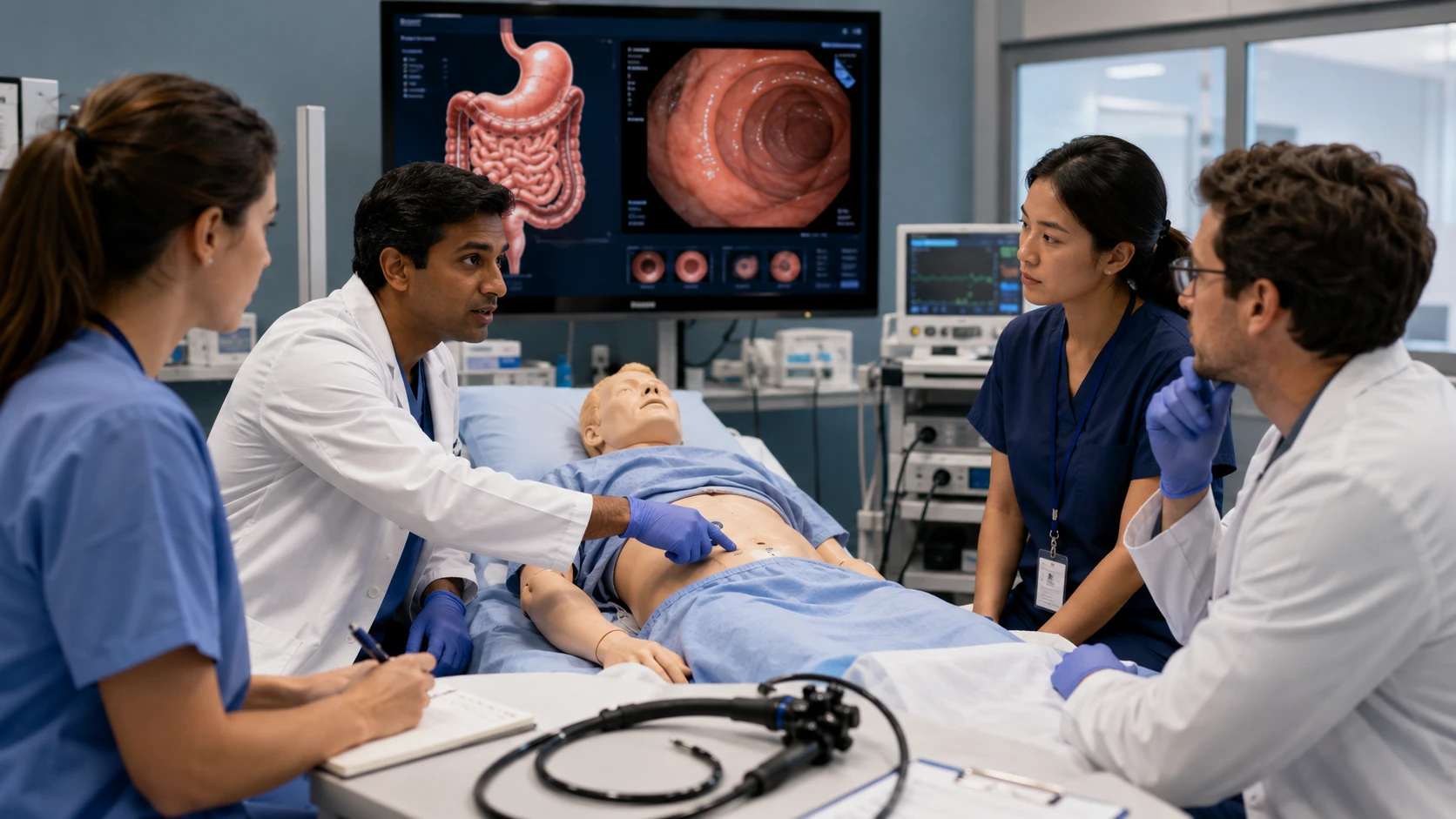
Digestive health care often involves procedures. Endoscopy, colonoscopy, biopsy, feeding tube placement, and other GI-related interventions require preparation, coordination, and clear understanding of anatomy and risk. Even when a learner is not performing the procedure independently, they need to understand what is happening, what can go wrong, and how to respond.
Simulation can also support training around complications and emergencies. GI bleeding, severe dehydration, bowel obstruction, perforation concerns, aspiration risk, acute abdominal pain, and post-procedure deterioration are situations where teams need to communicate quickly and clearly.
When the pressure is part of the lesson
Real emergencies are difficult places to learn for the first time. The environment is noisy, time is limited, and patient safety comes first. Simulation allows the pressure to be recreated without the same risk. A team can practice what happens when a patient’s blood pressure drops, when bleeding is suspected, or when abdominal pain suddenly worsens.
The value is not only in performing the right technical step. It is also in learning how to assign roles, call for help, communicate findings, and avoid confusion. In GI care, where symptoms can change quickly and information may be incomplete, this kind of practice can make training more structured.
Organizations such as AHRQ discuss simulation training as part of broader patient safety education. In digestive health, that patient safety angle is especially relevant when learners are preparing for procedures, triage decisions, and urgent clinical scenarios.
Ultrasound and Anatomy Training in Broader Clinical Education
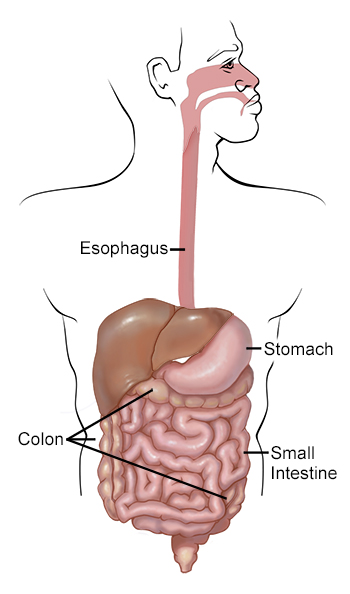
Digestive health care often depends on understanding anatomy, spatial relationships, and clinical reasoning. The abdomen is not always straightforward. Pain may be referred. Symptoms may not match one single organ. Imaging, physical examination, and procedural planning all require a clear mental map of what might be happening inside the body.
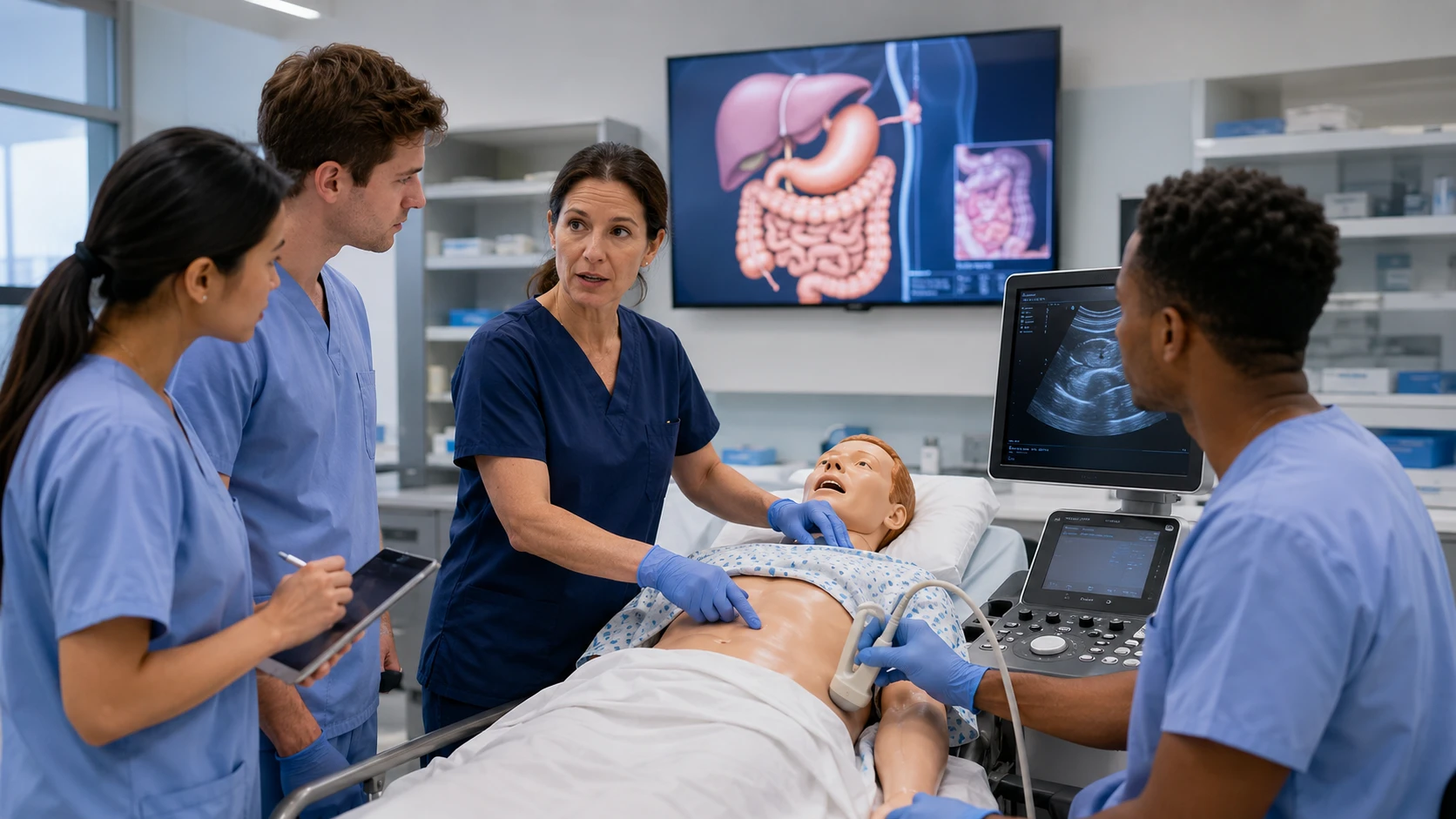
This is why anatomy training and ultrasound-related education can support broader clinical learning. Point-of-care ultrasound is increasingly discussed in many clinical settings, and even when it does not replace formal imaging, it can help learners think more carefully about anatomy, fluid, organ position, and clinical context.
Modern tools from MedVision, including patient simulators, anatomy solutions, and ultrasound trainers, can support medical educators who want to make complex clinical scenarios easier to practice before real patient care. In a GI-related curriculum, these tools can fit into broader training around abdominal assessment, procedural readiness, anatomy review, and team-based decision-making.
Why anatomy should not stay theoretical
A diagram in a textbook is useful, but it does not fully prepare a learner for a real patient. Bodies vary. Symptoms are messy. Patients move, ask questions, feel pain, and bring their own fears into the room. Simulation can help connect the clean structure of anatomy with the less predictable reality of clinical care.
That bridge matters in digestive health because so many decisions depend on combining different kinds of information: symptoms, examination findings, imaging, lab results, history, and patient preferences.
Better Training Means Better Patient Conversations
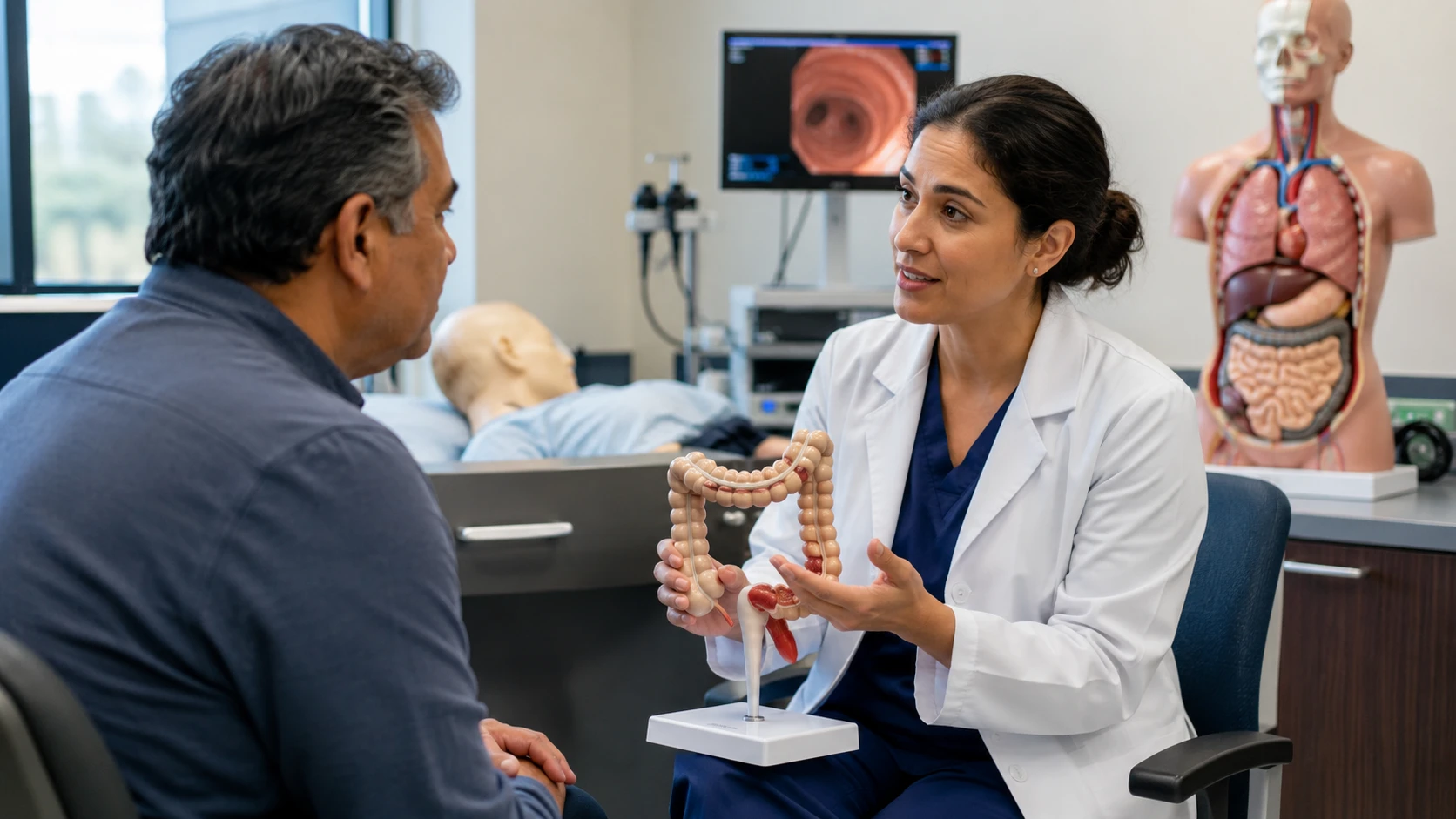
Patients with digestive symptoms often arrive worried. They may be embarrassed, uncomfortable, or tired from living with symptoms that affect daily life. Someone with chronic constipation may feel dismissed. A patient with reflux may worry about long-term damage. A person with IBS may have spent years trying diets, medications, and routines without feeling fully understood.
This is why communication is not a soft extra in digestive health care. It is part of the clinical work.
A good GI conversation often needs to cover sensitive topics: stool changes, rectal bleeding, abdominal pain, gas, diet, weight, medication use, and family history. It also needs to explain uncertainty. Not every symptom leads to an immediate answer. Not every test is needed right away. Not every normal result means the patient’s experience is not real.
What simulation can teach about communication
Simulation scenarios can help learners practice how to:
- ask sensitive questions without making the patient feel embarrassed;
- explain why certain symptoms are considered red flags;
- discuss colonoscopy preparation clearly and practically;
- respond to anxiety about cancer, chronic illness, or procedures;
- explain functional digestive disorders without making them sound “imaginary”;
- give follow-up instructions that patients can actually understand.
These communication skills can shape whether a patient trusts the plan. They can also affect whether the patient returns for follow-up, completes preparation for a procedure, or seeks help if symptoms worsen.
A More Structured Path From Classroom to Clinic
Simulation training does not replace clinical experience. It cannot fully reproduce the complexity of a real patient, a busy clinic, or a difficult diagnosis. But it can make the path into those settings safer and more structured.
For digestive health education, that structure is valuable. Learners can practice common complaints, rare emergencies, procedure-related situations, and sensitive conversations before they are expected to manage them in real time. Educators can repeat scenarios, adjust the difficulty, and give feedback in a way that is often impossible during a busy clinical day.
The practical value for GI education
The strongest use of simulation is not technology for its own sake. It is preparation. It gives learners a place to make early mistakes, ask better questions, review decisions, and build confidence before patients are depending on them.
In modern digestive health care, that preparation can support safer triage, clearer communication, better procedural readiness, and stronger teamwork. These are not small outcomes in a field where symptoms are common, decisions are layered, and patients often need both medical skill and careful explanation.
Conclusion
Digestive health care is full of everyday symptoms that can lead to complex decisions. Abdominal pain, reflux, constipation, bloating, diarrhea, and bowel changes may seem routine, but they require careful listening, clinical judgment, and the ability to recognize when something more serious may be happening.
Simulation training helps bridge the gap between knowledge and practice. It allows learners and teams to rehearse realistic GI scenarios, prepare for procedures and emergencies, strengthen anatomy-based reasoning, and improve patient communication.
It will never replace real clinical experience. But it can make that experience safer, more deliberate, and more educational. In gastroenterology and digestive health care, that kind of preparation matters — not only for clinicians, but for every patient who depends on them to make the right decision at the right time.