Most people who develop pelvic floor weakness notice it late. A cough or a laugh produces a little leakage, or the need to urinate arrives faster and harder than it used to, and only then does the underlying problem come into focus. The trigger differs from one patient to the next – pregnancy and delivery, the hormonal shift of menopause, recovery after prostate removal, or the gradual decline that arrives with age – and the condition is in no way confined to women. First-line management has traditionally meant muscle exercises. More and more, though, clinics are reaching for a different tool: a seat that trains the pelvic floor with a magnetic field, no surgery and no discomfort involved. The sections below walk through how an EMS pelvic floor chair functions, the patients it suits, and how two professional KERNEL models sold by UVTreat stack up for clinical work.
What Is an EMS Pelvic Floor Chair?
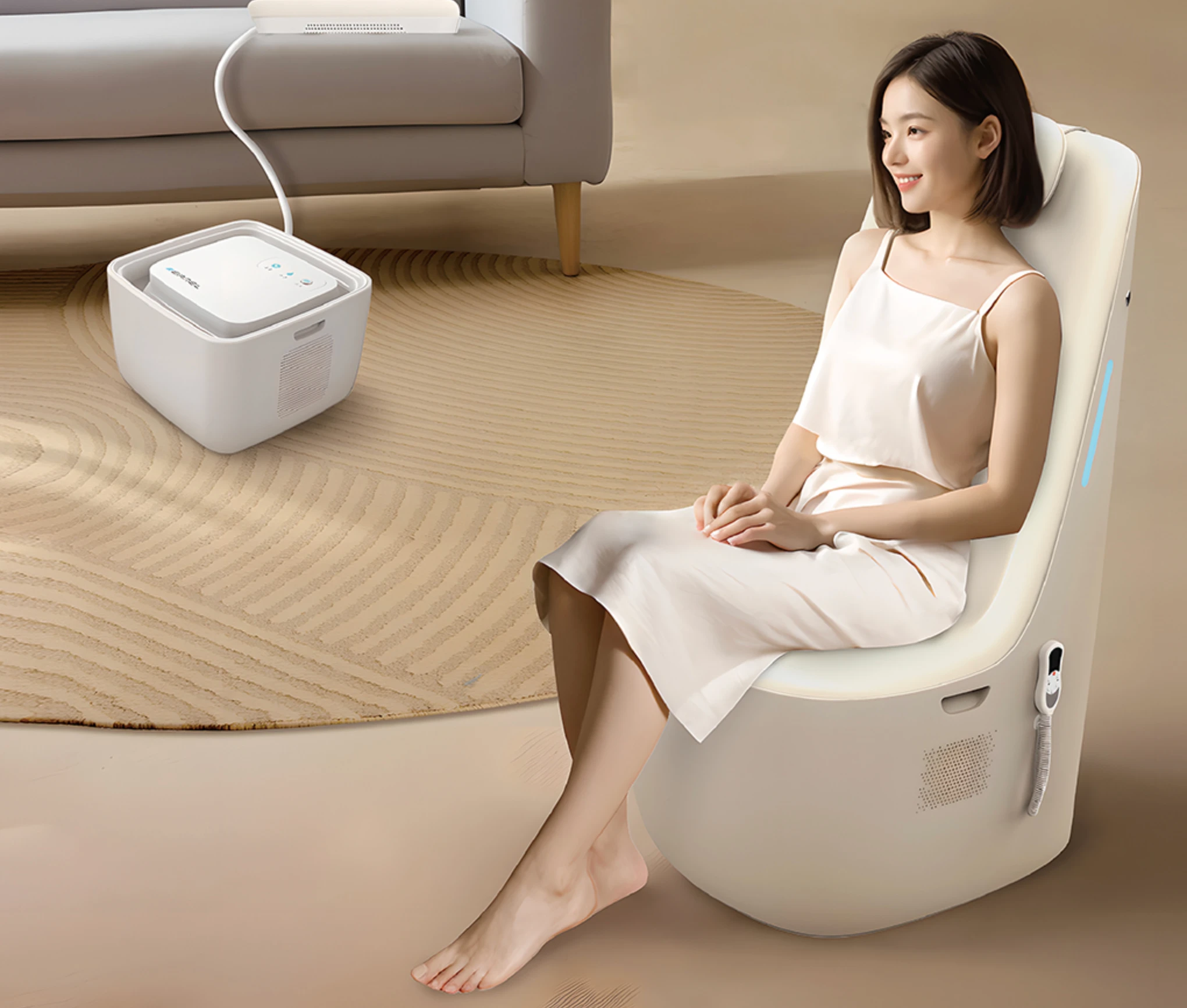
EMS pelvic floor chair is a seat with an electromagnetic coil beneath the cushion. The patient stays dressed and simply sits down; the coil then fires pulses of magnetic energy up into the pelvis. A shifting magnetic field sets off small induced currents in the surrounding tissue, and those currents excite the nerves that drive the pelvic floor muscles – so the muscles tighten and release without the person doing anything at all (1). Clinicians and manufacturers label this High-Intensity Electromagnetic Stimulation, abbreviated to HI-EMT or HIFEM, and some studies file it under functional magnetic stimulation. The naming shifts around; the effect does not. The field can force contractions well beyond anything conscious effort produces, and it reaches muscles that are genuinely hard to switch on by squeezing (1).
Set against a home exercise plan, the real difference is reliability. Kegels only help when the patient can find the correct muscles and hold a proper contraction, session after session – and a large share simply cannot. One clinical review put roughly one patient in three in the group that either squeezed the wrong muscles or pushed down instead of drawing up (2), while elsewhere between a third and half of women were found to be performing the movement incorrectly (3). A magnetic pelvic floor chair sidesteps that entirely by generating the contraction itself, which accounts for much of its appeal over exercise a patient does unsupervised. Because the seat is, in effect, doing the Kegel for whoever sits in it, some suppliers market it plainly as a kegel chair – even though nothing about the contraction is voluntary.
Why Are EMS Pelvic Floor Chairs Becoming More Popular?
The appeal comes down to a handful of things clinicians and patients both value.
Comfort and access sit at the top. Nothing is inserted, no anesthetic is required, and the patient leaves with no recovery to manage; the session is spent seated and clothed, registering as a buzzing, rhythmic squeeze rather than anything painful (6). For anyone wary of an operation or an internal probe, that alone makes them far more likely to start treatment in the first place.
The muscle response is what pulls clinicians in. An involuntary contraction that outmuscles any voluntary one lets a pelvic floor strengthening chair make headway in patients whose own technique would otherwise stall them. The trial data bear this out. Postpartum women with stress leakage who were randomized to electromagnetic stimulation finished with meaningfully stronger pelvic floor pressure than those handed a Kegel program – 16.5 against 8.0 cmH₂O, p = 0.006 – even though symptom and pad-test scores improved in both arms (4).
On incontinence specifically, the figures are encouraging. A prospective series run on a magnetic stimulation chair recorded cure in 47 percent of women with pure stress incontinence and 50 percent of those with overactive bladder by the two-month review, with close to seven in ten calling themselves improved (1). When stimulation was pitted against pelvic floor muscle training in a randomized multicenter study, the stimulation group gained substantially more in quality of life, and most of that lead was still there a year on (5).
Postpartum and sexual-health recovery round out the case. A 2025 systematic review found that stimulation combined with pelvic floor training lifted both incontinence severity and female sexual function, with side effects that were uncommon, minor, and short-lived – usually a passing soreness (6). Men are candidates as well: in a trial of post-prostatectomy incontinence, symptom scores fell significantly over a course of treatment (9).
Put together, the strongest candidates are women with stress, urge, or mixed incontinence, new mothers rebuilding after delivery, patients working through menopausal pelvic change, and men recovering from prostate surgery. A caveat belongs here all the same: results track the diagnosis, its severity, and the plan behind it. The evidence is most convincing in mild-to-moderate incontinence and in people who cannot locate the right muscles on their own, and the chair does not stand in for surgery when prolapse is severe, where operative repair still comes out ahead on the anatomical measures (7).
KERNEL Professional Pelvic Floor Stimulation Chairs
The two KERNEL chairs UVTreat carries run on identical underlying technology but are pitched at different kinds of practice. Each delivers non-contact magnetic stimulation up to 5 Tesla, ships with 18 preloaded clinical protocols, and pairs a wired remote with app-based control. Their one meaningful difference is how wide a frequency range they cover – and that ends up deciding which clinic each one belongs in.
KERNEL KN-2611M Pelvic Floor Magnetic Stimulation Chair
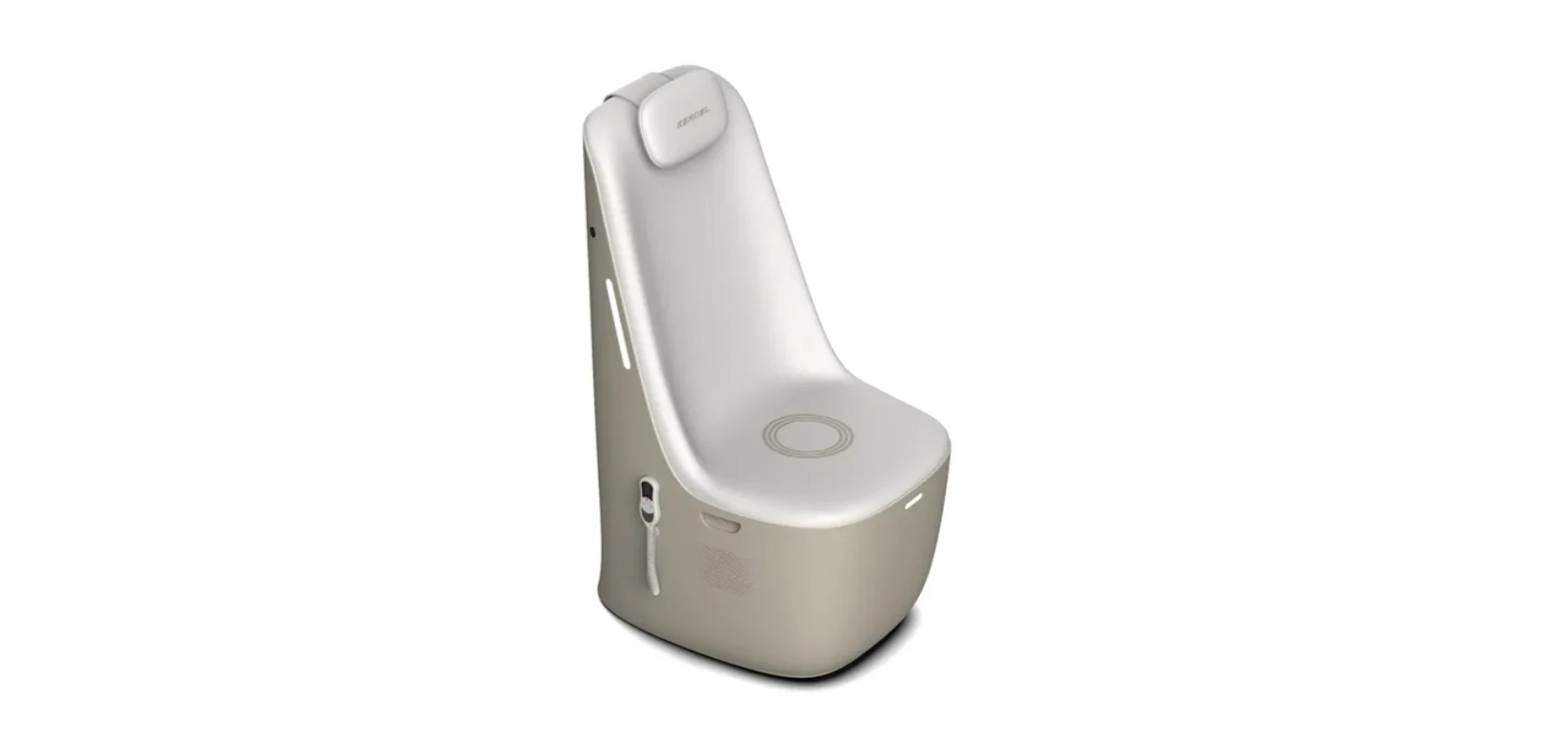
The KN-2611M is the wider-band of the pair, with stimulation frequency adjustable from 0.01 right up to 60 Hz. That reach lets a single chair work both ends of a treatment plan – the low end for settling an overactive bladder or releasing a tight, over-guarded pelvic floor, the high end for building strength and stamina. A department that sees the full spread in a day – stress incontinence, urgency, postnatal weakness, pelvic pain – can run all of it through one unit. It stands on the floor and slots neatly into hospitals, rehabilitation departments, and elder-care settings, its app keeping protocols and session history in order when the schedule fills up.
KERNEL KN-2610M Pelvic Floor Magnetic Stimulation Chair
The KN-2610M uses the same frame and matches its sibling on field strength, output, protocol set, and controls. The parting line is frequency: it runs from 0.01 to 30 Hz. Where a clinic’s work sits mainly in strengthening and everyday incontinence care within that window, the KN-2610M offers the same therapeutic engine in a leaner, usually more affordable form. As a working pelvic floor machine chair it behaves no differently; the narrower band simply reflects a tighter job description, not any trade-off in safety or comfort.
Choosing the Right Pelvic Floor Chair for Your Practice
Picking the best chair for pelvic floor work in a given clinic hangs less on the hardware, which is nearly the same either way, than on how the space will be used. Volume is the place to start. A busy or mixed-discipline practice – urogynecology, urology, women’s health, or a rehab center juggling pelvic pain and post-prostatectomy cases – will genuinely use the KN-2611M’s 60 Hz headroom, since one chair then flexes across every presentation that comes through the door. A clinic with a tighter focus on strengthening and routine incontinence is often better served by the KN-2610M, which covers that workload without charging for range it will never touch.
Room and workflow come next. Both units are floor-standing, so the space has to hold the chair, the operator, and easy access for the patient. App-driven protocols earn their keep when several team members share one machine, keeping settings consistent from one clinician to the next. Budget closes the loop, and because price and full regulatory paperwork depend on the exact build, live specifications and reimbursement routes are worth confirming before any decision is made.
Compare KERNEL Pelvic Floor Chairs
| Model | Technology | Best For | Treatment Applications | Clinical Setting | Key Advantages |
| KERNEL KN-2611M | Magnetic stimulation, up to 5 T, 0.01–60 Hz, 18 protocols | Busy or mixed-discipline practices | Stress, urge & mixed incontinence; postnatal recovery; pelvic pain; rehabilitation | Hospitals, rehabilitation departments, elder care | 60 Hz headroom covers relaxation and strengthening on one chair; app keeps shared use consistent |
| KERNEL KN-2610M | Magnetic stimulation, up to 5 T, 0.01–30 Hz, 18 protocols | Clinics focused on strengthening & routine care | Pelvic floor strengthening; incontinence management; postnatal recovery | Hospitals, rehabilitation departments, elder care | Identical therapeutic engine and safety profile in a leaner, more affordable build |
Professional EMS pelvic floor therapy earns its keep by strengthening muscle many patients cannot train well on their own, doing it without surgery and with a comfort profile that keeps people coming back to finish a course. Both KERNEL chairs work from the same evidence-based principle of supramaximal magnetic stimulation; which one fits a practice depends on its clinical goals, the patients it treats, and the services it plans to run. A clinic weighing the two is best off reviewing both KERNEL systems side by side before committing, and matching the frequency range and workflow to the work that actually happens in the room.
One note on regulation. Pelvic floor electromagnetic stimulation chairs belong to an FDA-regulated device category, and the cleared indication wording for the class covers non-invasive stimulation of the pelvic floor musculature to rehabilitate weak muscles and restore neuromuscular control in the treatment of male and female urinary incontinence (8). That clearance attaches to particular devices and models, so the regulatory status of any single unit should be verified before it is relied on in procurement or marketing.
References
- Braga A, et al. Pelvic floor muscle stimulation with a 3-Tesla functional magnetic stimulation chair in women with stress urinary incontinence and overactive bladder. Journal of Clinical Medicine. 2022.
- From Kegel exercises to pelvic floor rehabilitation: a physiotherapeutic perspective. SciELO.
- Safety and efficacy of a non-invasive high-intensity focused electromagnetic field (HIFEM) device for treatment of urinary incontinence and enhancement of quality of life. PMC.
- Electromagnetic stimulation versus pelvic floor muscle training for postpartum stress urinary incontinence: a single-blind randomized trial. PMC.
- Guerette N, et al. Randomized multicenter trial of a HIFEM pelvic floor stimulation device compared with pelvic floor exercises.
- Sacarin C, et al. Chair-based magnetic pelvic floor stimulation and female sexual function in women with urinary incontinence: a systematic review. Journal of Clinical Medicine. 2025.
- Comparative study of anterior colporrhaphy versus electromagnetic chair stimulation for pelvic organ prolapse. PMC.
- U.S. Food and Drug Administration. 510(k) Premarket Notification K181497 (electromagnetic pelvic floor stimulation device).
- High-intensity focused electromagnetic stimulation for post-prostatectomy urinary incontinence in men. Therapeutics and Clinical Risk Management.
- Yang X, et al. Effectiveness of extracorporeal magnetic stimulation in the treatment of pelvic floor dysfunction: a systematic review and meta-analysis. Neurourology and Urodynamics. 2025.
- KERNEL KN-2611M Pelvic Floor Magnetic Stimulation Chair. UVTreat.
- KERNEL KN-2610M Pelvic Floor Magnetic Stimulation Chair. UVTreat.