Skip to content
Epomedicine

Mnemonics, Simplified Concepts & Thoughts

Epomedicine

Mnemonics, Simplified Concepts & Thoughts

otawa ankle and foot rules

Ottawa Foot, Ankle and Knee rules – Mnemonic

Epomedicine, Oct 29, 2017Apr 10, 2020

Ottawa Ankle and Foot Rules

otawa ankle and foot rules

Mnemonic: 44-55-66-PM

Patients need an X-ray only if:

4: Unable to do 4 steps immediately AND
4: Unable to do 4 steps at Emergency Department

OR

5: Has pain at the base of 5th metatarsal
5: Has pain at the 5caphoid (Navicular)

OR

6: Tenderness in 6 cm tip or Posterior edge of lateral Malleolus
6: Tenderness in 6 cm tip or Posterior edge of medial Malleolus

Ottawa Knee Rules
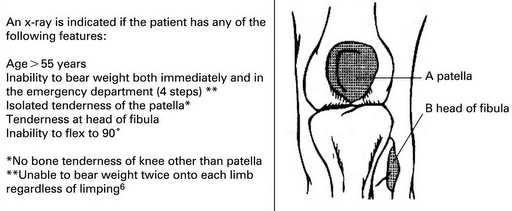
ottawa knee rule

Mnemonic: WAIT

WAIT, get an X-ray of knee if:

  1. Weight bearing for 4 steps not possible – immediately and in ER
  2. Age ≥55 years
  3. Inability to flex knee to 90 degrees
  4. Tenderness isolated to patella or head of fibula
15 shares
  • Facebook14
  • Twitter
Emergency Medicine Emergency medicineMusculoskeletal systemOrthopedicsRadiology

Post navigation

Previous post
Next post

Related Posts

Emergency Medicine

Differential Diagnoses of Older patient’s fall : Mnemonic

Aug 18, 2021Aug 18, 2021

Mnemonic: CATASTROPHE 1. Caregiver and housing (information on the circumstances of present fall and falls history) 2. Alcohol (including withdrawal) 3. Treatment (medications, recently added or stopped, compliance) 4. Affect (depression or lack of initiative) 5. Syncope (any episode of fainting) 6. Teetering (dizziness) 7. Recent illness 8. Ocular problems…

Read More
Clinical Skills and Approaches

FARES method of Shoulder Reduction

Nov 30, 2019Nov 30, 2019

Indication: Anterior shoulder dislocation Position of patient: Supine Position of physician: Standing on the side of the dislocated shoulder Steps: Physician holds the wrist of the patient with both the arms keeping elbow of the patient extended and forearm in neutral position Arm is slowly abducted in brief oscillating movement…

Read More
Emergency Medicine gustilo anderson type III

Open fractures : Mnemonics

Apr 17, 2017Oct 9, 2022

Gustilo Anderson Classification Mnemonics:1. Parameters: ABCD’S (Area, Bone, Circulation, Dirt, Soft tissue)2. Classification: I, II, III then A, B, C Progression for grade I to III C implies a higher degree of energy involved in the injury, higher soft tissue and bone damage, and higher potential for complications. Type I:…

Read More

Leave a Reply Cancel reply

Your email address will not be published. Required fields are marked *

This site uses Akismet to reduce spam. Learn how your comment data is processed.

Epomedicine. Ottawa Foot, Ankle and Knee rules – Mnemonic [Internet]. Epomedicine; 2017 Oct 29 [cited 2026 Jan 17]. Available from: https://epomedicine.com/emergency-medicine/ottawa-rules-extremitity-radiographs/.

Pre-clinical (Basic Sciences)

Anatomy

Biochemistry

Community medicine (PSM)

Embryology

Microbiology

Pathology

Pharmacology

Physiology

Clinical Sciences

Anesthesia

Dermatology

Emergency medicine

Forensic

Internal medicine

Gynecology & Obstetrics

Oncology

Ophthalmology

Orthopedics

Otorhinolaryngology (ENT)

Pediatrics

Psychiatry

Radiology

Surgery

RSS Ask Epomedicine

  • What to study for Clinical examination in Orthopedics?
  • What is the mechanism of AVNRT?

Epomedicine weekly

  • About Epomedicine
  • Contact Us
  • Author Guidelines
  • Submit Article
  • Editorial Board
  • USMLE
  • MRCS
  • Thesis
©2026 Epomedicine . All rights reserved.