Extracorporeal Shock Wave Therapy, commonly known as ESWT (Extracorporeal Shock Wave Therapy), has become one of the most effective non-invasive technologies in modern medicine. It enables the treatment of a wide range of conditions without surgery, injections, or long recovery periods.
Its popularity continues to grow among orthopedic doctors, neurologists, rehabilitation specialists, and professional athletes, as the method helps to rapidly relieve pain, reduce inflammation, accelerate tissue healing, and return patients to an active lifestyle.
Today, ESWT is more than just physiotherapy. It is a high-tech, clinically proven method capable of treating even chronic conditions that have remained resistant to therapy for years.
What is Extracorporeal Shock Wave Therapy?
ESWT is a treatment method based on the application of high-energy acoustic waves to affected areas of the body. Shock waves penetrate the skin and soft tissues, creating micro-mechanical changes at the cellular level and stimulating natural regenerative processes.
Each shock wave pulse is brief but high in amplitude, which allows it to:
- improve blood microcirculation,
- stimulate collagen production,
- break down calcifications,
- relieve pain,
- activate metabolic processes,
- accelerate tissue recovery.
These effects make ESWT a highly versatile and effective therapy.
How ESWT devices work: mechanism of action
Shock wave therapy devices generate short, focused wave impulses that are directed at specific areas of the body. The energy penetrates to a predetermined depth (depending on device settings) without damaging the superficial layers of the skin.
During treatment, the following processes occur:
Improved blood circulation
Microcirculation within the tissues is enhanced, accelerating metabolic processes and oxygen delivery.
Disruption of pathological structures
Calcified deposits, fibrotic tissue, and abnormal adhesions are broken down by shock waves, reducing pain and restoring mobility.
Analgesic effect
Endorphin production is stimulated, nerve sensitivity is reduced, and chronic pain signals are blocked.
Accelerated tissue regeneration
Collagen fibers regenerate, and tendons and ligaments become stronger and more elastic.
As a result, ESWT triggers a biological self-healing response in tissues that continues even after the treatment course is completed.
Types of Shock Wave Therapy
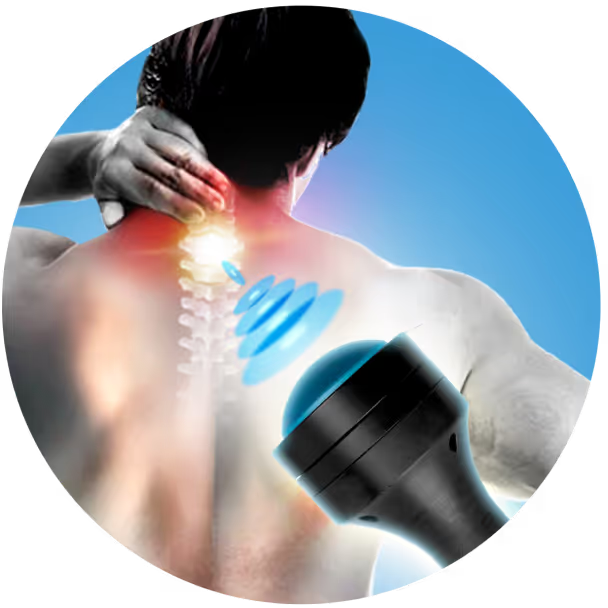
Modern medicine uses two primary types of ESWT:
1. Radial Shock Wave Therapy (RSWT)
Used for treating superficial tissues, including:
- muscles,
- tendons,
- ligaments,
- fascia.
It is suitable for most sports injuries and chronic pain conditions.
2. Focused Shock Wave Therapy (FSWT)
Delivers energy deeper and with greater precision. It is used for:
- calcifications,
- chronic ischemia,
- heel spurs,
- complex orthopedic conditions,
- neurological disorders.
Both types are often combined to achieve maximum therapeutic effect.
Indications for ESWT
Shock wave therapy is widely used across multiple medical fields.
Orthopedics and traumatology
- heel spurs;
- plantar fasciitis;
- epicondylitis (tennis elbow, golfer’s elbow);
- osteoarthritis and arthritis;
- tendinitis and tendinopathies;
- Achilles tendinopathy;
- knee and shoulder pain;
- contractures;
- bursitis;
- flat feet.
Sports medicine
- ligament sprains;
- muscle overuse injuries;
- chronic sports injuries;
- recovery after excessive physical load.
Neurology
- radiculitis;
- neuropathic pain;
- nerve entrapment;
- myofascial pain syndrome.
Rheumatology
- degenerative joint diseases.
Aesthetic medicine
- cellulite;
- localized fat deposits;
- stretch marks;
- post-traumatic and post-surgical scars;
- loss of skin tone.
Urology
- vascular erectile dysfunction;
- chronic pelvic pain.
Thanks to its broad range of effects, ESWT has become one of the most widely used methods for treating chronic conditions.
Advantages of Shock Wave Therapy
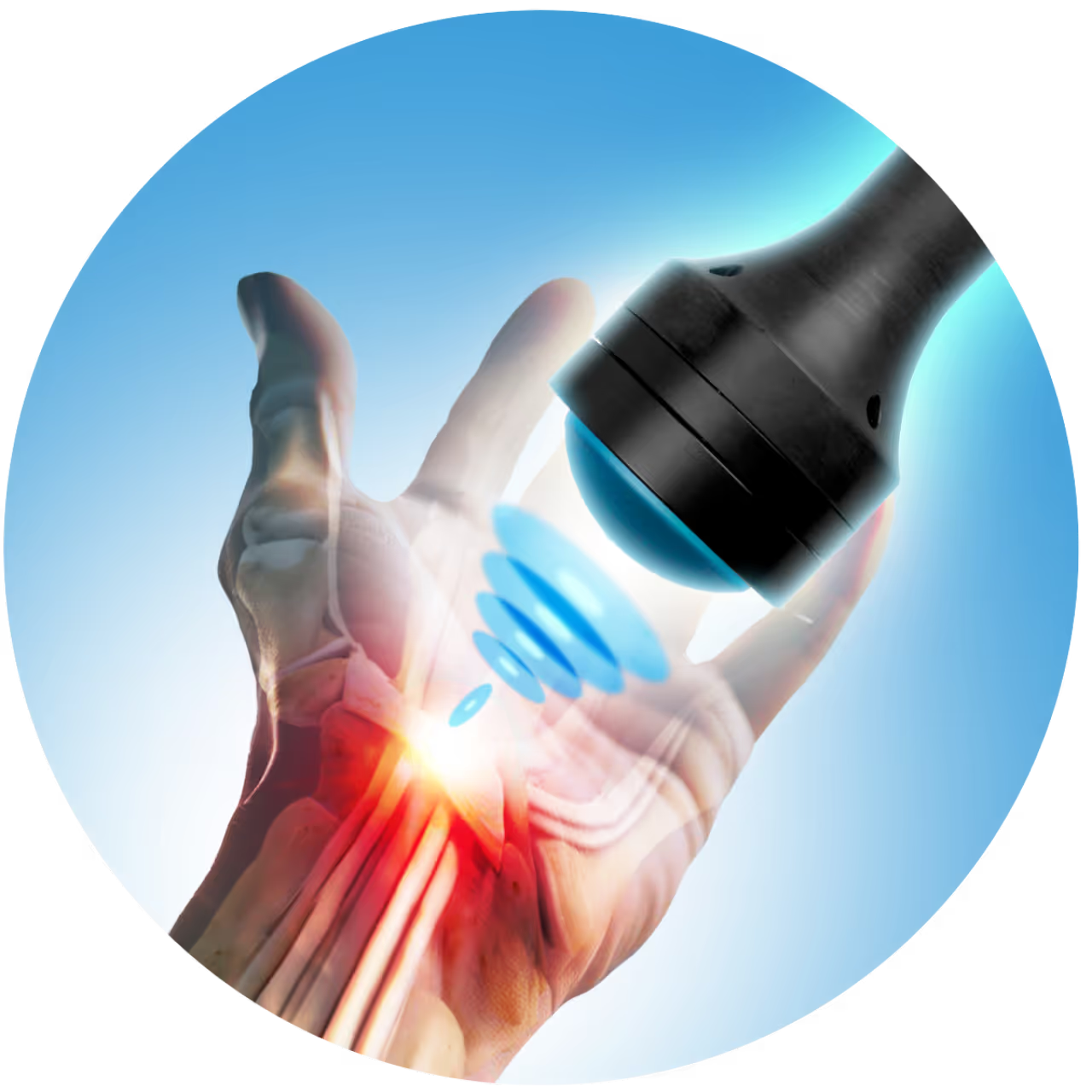
- Non-invasive and safe – no incisions, injections, or residual tissue damage.
- High effectiveness even in chronic cases – works where other physiotherapy methods fail.
- Long-lasting results – regenerative processes continue for months after treatment.
- Short treatment course – 5–8 sessions are usually sufficient for significant improvement.
- Minimal contraindications – suitable for patients of different ages.
- Rapid return to activity – little to no rehabilitation required.
- Drug-free treatment – no pharmacological burden on the body.
How is the ESWT procedure performed?
- The patient is positioned comfortably (sitting or lying down).
- A conductive gel is applied to improve wave transmission.
- The device applicator is placed on the target area.
- Individual parameters are selected: depth, intensity, and pulse frequency.
- A session lasts between 10 and 25 minutes.
Patients may feel mild tapping or vibration, which is generally well tolerated and not painful. After the session, normal daily activities can be resumed immediately.
Contraindications
- oncological diseases;
- pregnancy;
- infections in the treatment area;
- blood clotting disorders;
- acute inflammatory conditions;
- implanted pacemaker (local contraindication).
A medical consultation is required before starting treatment.
Clinical results and effectiveness of ESWT
According to clinical studies:
- 80–90% of patients experience significant pain reduction or complete relief;
- joint mobility improves;
- injury healing accelerates;
- calcified formations decrease;
- long-standing chronic pain syndromes resolve.
In many cases, shock wave therapy helps patients avoid surgical intervention.
Conclusion
Extracorporeal Shock Wave Therapy (ESWT) is a modern, highly effective, and safe technology that allows the treatment of a wide range of conditions without surgery or medication.
Its versatility, rapid results, minimal contraindications, and scientifically proven therapeutic effects make ESWT one of the most valuable tools in modern physiotherapy and rehabilitation: https://www.dodpowerpack.com/